

Ravi Tyagi
Lead AI Engineer & Generative AI Systems Engineer
Master Generative AI from transformer foundations to LLMs, prompt engineering, RAG, LoRA fine-tuning and AI agents with MCP through 12+ real projects, hands-on PyTorch, Hugging Face and career support support.

Build the future with a production-grade Generative AI Course designed to take you from core transformer foundations to deploying autonomous AI agents at scale. Modern AI engineering demands far more than basic API calls. You need to understand how tokens, embeddings, attention mechanisms, and parameter-efficient fine-tuning actually work under the hood. Whether you are aiming for specialized AI roles or moving up from full-stack engineering, this program bridges the gap between raw transformer research and robust, reliable software in production.
You will move past toy scripts and build real production systems that solve genuine engineering problems across 12+ hands-on projects:
This program is built for backend developers, software engineers, and data professionals looking to pivot into AI engineering. You should have a working command of Python and basic familiarity with machine learning fundamentals. If you are starting fresh with the math and logic behind machine learning, you might want to explore the Artificial Intelligence course before diving deep into large language models. Similarly, if your focus is on cloud architecture and enterprise compliance, pairing this with the Microsoft Azure AI Engineer Associate (AI-102) Certification Training or the Microsoft Azure AI-500 Certification Course creates a formidable combination for enterprise roles.
All cohorts run live online in timezone-friendly batches, allowing you to ask questions, debug code in real time, and collaborate with peers worldwide. You code alongside working practitioners who ship LLM applications in production every week. Every session is recorded so you can review complex transformer mechanics or multi-agent workflows whenever needed. Weekly doubt-clearing hours and personalized code reviews ensure you never get stuck on a broken dependency or a misconfigured vector index.
Engineering teams across product startups and global tech enterprises are actively hiring for specialized roles such as Generative AI Engineer, LLM Engineer, and AI Application Developer. Hiring loops no longer test generic algorithms alone. Interviewers probe your ability to manage context windows, optimize token usage and inference latency, prevent prompt injection, and debug multi-agent hallucinations. Mastering these patterns makes you immediately productive on day one.
Take the next step in your engineering career by enrolling in our Agentic AI Software Engineering: Build & Deploy Production Agents program or joining our free community journey with 100 Days of AI Engineering today.
A structured curriculum with real tools and outcomes built for the workplace.
You can distinguish generative architectures from discriminative models and set up an isolated Python environment with PyTorch and Hugging Face.
Hands-on project: Write a Python script that loads a pre-trained tokenizer from Hugging Face, tokenizes a raw text corpus, and outputs vocabulary statistics and token frequency histograms.
You can explain multi-head self-attention, token embeddings, and positional encodings mathematically and inspect attention weight matrices in PyTorch.
Hands-on project: Implement a scaled dot-product attention block from scratch using PyTorch tensors and verify output shapes against a multi-head reference layer.
You can configure decoding hyperparameters, manage KV cache memory footprints, and serve open-source weights locally via Ollama.
Hands-on project: Deploy an open-source 7B parameter model locally using Ollama and write an evaluation script that benchmarks token generation latency across different temperature settings.
You can design robust system prompts, enforce strict JSON output schemas, and manage context window stuffing for complex tasks.
Hands-on project: Build a structured data extraction pipeline using OpenAI function schemas that converts unstructured invoice text into a validated Pydantic model.
You can build end-to-end Retrieval-Augmented Generation systems featuring semantic chunking, hybrid search, and cross-encoder re-ranking.
Hands-on project: Construct a production RAG pipeline over a 500-page technical manual using Chroma, recursive text splitting, and an external re-ranker, achieving over 90% groundedness scores.
You can fine-tune large language models efficiently using PEFT, LoRA, and QLoRA on consumer cloud GPUs without memory overflow.
Hands-on project: Fine-tune a LLaMA 3 8B model on a custom JSON dataset using QLoRA, bitsandbytes 4-bit quantization, and Hugging Face Trainer with Weights & Biases tracking.
You can construct conversational applications with persistent memory, tool integration, and streaming responses using LangChain and LlamaIndex.
Hands-on project: Build an interactive CLI chatbot in Python that maintains conversation state across sessions, queries a SQL database via LangChain tool abstractions, and streams responses.
You can build autonomous multi-agent systems using LangGraph and the Model Context Protocol for secure external tool execution.
Hands-on project: Build an autonomous code refactoring agent team using LangGraph state graphs and MCP server tools that inspects a local git repository, runs tests, and opens pull requests.
You can generate and manipulate images using Stable Diffusion pipelines, ControlNet conditioning, and DreamBooth subject fine-tuning.
Hands-on project: Build a Python image generation service using the Diffusers library that applies ControlNet pose conditioning and generates custom subject variants via DreamBooth weights.
You can process images, transcribe audio with Whisper, and build multimodal AI applications that ingest visual and speech data.
Hands-on project: Build an audio-to-text-to-action pipeline that transcribes meeting voice notes using Whisper and extracts action items into a JSON payload using a vision-language model.
You can implement LLM-as-a-judge evaluation frameworks, defend against prompt injection, and enforce safety guardrails on generative endpoints.
Hands-on project: Build a security middleware proxy in FastAPI that inspects incoming user prompts for jailbreak patterns and filters toxic model outputs using content moderation APIs.
You can serve an LLM feature within a latency and cost budget and show the numbers.
Hands-on project: Define a p95 latency and cost-per-request budget for the capstone feature, instrument token usage, then meet the budget with streaming, caching, prompt trimming and routing simple requests to a smaller model, reporting before and after.
You can serve LLMs with vLLM, build asynchronous FastAPI inference microservices, monitor token usage, and deploy a production GenAI capstone to the cloud.
Hands-on project: Containerise a complete multi-agent RAG application with vLLM inference and FastAPI using Docker, configure token-bucket rate limiting, and push the artifact to a cloud VM with automated health checks.
Every instructor here ships production code for a living and teaches the same week they deploy.
5 learners sharing their experience

The Full-Stack Java developer program at Squarebrackets completely transformed my career. Learning Spring Boot and microservices architecture alongside React and Next.js gave me the exact modern stack companies are looking for. Building real-time projects using Apache Kafka and RabbitMQ for message queuing gave me the practical confidence I needed to ace my system design rounds.
Ankit transitioned from a legacy support engineer to a high-paying product development role after completing his 6-month intensive Java and JavaScript full-stack training at our Noida campus.

Squarebrackets took me from not knowing what a gradient was to building and deploying CNNs and Transformers. The maths-first approach made everything click, and the mentors pushed me through every hard concept.
Completed the Deep Learning Course at Squarebrackets and landed a deep learning role within two months.

Squarebrackets gave me the complete AI picture — from search algorithms and Bayesian reasoning to building LLM agents. The maths-first approach meant nothing was a black box, and the mentors pushed me through every project.
Completed the Artificial Intelligence Course at Squarebrackets and moved into an AI engineering role within two months.

The Java Full-Stack and DSA course at Squarebrackets completely changed my career trajectory. The focus on raw problem-solving with DSA alongside hands-on Spring Boot and React projects gave me the practical skills I needed. I went from struggling with basic coding rounds to cracking my technical interview with absolute confidence.
Aniket joined Squarebrackets as a college senior looking to transition from theoretical academic projects to production-ready software development. After completing our rigorous training program, he secured a placement as an Associate Software Engineer.
The live cohort broke down complex concepts like Spring Boot transaction management and React state handling in a way that made immediate sense for production work. Having worked through real backend architectures during class, my daily code reviews at work became much smoother.
Completed the Java Full Stack live training while balancing a full-time role, upgrading engineering skills through rigorous hands-on sessions.

“The Full-Stack Java developer program at Squarebrackets completely transformed my career. Learning Spring Boot and microservices architecture alongside React and Next.js gave me the exact modern stack companies are looking for. Building real-time projects using Apache Kafka and RabbitMQ for message queuing gave me the practical confidence I needed to ace my system design rounds.”

Software Engineer, Student
“Squarebrackets took me from not knowing what a gradient was to building and deploying CNNs and Transformers. The maths-first approach made everything click, and the mentors pushed me through every hard concept.”

Student
“Squarebrackets gave me the complete AI picture — from search algorithms and Bayesian reasoning to building LLM agents. The maths-first approach meant nothing was a black box, and the mentors pushed me through every project.”

Student
“The Java Full-Stack and DSA course at Squarebrackets completely changed my career trajectory. The focus on raw problem-solving with DSA alongside hands-on Spring Boot and React projects gave me the practical skills I needed. I went from struggling with basic coding rounds to cracking my technical interview with absolute confidence.”
Associate Software Engineer, Capgemini
“The live cohort broke down complex concepts like Spring Boot transaction management and React state handling in a way that made immediate sense for production work. Having worked through real backend architectures during class, my daily code reviews at work became much smoother.”

Student


Browse the common questions, or reach out and our team will help you directly.
6 courses in this collection

GitHub Copilot Mastery: GH-300 & GH-600 Certification Program Beginner12 Weeks (93 Hours)

Agentic AI Software Engineering: Build & Deploy Production Agents Beginner12 Weeks

Artificial Intelligence Advanced6 Months

Machine Learning Intermediate6 Months

Data Science Advanced6 Months

Deep Learning Advanced6 Months
Best seller
Best seller
Trending
Trending
Trending
TrendingHands-on programming tracks with runnable code, from fundamentals to job-ready projects.
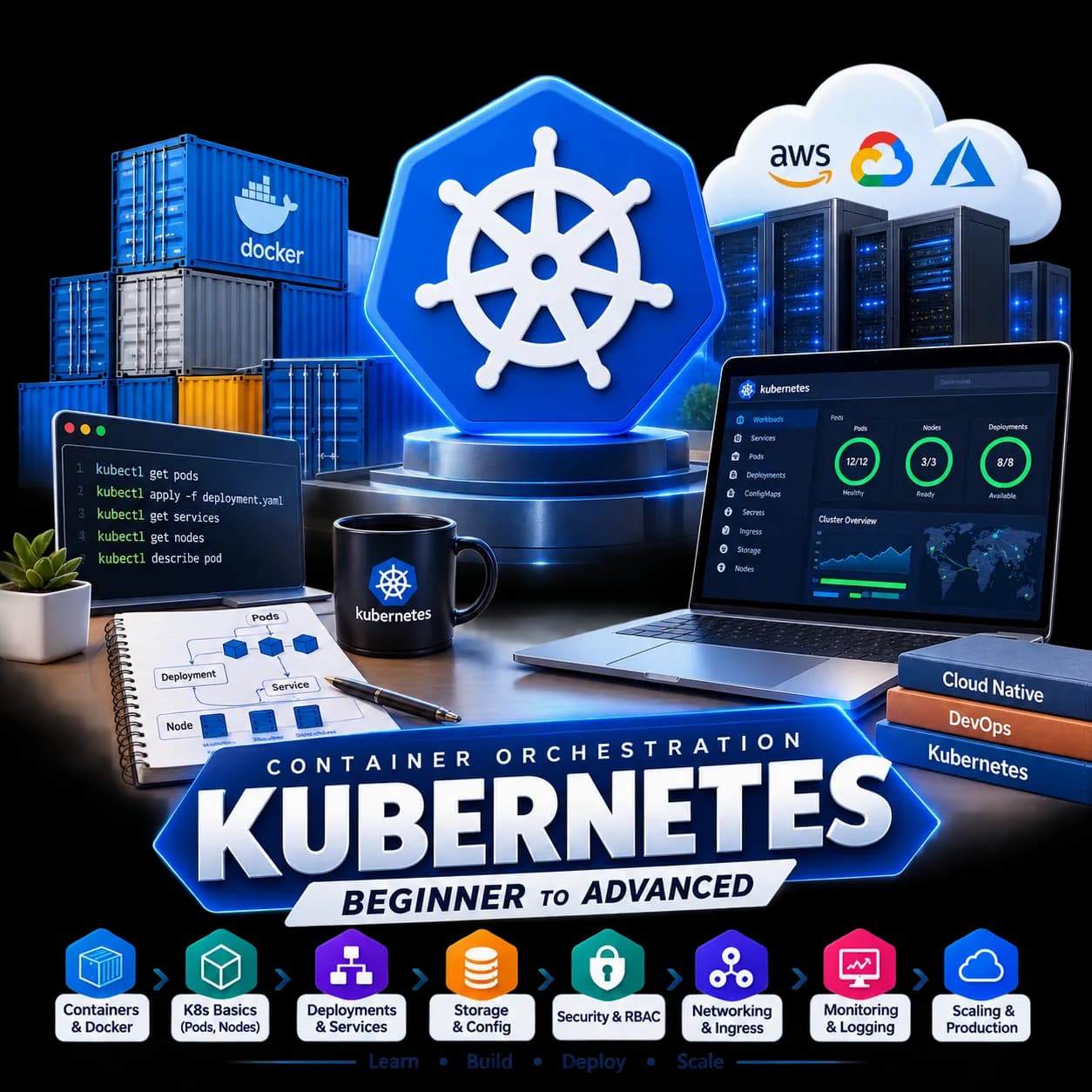
Kubernetes Beginner to Production Grade: A Hands-On DevOps Guide Beginner25 min
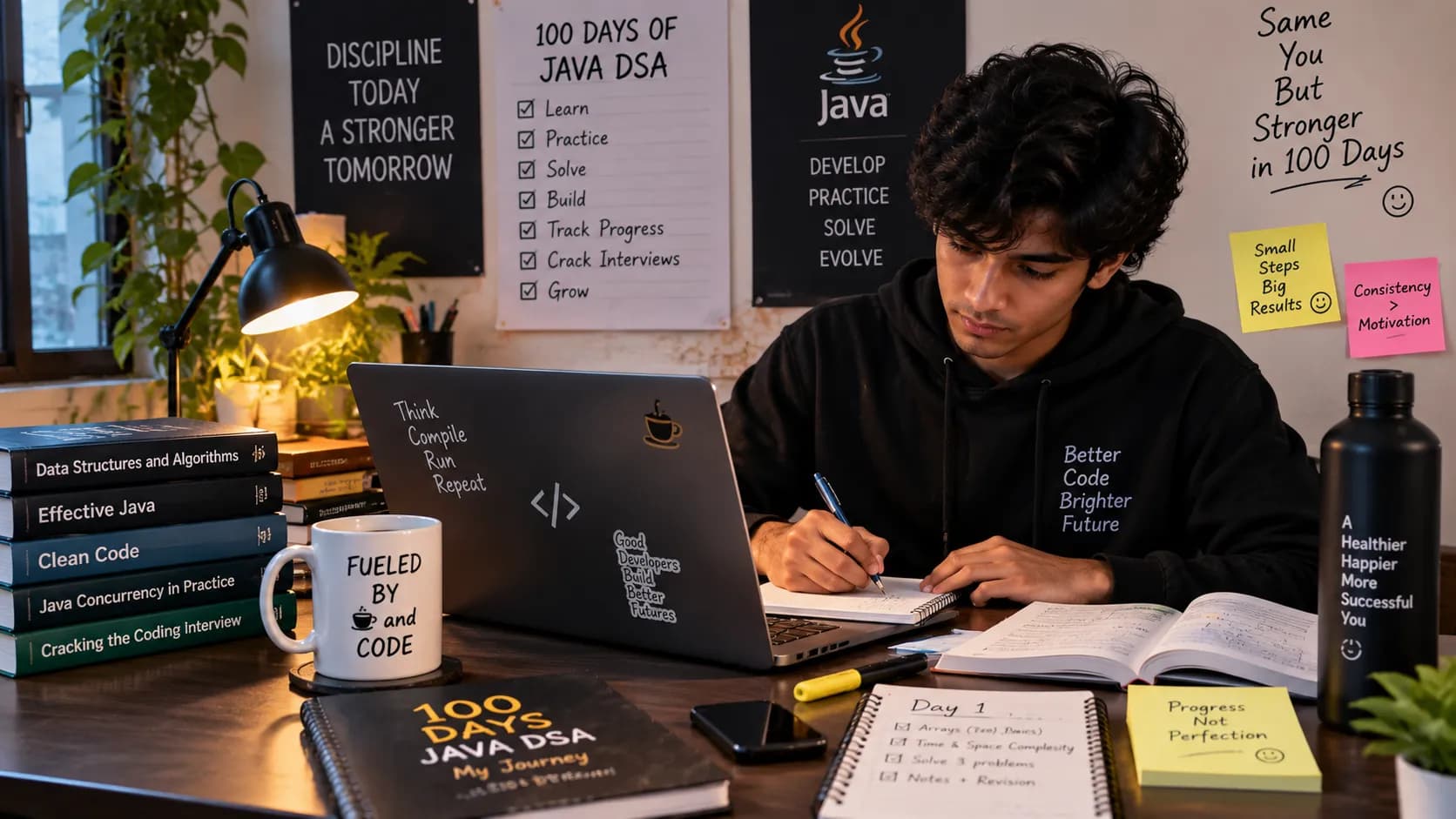
100 Days of DSA with Java Beginner to advanced100 days · 85 lessons published

100 Days of AI Engineering Beginner to advanced100 days · 57 lessons published


Articles to help you learn, grow, and get hired.
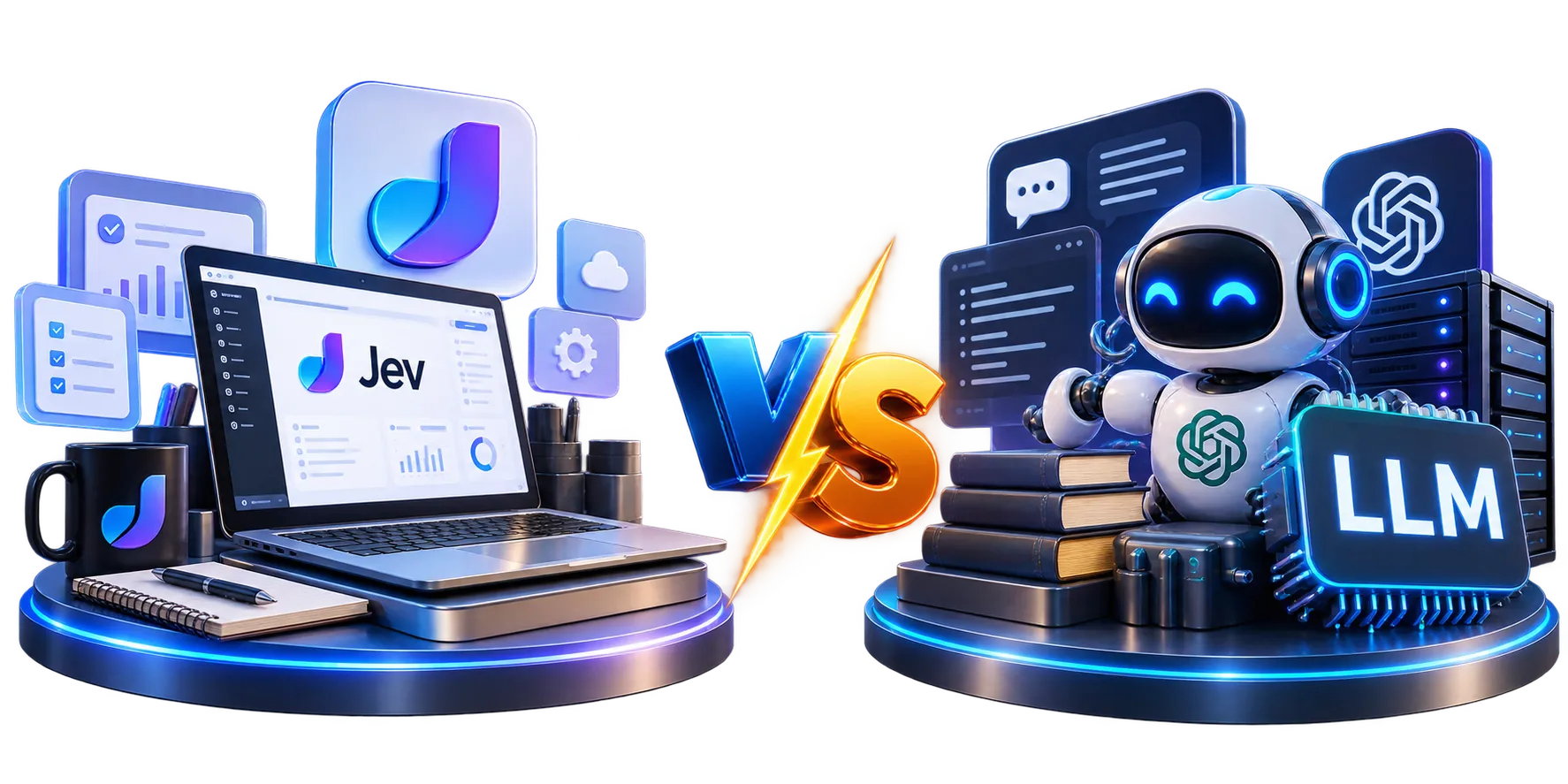
What is JEV and How Is It Different from LLMs? 5 min3 Oct 2026

Waterfall to Agentic SDLC: The Evolution of Software Engineering 5 min6 Sept 2026

Prompt Engineering to Harness Engineering: AI Development Evolution 5 min6 Sept 2026
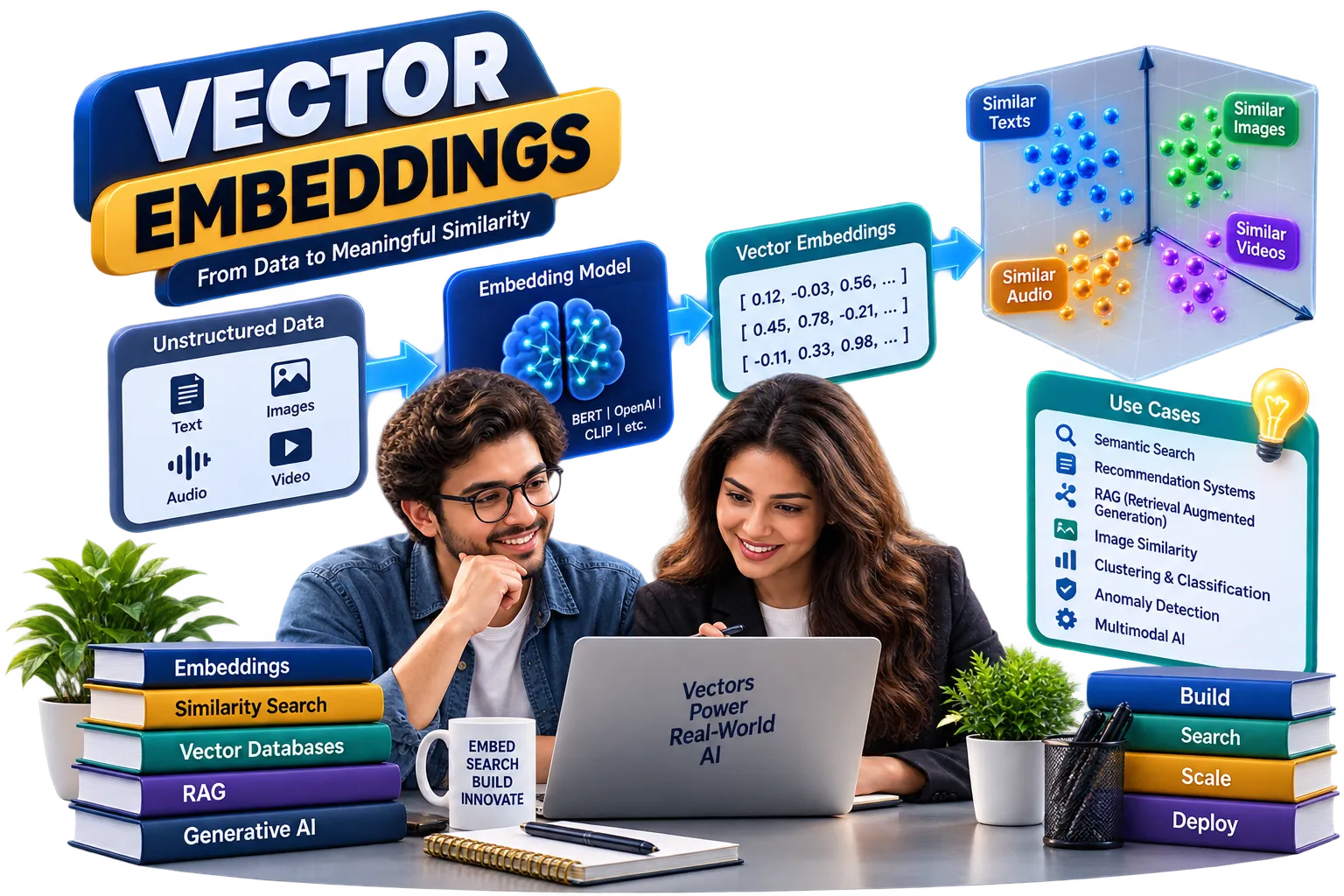
Vector Embedding Explained: The Math Behind Modern AI 5 min4 Sept 2026
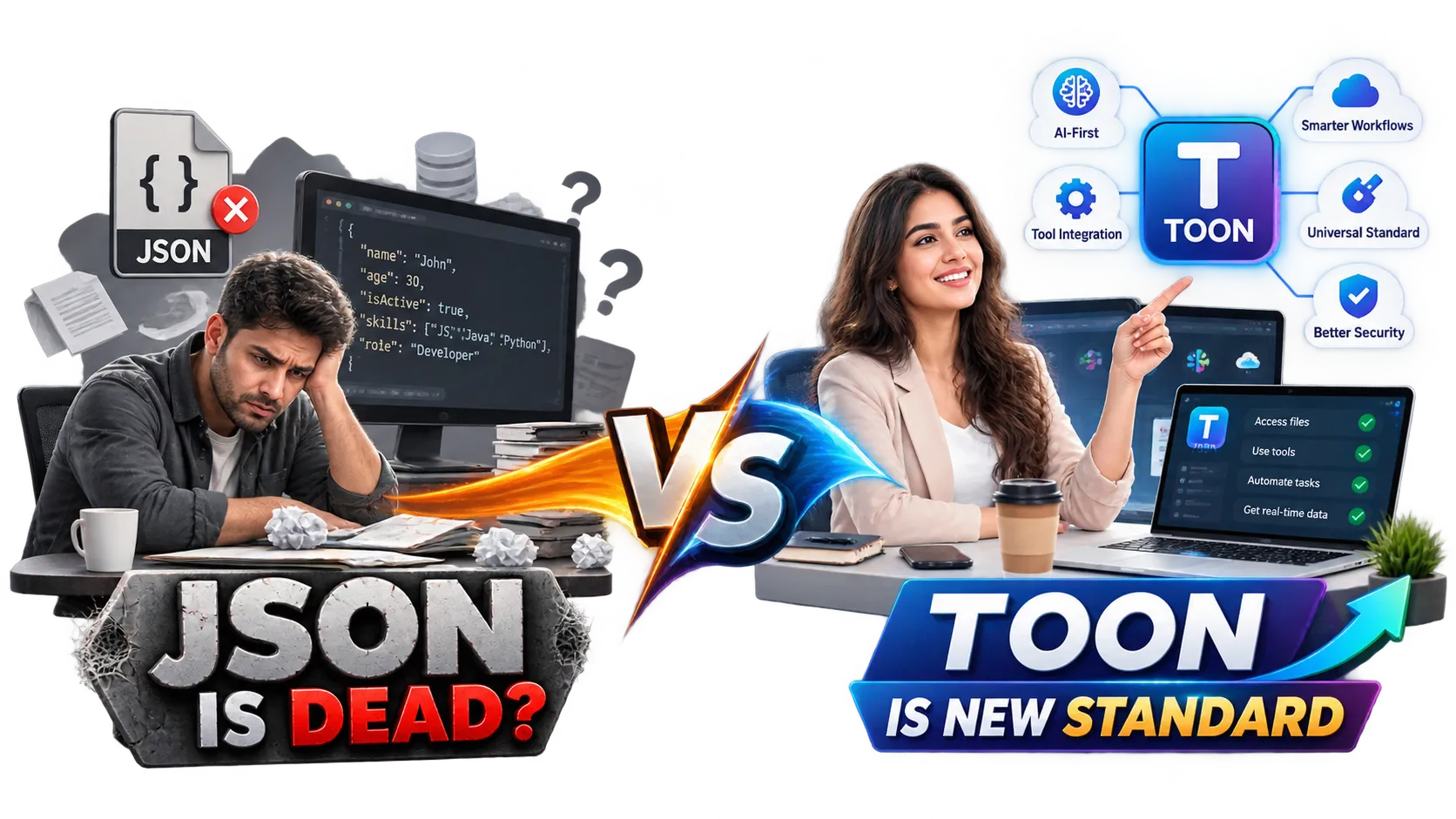
JSON vs TOON: The Problem and the Fix for LLM Data Transfer 5 min18 Aug 2026
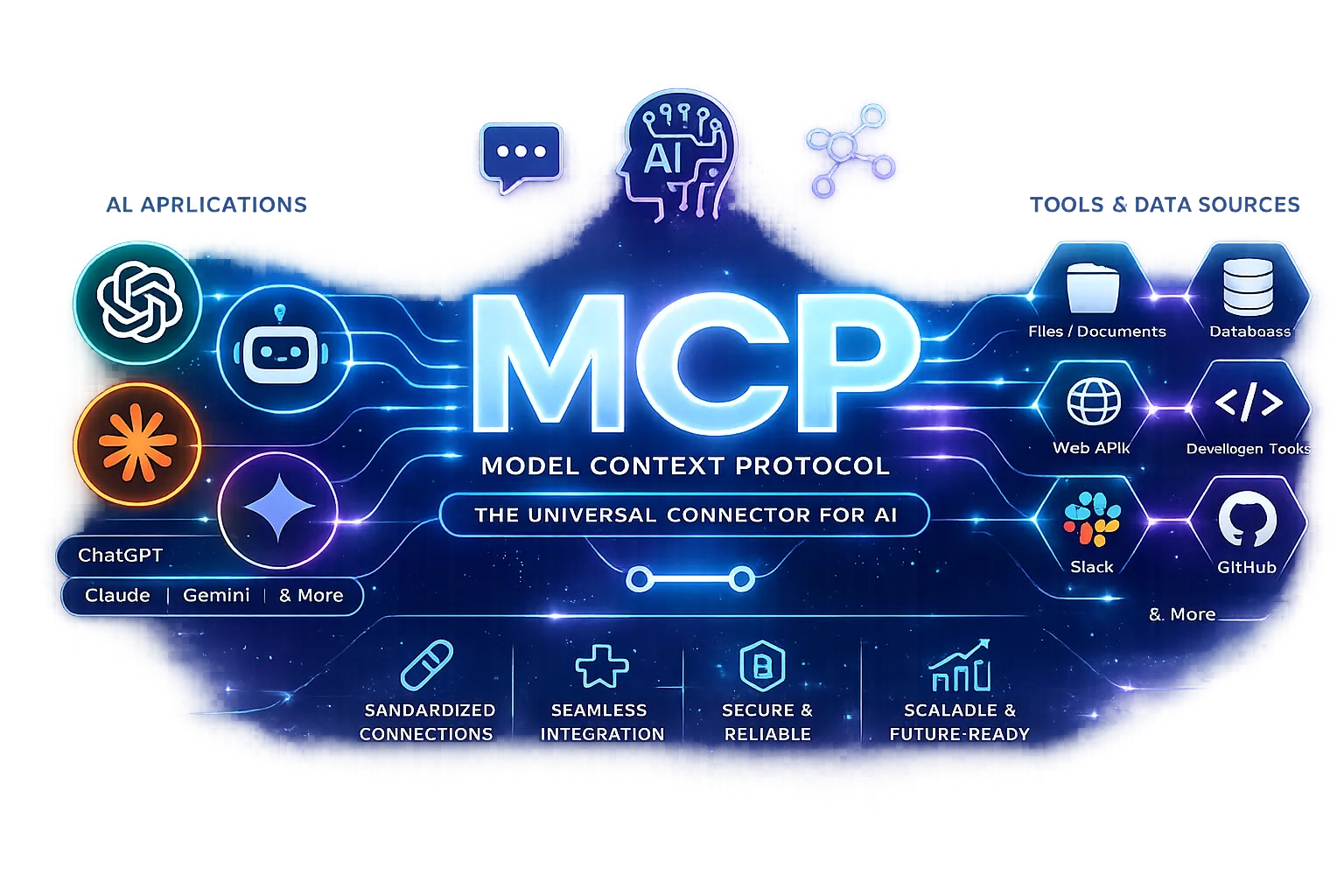
Model Context Protocol and the N*M Integration Problem 5 min16 Aug 2026
TrendingDiscover JEV, how it differs fundamentally from Large Language Models, and when to use each for enterprise architectures.

Explore how software development evolved from rigid Waterfall and Agile cycles into the era of Agentic SDLC, where autonomous AI agents write, test, and deploy code.
TrendingDiscover why AI development is moving beyond simple prompt writing toward robust software wrappers. Learn how to build production-grade LLM application pipelines.

Demystify vector embeddings, how they represent real-world data as high-dimensional coordinates, and how LLMs use them to understand semantic meaning.

Discover why JSON costs you money in LLM APIs and how TOON (Token Object-Oriented Notation) fixes token bloat for efficient AI automation.
TrendingUnderstand the Model Context Protocol (MCP), how it solves the complex N*M integration problem between LLMs and data sources, and why it simplifies AI tool development.