

Swati Tyagi
Senior Full Stack and Mobile App Developer
Go from absolute basics to advanced deep learning — neural networks, CNNs, RNNs, Transformers and generative AI — with the required maths, 12+ real projects, mentorship and career support at Squarebrackets.

Deep Learning stands at the center of modern artificial intelligence, driving everything from automated diagnostics in healthcare to autonomous driving perception stacks and frontier language models. Building production-grade neural networks requires more than running high-level APIs; it demands a firm grip on linear algebra, gradient optimization, tensor shapes, and memory management under GPU constraints. This comprehensive program is engineered to take you from core mathematical foundations straight through to deploying containerized models in production.
You will learn to write custom layers in PyTorch 2.3, train convolutional architectures with mixed precision, fine-tune transformer models using the Hugging Face ecosystem, and serve inference endpoints through FastAPI and Docker. Whether you are scaling up from traditional tabular modeling or stepping into artificial intelligence for the first time, this curriculum focuses on the engineering rigor that distinguishes hobbyist scripts from robust enterprise systems. If you are starting your broader journey into this domain, our foundational Artificial Intelligence program provides an ideal entry point before tackling advanced architectures.
Engineering competence comes from shipping complete systems rather than tuning isolated hyperparameters on clean datasets. Throughout this program, you will build and deploy concrete deliverables that mirror what machine learning teams tackle in production environments:
This course is designed for software engineers, data analysts, and technical professionals who want to build real AI capability rather than consume pre-packaged APIs. If you write Python comfortably, understand basic scripting, and want to master the mathematical and architectural foundations of neural networks, you belong here. It is equally valuable for developers transitioning from backend web development into machine learning engineering roles where model deployment and performance matter as much as training accuracy.
It is not a superficial overview or a weekend workshop. Expect rigorous coding assignments, mathematical derivations explained through code, and debugging sessions where NaN gradients and out-of-memory GPU errors are resolved line by line. For practitioners aiming to validate specialized cloud skills subsequently, preparing for certifications such as the Microsoft Azure AI Engineer Associate (AI-102) Certification Training offers a natural extension.
Cohorts meet via live interactive online sessions led by working deep learning engineers who ship models to production daily. Each week combines theoretical breakdowns of architectures with live coding walkthroughs and debugging clinics. You are never left staring at a broken training loop alone. Code reviews happen directly on your GitHub repository, where instructors examine your tensor manipulations, loss definitions, and evaluation metrics.
Sessions accommodate remote-first schedules across international timezones, with lifetime access to session recordings, code repositories, and private community channels for continuous collaboration.
Companies across finance, SaaS, healthcare, and robotics are actively hiring engineers who understand how neural networks operate under the hood. Job titles include Deep Learning Engineer, Computer Vision Engineer, Machine Learning Infrastructure Engineer, and AI Research Developer. Interview loops for these roles have evolved past basic scikit-learn questions. Hiring managers expect you to write backpropagation loops from memory, explain why batch normalization stabilizes training, debug vanishing gradients, and optimize model inference latency using ONNX runtime or quantization.
To build a well-rounded foundation in adjacent domains, many learners pair this curriculum with our Machine Learning program for core statistical foundations, or explore the Generative AI Course to specialize further in modern transformer applications and generative architectures.
Your next step is simple. Review the curriculum modules, check upcoming cohort schedules, and secure your place in our next online batch to start building production-ready neural networks.
A structured curriculum with real tools and outcomes built for the workplace.
You can calculate gradients, decode matrix operations, and trace the exact linear algebra powering neural networks.
Hands-on project: Write a pure Python vectorised backpropagation engine from scratch using NumPy and verify analytic gradients against finite-difference approximations with 10^-5 tolerance.
You can configure GPU environments on Google Colab, manipulate tensors with NumPy, and build initial pipelines using TensorFlow and PyTorch.
Hands-on project: Build an exploratory data analysis pipeline using Pandas and NumPy to clean a 100k-row image metadata CSV, generating train/val splits and loading them efficiently via PyTorch DataLoader.
You can evaluate models using cross-validation, diagnose overfitting, and select appropriate loss functions for regression and classification tasks.
Hands-on project: Train a baseline scikit-learn classifier on tabular sensor data, execute stratified K-fold cross-validation, and log evaluation metrics including precision, recall, and ROC-AUC.
You can construct multilayer perceptrons from scratch, implement forward and backward propagation, and configure activation functions.
Hands-on project: Implement a 3-layer feedforward neural network from scratch in NumPy with configurable activation functions, achieving over 95 percent accuracy on the MNIST digits dataset without deep learning frameworks.
You can apply modern optimizers, batch normalisation, and regularisation techniques to stabilise and accelerate deep network convergence.
Hands-on project: Build an experimental tracking script in PyTorch that compares Adam, RMSProp, and SGD with momentum on a deep classifier, using TensorBoard to log learning rates, weight norms, and validation loss.
You can build, fine-tune, and deploy convolutional and object-detection architectures for advanced computer vision applications.
Hands-on project: Fine-tune a pretrained ResNet50 model using PyTorch on a custom multi-class image dataset, achieving over 92% validation accuracy with data augmentation and mixed-precision training.
You can model sequential time-series and text data using Recurrent Neural Networks, LSTMs, and gated units.
Hands-on project: Train an LSTM network in PyTorch to predict multi-step financial time-series stock prices, handling sequence padding and evaluating root mean squared error on test splits.
You can preprocess text, generate dense word embeddings, and implement attention mechanisms for natural language processing tasks.
Hands-on project: Build a sentiment analysis classifier using PyTorch embedding layers and bidirectional LSTMs on a customer review dataset, achieving over 89% test set accuracy.
You can implement self-attention, fine-tune transformer models with Hugging Face, and build applications powered by LLMs.
Hands-on project: Fine-tune a BERT model using Hugging Face Transformers and PyTorch for multi-label text classification on an enterprise support ticket dataset, and save the model artifact.
You can design and train generative models including variational autoencoders, generative adversarial networks, and diffusion pipelines.
Hands-on project: Train a Deep Convolutional GAN (DCGAN) on a custom image dataset using PyTorch, monitoring generator and discriminator loss curves and generating synthetic sample grids.
You can serialise model weights, build serving APIs with FastAPI, containerise with Docker, and track experiments with MLflow.
Hands-on project: Containerise a fine-tuned PyTorch image classification model inside a multi-stage Dockerfile, expose it via a FastAPI prediction endpoint, and track model metrics with MLflow.
You can train a model that does not fit comfortably on one GPU and explain the trade-offs you took.
Hands-on project: Take a training run near the memory limit and make it fit and finish faster using mixed precision, gradient accumulation and gradient checkpointing, then scale it across devices with DDP, reporting throughput and final accuracy against the baseline.
You can architect, build, and deploy an end-to-end deep learning system, interpret research papers, and clear technical hiring loops.
Hands-on project: Build, containerize, and deploy a full-stack deep learning application combining a Transformer NLP model and a CNN vision classifier, integrated with a FastAPI backend and a cloud deployment.
Every instructor here ships production code for a living and teaches the same week they deploy.
5 learners sharing their experience

The Full-Stack Java developer program at Squarebrackets completely transformed my career. Learning Spring Boot and microservices architecture alongside React and Next.js gave me the exact modern stack companies are looking for. Building real-time projects using Apache Kafka and RabbitMQ for message queuing gave me the practical confidence I needed to ace my system design rounds.
Ankit transitioned from a legacy support engineer to a high-paying product development role after completing his 6-month intensive Java and JavaScript full-stack training at our Noida campus.

Squarebrackets took me from not knowing what a gradient was to building and deploying CNNs and Transformers. The maths-first approach made everything click, and the mentors pushed me through every hard concept.
Completed the Deep Learning Course at Squarebrackets and landed a deep learning role within two months.

Squarebrackets gave me the complete AI picture — from search algorithms and Bayesian reasoning to building LLM agents. The maths-first approach meant nothing was a black box, and the mentors pushed me through every project.
Completed the Artificial Intelligence Course at Squarebrackets and moved into an AI engineering role within two months.

The Java Full-Stack and DSA course at Squarebrackets completely changed my career trajectory. The focus on raw problem-solving with DSA alongside hands-on Spring Boot and React projects gave me the practical skills I needed. I went from struggling with basic coding rounds to cracking my technical interview with absolute confidence.
Aniket joined Squarebrackets as a college senior looking to transition from theoretical academic projects to production-ready software development. After completing our rigorous training program, he secured a placement as an Associate Software Engineer.
The live cohort broke down complex concepts like Spring Boot transaction management and React state handling in a way that made immediate sense for production work. Having worked through real backend architectures during class, my daily code reviews at work became much smoother.
Completed the Java Full Stack live training while balancing a full-time role, upgrading engineering skills through rigorous hands-on sessions.

“The Full-Stack Java developer program at Squarebrackets completely transformed my career. Learning Spring Boot and microservices architecture alongside React and Next.js gave me the exact modern stack companies are looking for. Building real-time projects using Apache Kafka and RabbitMQ for message queuing gave me the practical confidence I needed to ace my system design rounds.”

Software Engineer, Student
“Squarebrackets took me from not knowing what a gradient was to building and deploying CNNs and Transformers. The maths-first approach made everything click, and the mentors pushed me through every hard concept.”

Student
“Squarebrackets gave me the complete AI picture — from search algorithms and Bayesian reasoning to building LLM agents. The maths-first approach meant nothing was a black box, and the mentors pushed me through every project.”

Student
“The Java Full-Stack and DSA course at Squarebrackets completely changed my career trajectory. The focus on raw problem-solving with DSA alongside hands-on Spring Boot and React projects gave me the practical skills I needed. I went from struggling with basic coding rounds to cracking my technical interview with absolute confidence.”
Associate Software Engineer, Capgemini
“The live cohort broke down complex concepts like Spring Boot transaction management and React state handling in a way that made immediate sense for production work. Having worked through real backend architectures during class, my daily code reviews at work became much smoother.”

Student


Browse the common questions, or reach out and our team will help you directly.
6 courses in this collection

GitHub Copilot Mastery: GH-300 & GH-600 Certification Program Beginner12 Weeks (93 Hours)

Agentic AI Software Engineering: Build & Deploy Production Agents Beginner12 Weeks

Artificial Intelligence Advanced6 Months

Machine Learning Intermediate6 Months

Data Science Advanced6 Months

Generative AI Course Advanced6 Months (24 Weeks)
Best seller
Best seller
Trending
Trending
Trending
NewHands-on programming tracks with runnable code, from fundamentals to job-ready projects.
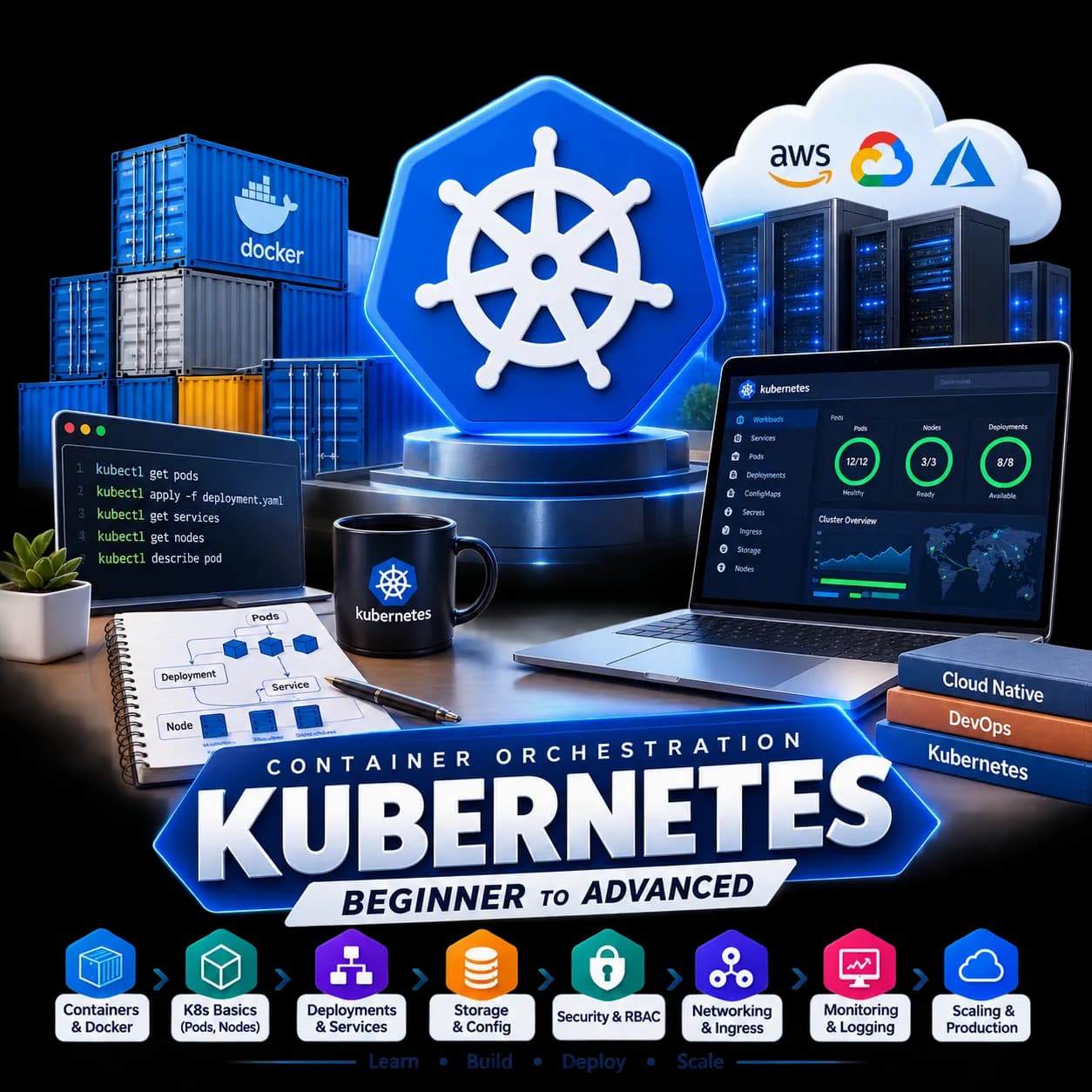
Kubernetes Beginner to Production Grade: A Hands-On DevOps Guide Beginner25 min

100 Days of DSA with Java Beginner to advanced100 days · 85 lessons published

100 Days of AI Engineering Beginner to advanced100 days · 57 lessons published


Articles to help you learn, grow, and get hired.
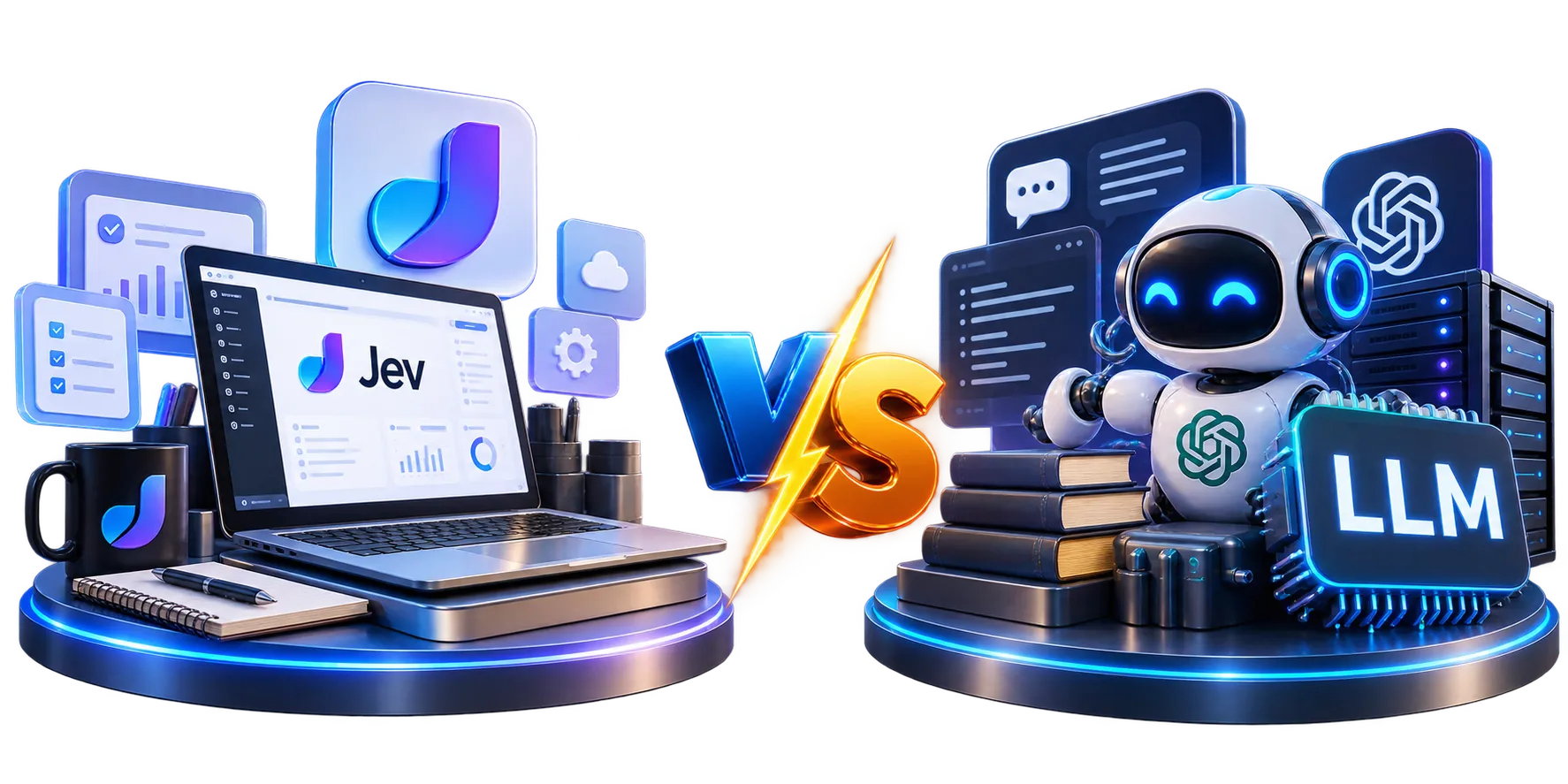
What is JEV and How Is It Different from LLMs? 5 min3 Oct 2026

Waterfall to Agentic SDLC: The Evolution of Software Engineering 5 min6 Sept 2026

Prompt Engineering to Harness Engineering: AI Development Evolution 5 min6 Sept 2026
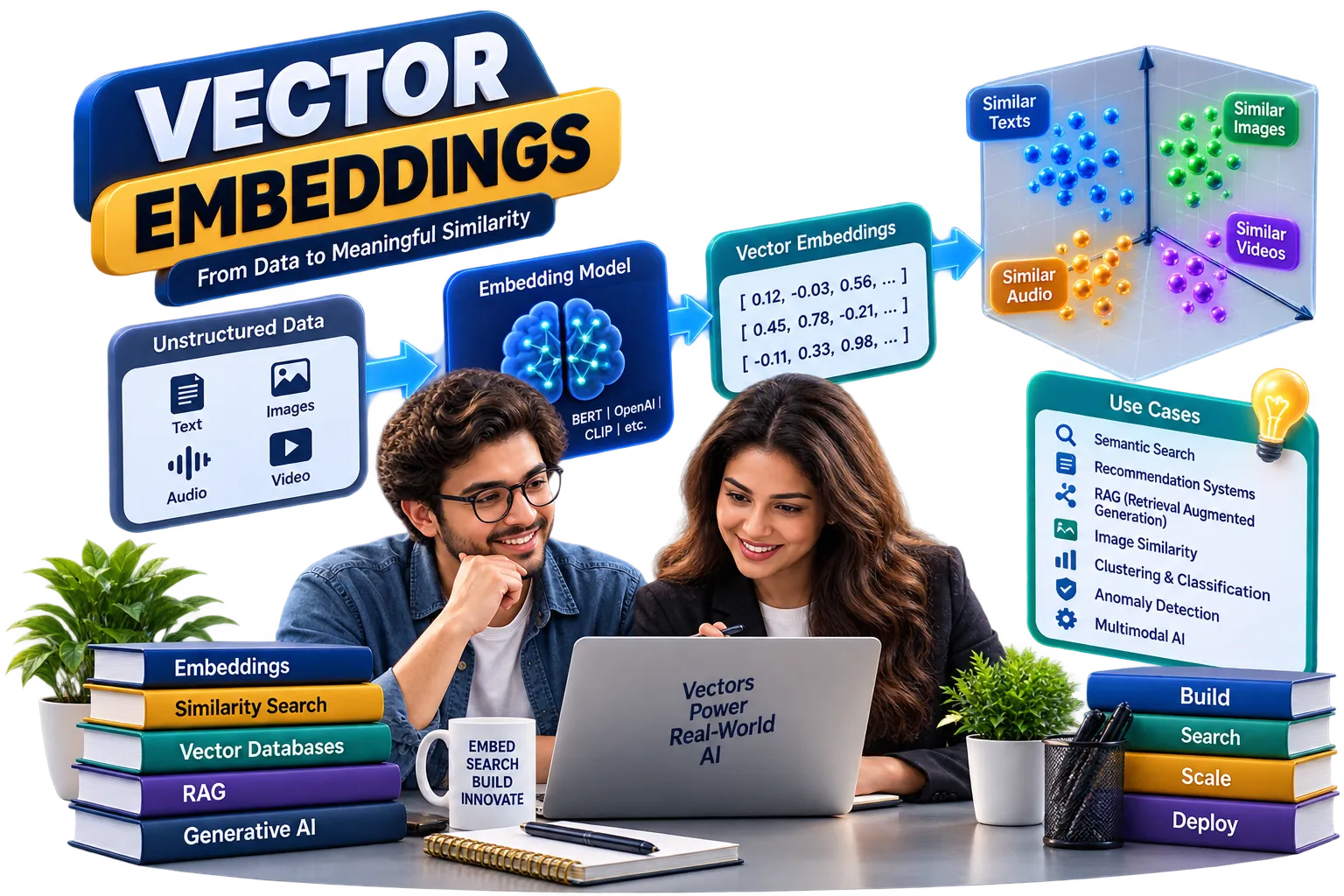
Vector Embedding Explained: The Math Behind Modern AI 5 min4 Sept 2026

JSON vs TOON: The Problem and the Fix for LLM Data Transfer 5 min18 Aug 2026
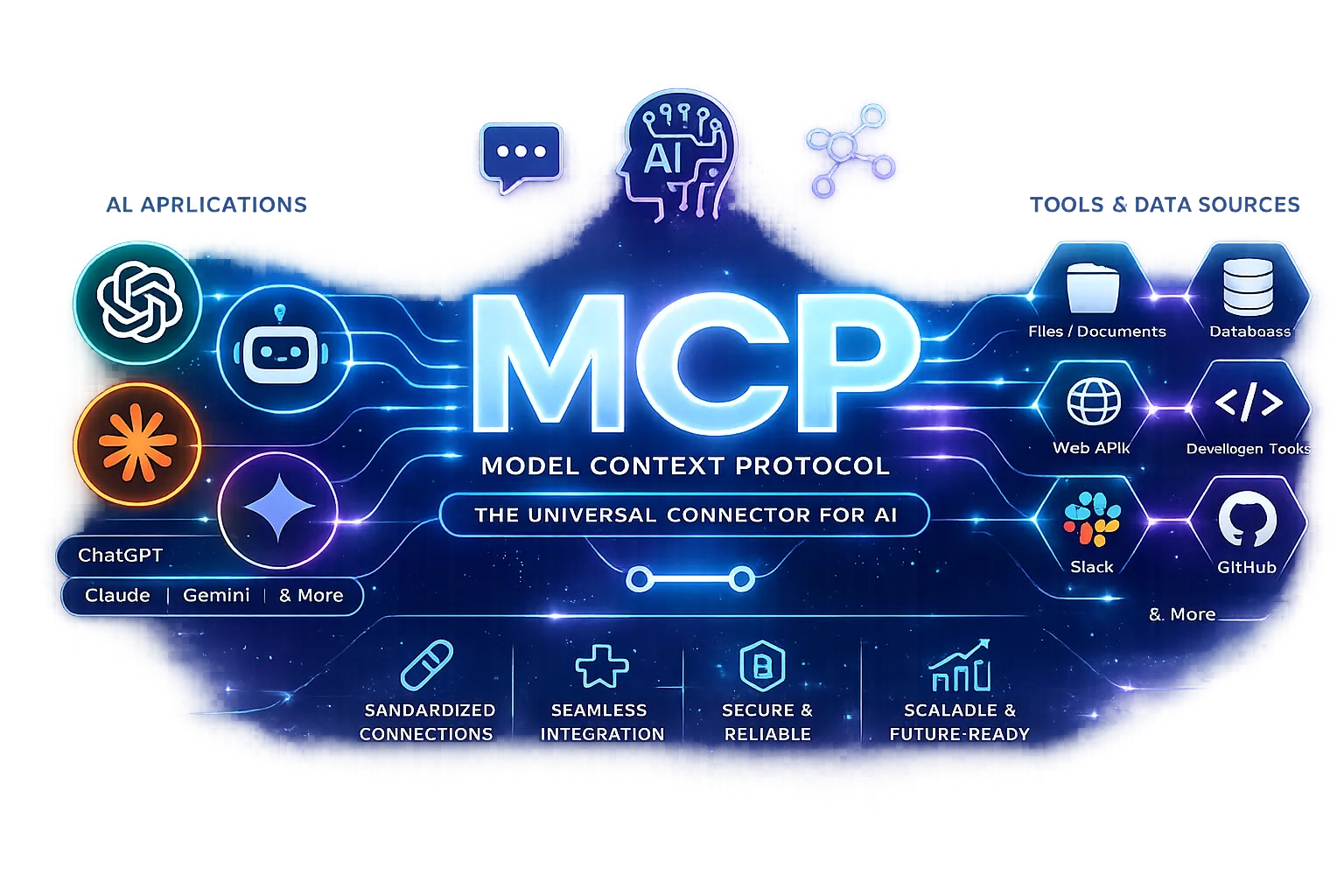
Model Context Protocol and the N*M Integration Problem 5 min16 Aug 2026
TrendingDiscover JEV, how it differs fundamentally from Large Language Models, and when to use each for enterprise architectures.

Explore how software development evolved from rigid Waterfall and Agile cycles into the era of Agentic SDLC, where autonomous AI agents write, test, and deploy code.
TrendingDiscover why AI development is moving beyond simple prompt writing toward robust software wrappers. Learn how to build production-grade LLM application pipelines.

Demystify vector embeddings, how they represent real-world data as high-dimensional coordinates, and how LLMs use them to understand semantic meaning.

Discover why JSON costs you money in LLM APIs and how TOON (Token Object-Oriented Notation) fixes token bloat for efficient AI automation.
TrendingUnderstand the Model Context Protocol (MCP), how it solves the complex N*M integration problem between LLMs and data sources, and why it simplifies AI tool development.