

Swati Tyagi
Senior Full Stack and Mobile App Developer
A beginner-friendly, project-based AI bootcamp — machine learning, deep learning, NLP and generative AI, from Python fundamentals to a deployed capstone.

When you sign up for our Artificial Intelligence Bootcamp, you are committing to more than just watching tutorials. You are learning how to build, test, and ship production-ready machine learning systems from scratch. Most learners start by reaching for a black-box model without knowing what happens under the hood, but this curriculum changes that by grounding every concept in runnable Python code.
You begin your journey with Python 3.12, setting up virtual environments, writing object-oriented modules, and consuming JSON APIs. We make sure your development environment is rock solid before touching any data. From there, you tackle the linear algebra, calculus, and probability that actually matter for model optimisation. You will never have to learn abstract proofs that you cannot apply; instead, you write gradient descent loops by hand so you can see how weights adjust during training. If you want a broader foundational view before starting, you can check out our Artificial Intelligence overview page for more details on the mathematical and logical foundations.
Practical engineering requires building systems that survive real-world constraints. Throughout this journey, your portfolio will grow through concrete deliverables:
If your ambitions extend toward data-heavy backend pipelines or full-stack integrations, many of our learners also pair this curriculum with our python full stack bootcamp with dsa to handle web interfaces, or explore our Data Analytics Bootcamp for upstream business intelligence. Scaling those deployments reliably across cloud clusters means pairing these skills with a DevOps & Automation Bootcamp to gain complete command over CI/CD pipelines and infrastructure.
This program is built for career-switchers, backend developers, fresh graduates, and analytical professionals who want a serious, hands-on path into machine learning. You do not need a computer science degree or a background in advanced mathematics. You do need patience, persistence, and the willingness to debug code when your loss curve refuses to converge. For learners who prefer a JVM-centric enterprise ecosystem rather than Python, our java full stack bootcamp with dsa provides an alternative path into backend systems.
Cohorts meet in live online sessions led by working AI engineers who build these systems during their day jobs. We avoid static, pre-recorded lectures from years ago. Instead, your mentor reviews your code live, breaks down architectural failure modes, and guides you through pull requests. Sessions mix live coding, architectural whiteboarding, and small-group debugging. If you miss a live session or want to re-watch a complex explanation on the Transformer attention mechanism, you keep lifetime access to all session recordings.
Companies are moving past simple prompt experiments. Engineering teams now require practitioners who know how to evaluate models, manage embedding stores, secure API endpoints, and monitor for data drift in production. Interview loops for AI Engineer and Machine Learning Engineer roles test your coding fluency in Python, your understanding of model evaluation metrics, and your ability to design scalable inference pipelines. By finishing this Artificial Intelligence Bootcamp, you build the exact portfolio of deployed projects required to pass those technical rounds with confidence.
A structured curriculum with real tools and outcomes built for the workplace.
You can write modular, object-oriented Python scripts using modern syntax, manage isolated environments, and build structured CLI utilities for automated API ingestion.
Hands-on project: Build an asynchronous CLI ingestion utility using Python 3.12, httpx, and Pydantic v2. Acceptance criteria: fetch paginated items from a remote REST API with exponential backoff on HTTP 429/503 errors; parse and validate raw JSON into typed Pydantic models; write structured JSONL records to disk using pathlib while rotating log files when size exceeds 5MB.
You can calculate matrix operations, partial derivatives, loss functions, and probability distributions directly in vectorized NumPy code.
Hands-on project: Implement a multivariate linear regression solver and a binary logistic regression classifier from scratch in NumPy without high-level ML libraries. Acceptance criteria: compute weight updates using explicit batch and stochastic gradient descent; vectorize loss calculation for Mean Squared Error and Binary Cross-Entropy; confirm convergence against an analytic normal equation solution within a tolerance of 1e-4.
You can clean, reshape, aggregate, and visualize high-dimensional tabular datasets using Pandas 2.2 and Seaborn to prepare clean model training inputs.
Hands-on project: Build an end-to-end data preparation and Exploratory Data Analysis (EDA) pipeline for a customer transaction dataset of 500,000 records. Acceptance criteria: handle missing values using domain-specific imputation strategies without data leakage; detect and cap statistical outliers using IQR thresholds; generate an automated Seaborn correlation and distribution report exported as HTML.
You can engineer predictive pipelines, prevent data leakage, train ensemble models, and optimize hyperparameters using scikit-learn.
Hands-on project: Build an enterprise credit risk assessment classifier on an imbalanced dataset of 250,000 rows. Acceptance criteria: structure transformations inside scikit-learn Pipeline and ColumnTransformer; handle class imbalance using SMOTE and class weights; run stratified K-Fold cross-validation; optimize XGBoost hyperparameters via Optuna; output ROC-AUC, Precision-Recall AUC, and confusion matrix reports.
You can construct, train, optimize, and debug custom feedforward neural network architectures in PyTorch with automated gradient tracking and GPU execution.
Hands-on project: Build an end-to-end tabular deep learning regression system in PyTorch 2.3 for predicting equipment remaining useful life. Acceptance criteria: structure data using custom Dataset and DataLoader classes with multi-process workers; implement an MLP with residual skips, batch normalization, and dropout; train using AdamW with cosine annealing learning rate scheduler; save and reload checkpoints preserving model weights and optimizer state.
You can engineer convolutional neural networks, perform image augmentation, fine-tune pre-trained backbones via transfer learning, and deploy visual inspection inference pipelines.
Hands-on project: Fine-tune a ResNet50 model using PyTorch torchvision to classify industrial component defects across 10 defect classes. Acceptance criteria: configure dynamic data augmentations using Albumentations; freeze pre-trained backbone weights and train an updated classification head; fine-tune top convolutional blocks with a discriminative learning rate; achieve over 92% Macro F1-score on a held-out test split.
You can tokenize text, compute embeddings, build Transformer models, and fine-tune modern LLM encoders using Hugging Face Transformers.
Hands-on project: Fine-tune a ModernBERT or RoBERTa encoder for enterprise multi-class customer intent classification. Acceptance criteria: preprocess text using Hugging Face AutoTokenizer with dynamic padding; write a custom Hugging Face Trainer script with compute_metrics tracking Macro F1; run gradient accumulation and mixed-precision (fp16) training; export the fine-tuned model and tokenizer artifacts to disk.
You can build Retrieval-Augmented Generation (RAG) applications, orchestrate multi-step chains, manage vector databases, and implement prompt security controls.
Hands-on project: Build an enterprise document question-answering RAG pipeline using LangChain, ChromaDB, and OpenAI models. Acceptance criteria: chunk PDF documentation using recursive character splitting with overlap; ingest into ChromaDB with metadata filtering; perform hybrid retrieval (keyword and dense vector similarity); inject relevant chunks into prompt templates with strict hallucination-prevention instructions; enforce JSON output validation using Pydantic.
You can wrap AI models and LLM chains into production-grade FastAPI microservices and deploy responsive Streamlit frontends.
Hands-on project: Build an asynchronous full-stack AI service with a FastAPI backend and a Streamlit chat frontend. Acceptance criteria: expose a /chat/stream SSE endpoint streaming LLM tokens using AsyncIterator; authenticate requests using Bearer API keys; store conversational memory in Redis; implement Streamlit frontend with st.chat_input and st.chat_message preserving conversation history.
You can containerize AI applications with Docker, orchestrate deployments, and monitor models for latency and drift in production.
Hands-on project: Package an AI inference service into a production Docker image and set up an automated CI/CD pipeline. Acceptance criteria: write a multi-stage Dockerfile keeping final image size under 350MB; enforce a non-root user and include a health check; configure GitHub Actions workflow running pytest and docker build; implement Prometheus latency metrics and an /health endpoint.
You can translate ambiguous business challenges into AI architectures, establish measurable ROI baselines, and assess compliance and algorithmic fairness.
Hands-on project: Author a comprehensive System Architecture and Business Case Document for an AI initiative in a regulated domain. Acceptance criteria: calculate expected cloud inference compute and token costs across 100k daily queries; define offline benchmark and online A/B testing metrics; outline demographic parity checks and regulatory compliance mitigations under EU AI Act and India DPDP regulations.
You can rigorously evaluate generative models against task benchmarks, red-team systems for security vulnerabilities, and document operational limits in standardized model cards.
Hands-on project: Build an automated evaluation and adversarial testing suite for an enterprise LLM assistant. Acceptance criteria: run automated benchmark evaluations across a golden test set using RAGAS; execute 20+ red-team attacks including direct prompt injections, jailbreaks, and indirect injection payloads; publish a Model Card documenting observed failure modes, residual risks, and operational boundaries.
You can architect, build, evaluate, containerize, and deploy a production-grade multimodal or RAG AI system, while mastering technical interview rounds.
Hands-on project: Build, deploy, and defend an enterprise-grade AI Capstone system. Acceptance criteria: train or fine-tune a model and integrate it into a production backend with FastAPI; incorporate a vector search RAG pipeline or deep learning inference component; package the complete system with Docker and deploy to cloud infrastructure with live URLs; publish a polished GitHub repository with full architecture diagrams, unit tests, and performance benchmarks; clear a mock technical interview loop.
Every instructor here ships production code for a living and teaches the same week they deploy.
5 learners sharing their experience
The Full-Stack Java developer program at Squarebrackets completely transformed my career. Learning Spring Boot and microservices architecture alongside React and Next.js gave me the exact modern stack companies are looking for. Building real-time projects using Apache Kafka and RabbitMQ for message queuing gave me the practical confidence I needed to ace my system design rounds.
Ankit transitioned from a legacy support engineer to a high-paying product development role after completing his 6-month intensive Java and JavaScript full-stack training at our Noida campus.
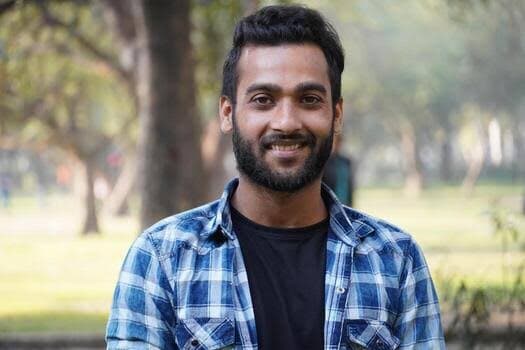
Squarebrackets took me from not knowing what a gradient was to building and deploying CNNs and Transformers. The maths-first approach made everything click, and the mentors pushed me through every hard concept.
Completed the Deep Learning Course at Squarebrackets and landed a deep learning role within two months.

Squarebrackets gave me the complete AI picture — from search algorithms and Bayesian reasoning to building LLM agents. The maths-first approach meant nothing was a black box, and the mentors pushed me through every project.
Completed the Artificial Intelligence Course at Squarebrackets and moved into an AI engineering role within two months.

The Java Full-Stack and DSA course at Squarebrackets completely changed my career trajectory. The focus on raw problem-solving with DSA alongside hands-on Spring Boot and React projects gave me the practical skills I needed. I went from struggling with basic coding rounds to cracking my technical interview with absolute confidence.
Aniket joined Squarebrackets as a college senior looking to transition from theoretical academic projects to production-ready software development. After completing our rigorous training program, he secured a placement as an Associate Software Engineer.
The live cohort broke down complex concepts like Spring Boot transaction management and React state handling in a way that made immediate sense for production work. Having worked through real backend architectures during class, my daily code reviews at work became much smoother.
Completed the Java Full Stack live training while balancing a full-time role, upgrading engineering skills through rigorous hands-on sessions.
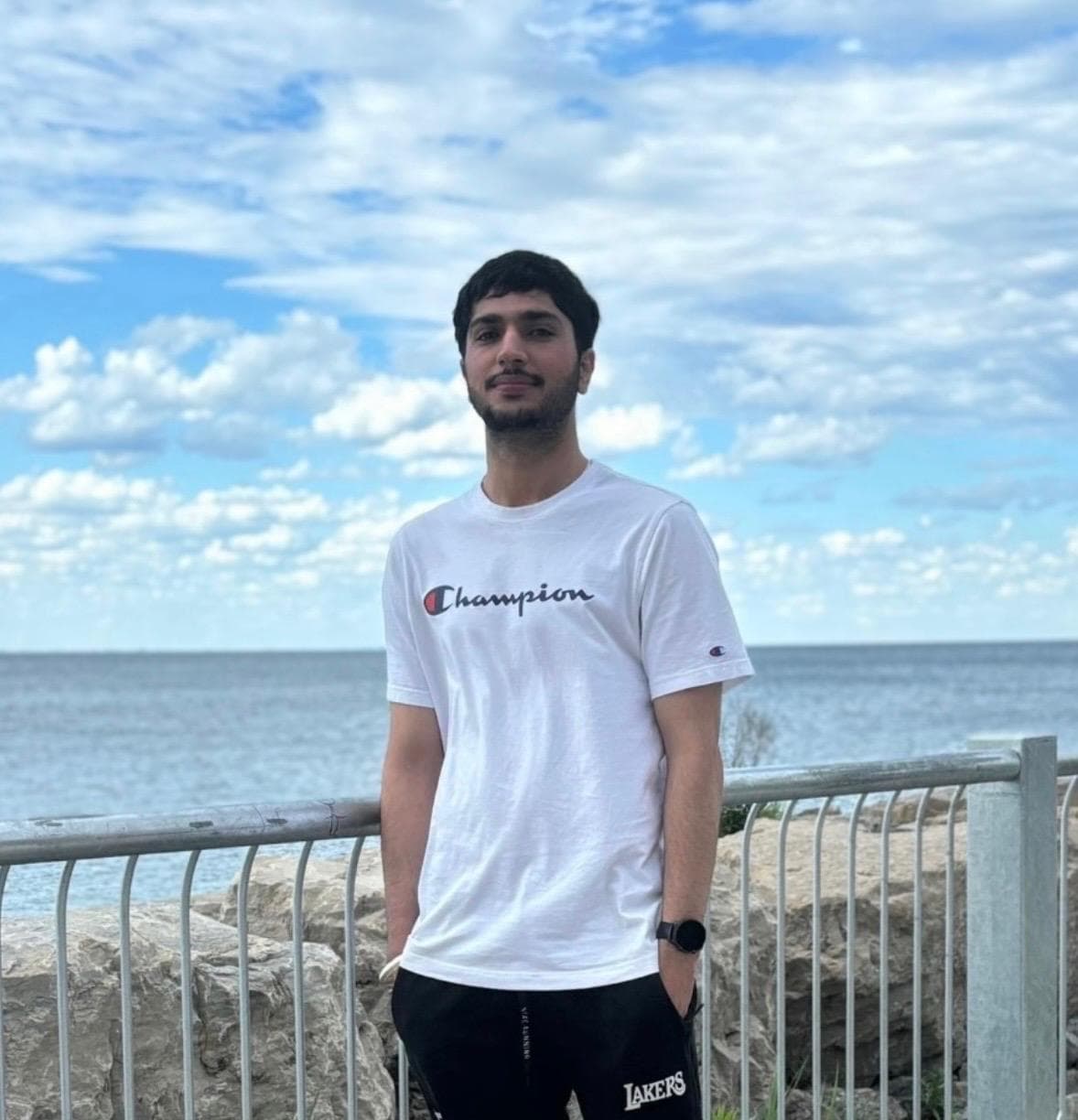
“The Full-Stack Java developer program at Squarebrackets completely transformed my career. Learning Spring Boot and microservices architecture alongside React and Next.js gave me the exact modern stack companies are looking for. Building real-time projects using Apache Kafka and RabbitMQ for message queuing gave me the practical confidence I needed to ace my system design rounds.”
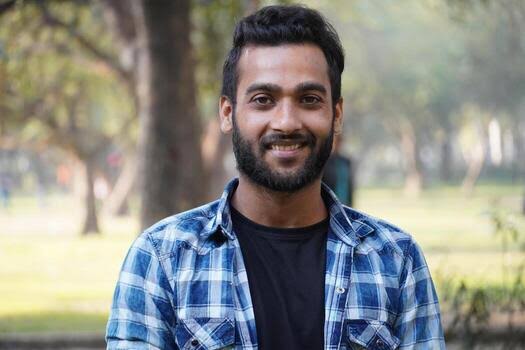
Software Engineer, Student
“Squarebrackets took me from not knowing what a gradient was to building and deploying CNNs and Transformers. The maths-first approach made everything click, and the mentors pushed me through every hard concept.”

Student
“Squarebrackets gave me the complete AI picture — from search algorithms and Bayesian reasoning to building LLM agents. The maths-first approach meant nothing was a black box, and the mentors pushed me through every project.”

Student
“The Java Full-Stack and DSA course at Squarebrackets completely changed my career trajectory. The focus on raw problem-solving with DSA alongside hands-on Spring Boot and React projects gave me the practical skills I needed. I went from struggling with basic coding rounds to cracking my technical interview with absolute confidence.”
Associate Software Engineer, Capgemini
“The live cohort broke down complex concepts like Spring Boot transaction management and React state handling in a way that made immediate sense for production work. Having worked through real backend architectures during class, my daily code reviews at work became much smoother.”
Student




Browse the common questions, or reach out and our team will help you directly.
6 courses in this collection
 DevOps & Automation Bootcamp Beginner5 Months (20 Weeks)
 Java Full Stack Bootcamp with DSA & System Design Beginner6 Months (24 Weeks)
 Machine Learning Bootcamp Beginner4 Months (16 Weeks)
 Cybersecurity (SOC OPS, Cloud Security) Beginner4 Months (16 Weeks)
 Forward Deployed Engineering (FDE) Masterclass Beginner20 weeks
 MERN Bootcamp with Microservices DSA & System Design Beginner6 Months (24 Weeks)
 Trending
 Trending
 Best seller
 Best seller
 Best seller
 Best seller
Hands-on programming tracks with runnable code, from fundamentals to job-ready projects.
 Docker Tutorial — Learn Docker from Scratch | Squarebrackets Intermediate15 Hours
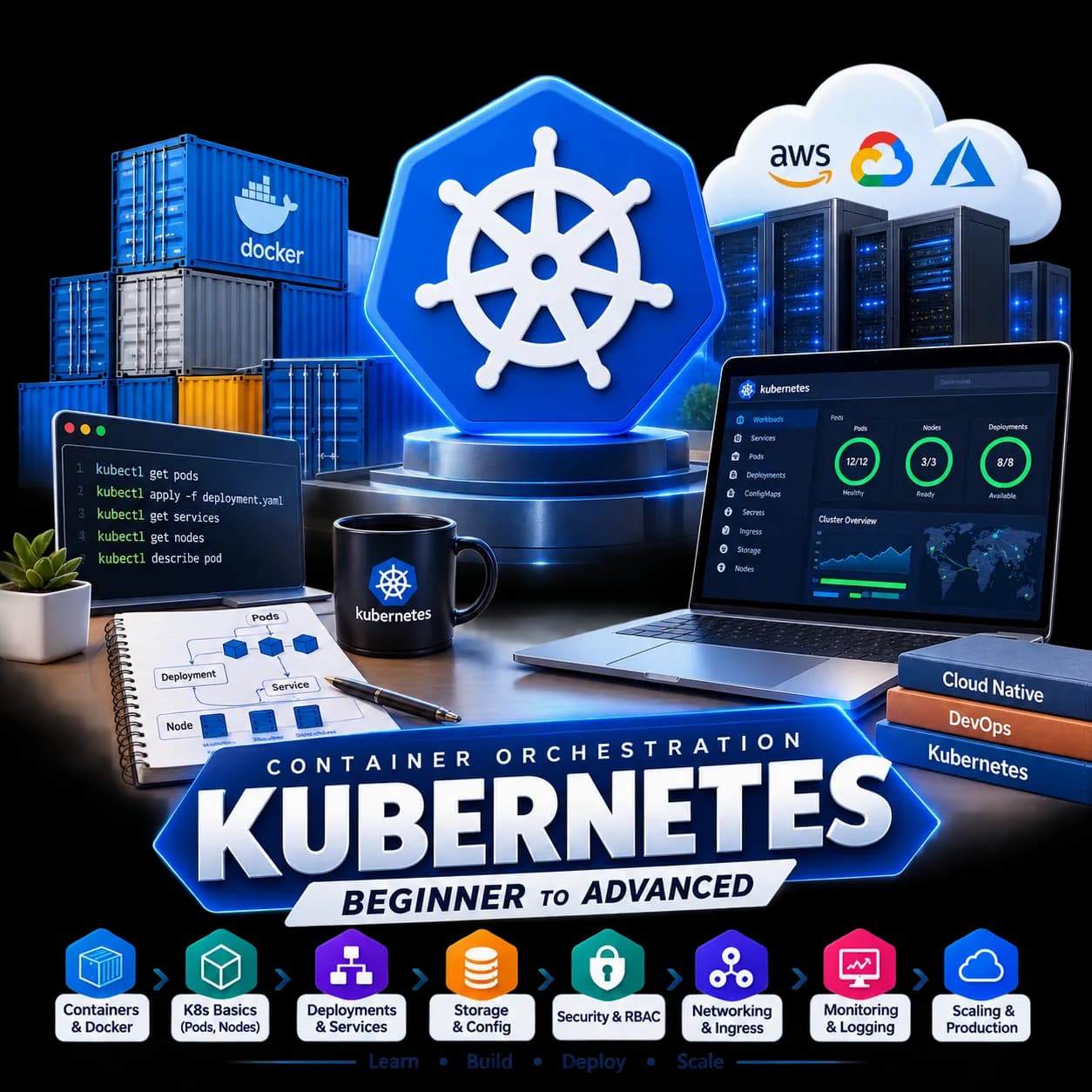 Kubernetes Beginner to Production Grade: A Hands-On DevOps Guide Beginner25 min
 100 Days of DSA with Java Beginner to advanced100 days · 85 lessons published
 100 Days of AI Engineering Beginner to advanced100 days · 57 lessons published
Articles to help you learn, grow, and get hired.
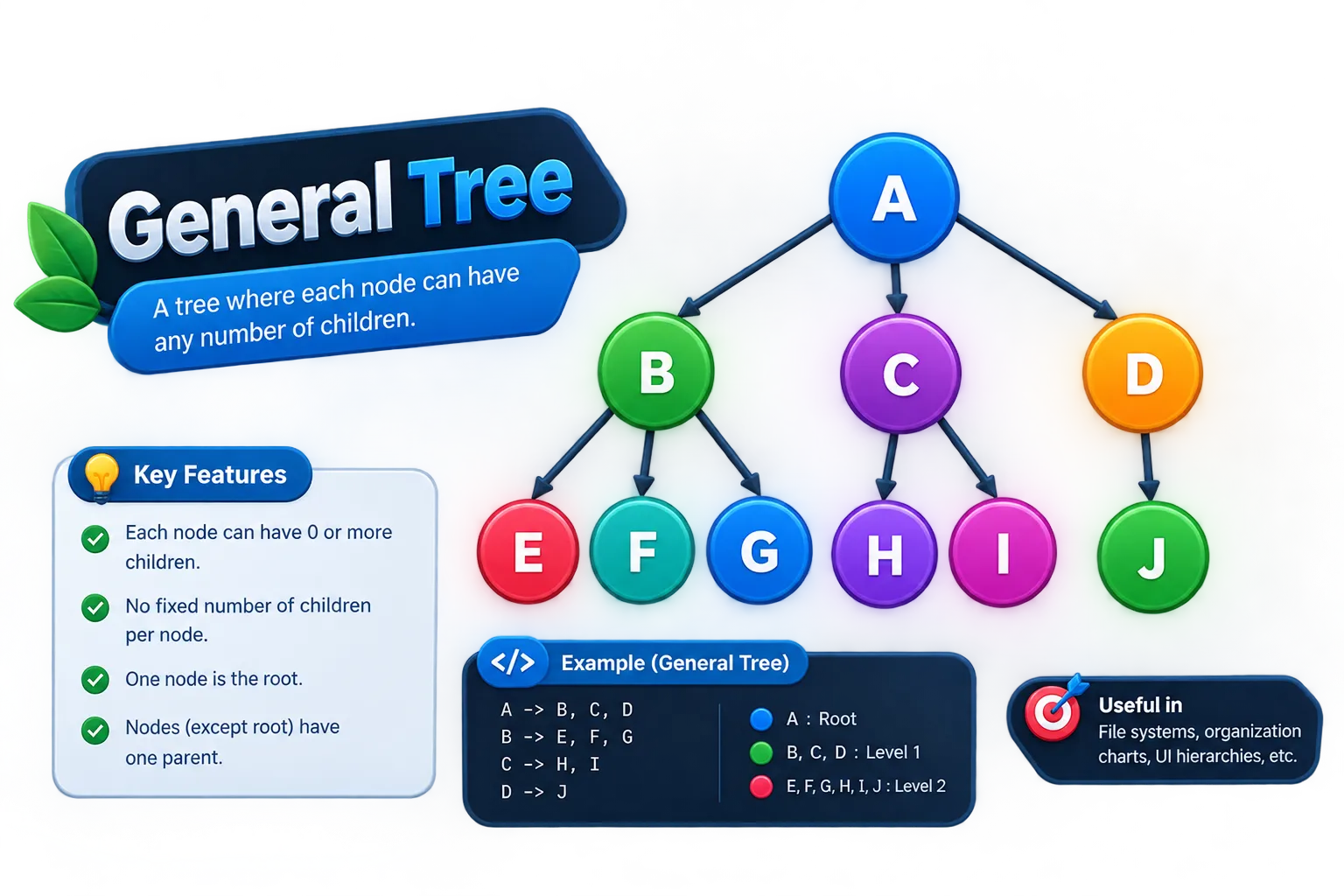 Generic Tree Interview Questions: Roadmap by Core Coding Techniques 5 min6 Sept 2026
 DSA Roadmap: Master Algorithms Roadmap 5 min5 Sept 2026
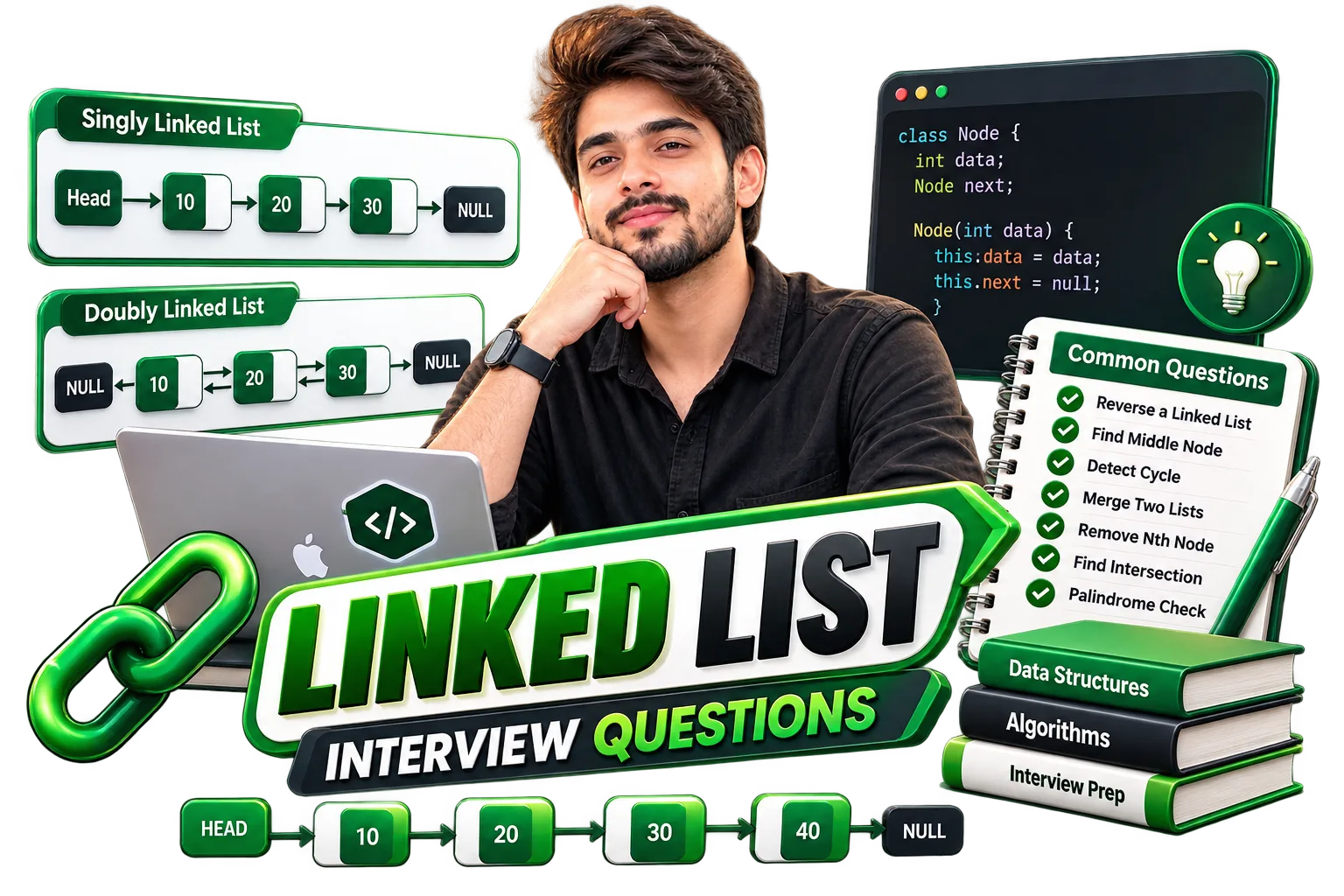 Linked List Placement Preparation Roadmap: 15 Patterns with LeetCode 5 min1 Sept 2026
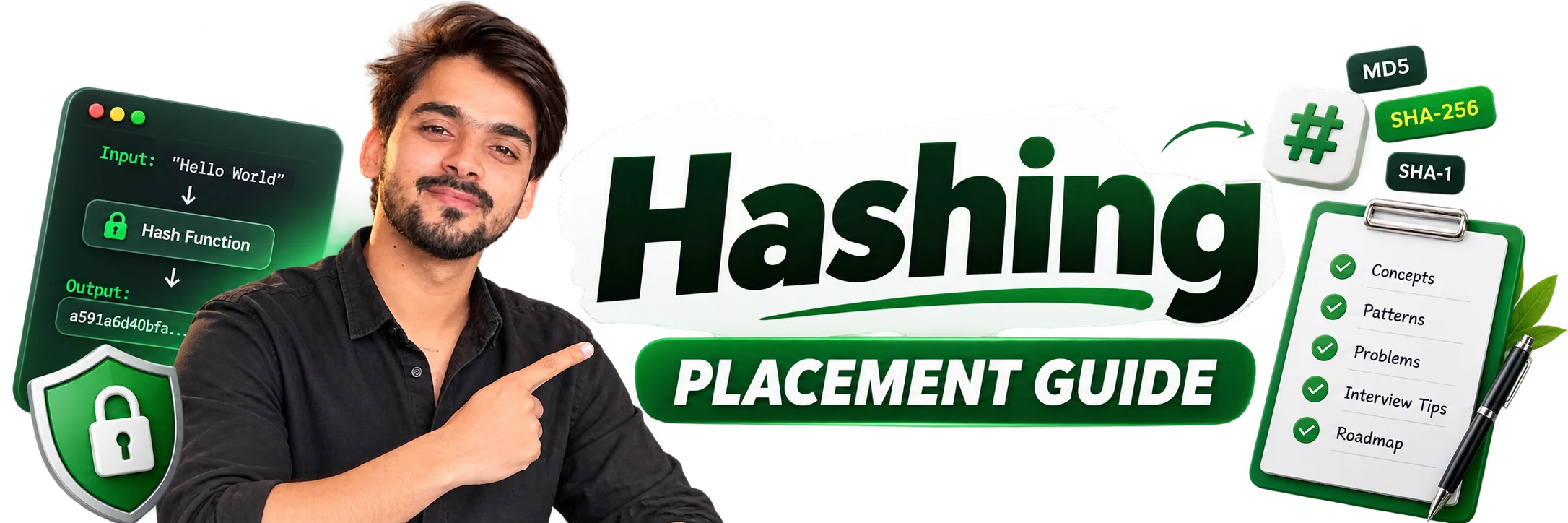 Hashing in DSA: What Tech Interviews Actually Ask 5 min30 Aug 2026
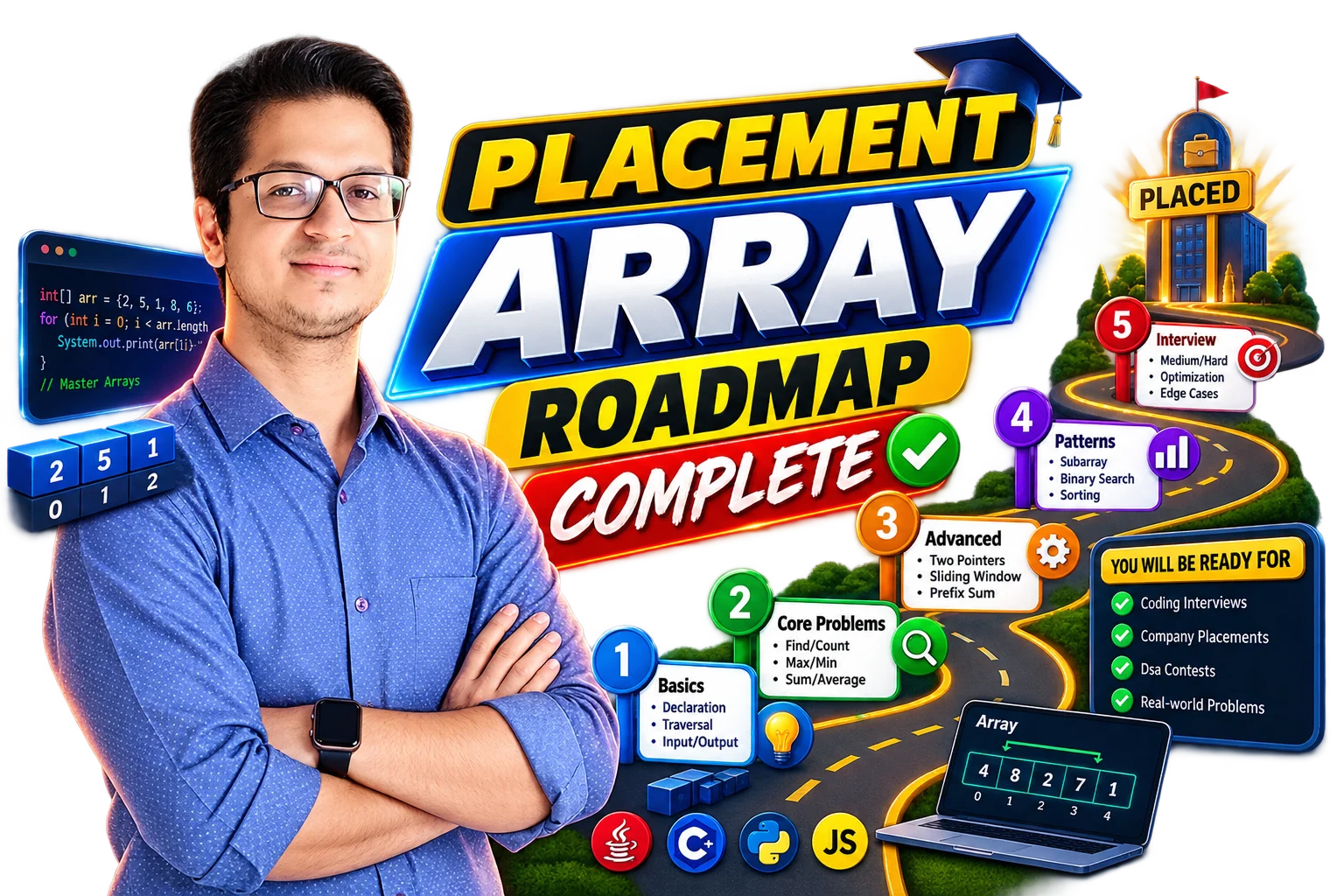 Placement Array Roadmap: The Ultimate Coding Interview Guide 5 min30 Aug 2026 Trending
Master N-ary and generic tree interview questions. This technical roadmap breaks down traversal, serialization, and recursion techniques with real-world coding patterns.
The ultimate master algorithm roadmap for our DSA roadmap. Learn the core patterns, time complexities, and coding techniques you need to crack FAANG interviews.
TrendingMaster linked list interview questions with our 15-step placement preparation roadmap. Features pattern breakdowns, practical code, and direct LeetCode links.
TrendingMaster hashing, HashMaps, and Map data structures for tech interviews. Learn the exact patterns, code implementations, and LeetCode problems top companies ask.
Master the Placement Array Roadmap with this complete guide featuring curated LeetCode problems, categorized by difficulty, to help you crack technical interviews.