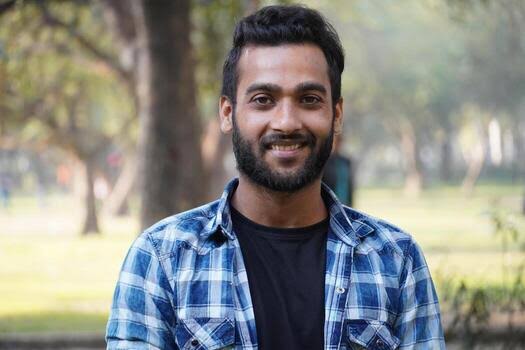


Himanshu Mudgal
Lead DevOps Engineer
Production DevOps from Linux internals to a running platform: Docker, Kubernetes, Terraform, Ansible, CI/CD, AWS, observability, SLOs and cost engineering. Beginner to senior depth, fully online.

Most DevOps courses are a tour of tools. You finish able to run the commands and unable to answer why the cluster fell over. This one is built the other way round: Linux and networking first, because every hard infrastructure problem turns out to be one of those two wearing a costume, and reliability, security and cost at the end, because those are what separate someone who can deploy from someone who can be trusted with production.
It assumes basic familiarity with a programming language and a command line, and nothing else. Linux, networking, containers, Kubernetes and cloud are all built from foundations. By the end you are defining error budgets, removing long-lived credentials from pipelines, diagnosing a cluster incident from telemetry and defending a cost model — the depth expected of an engineer with three or four years in the field.
Four modules exist because their absence is what keeps engineers at mid-level. Observability, because guessing is not debugging. Pipeline security, because a static cloud key in a CI variable is still the most common breach path there is. Reliability engineering, because reliable has to be a number before it can be a goal. Cost, because an architecture nobody can afford gets rewritten by someone else.
Fully online, in live IST cohorts, taught by engineers who run these systems rather than present about them. Every session is recorded to the LMS the same day and stays available. We teach learners across Noida, Greater Noida, Ghaziabad, Gurugram, Delhi NCR and the rest of India — fully online, so there is no commute and the people teaching are practitioners rather than whoever lives near a building.
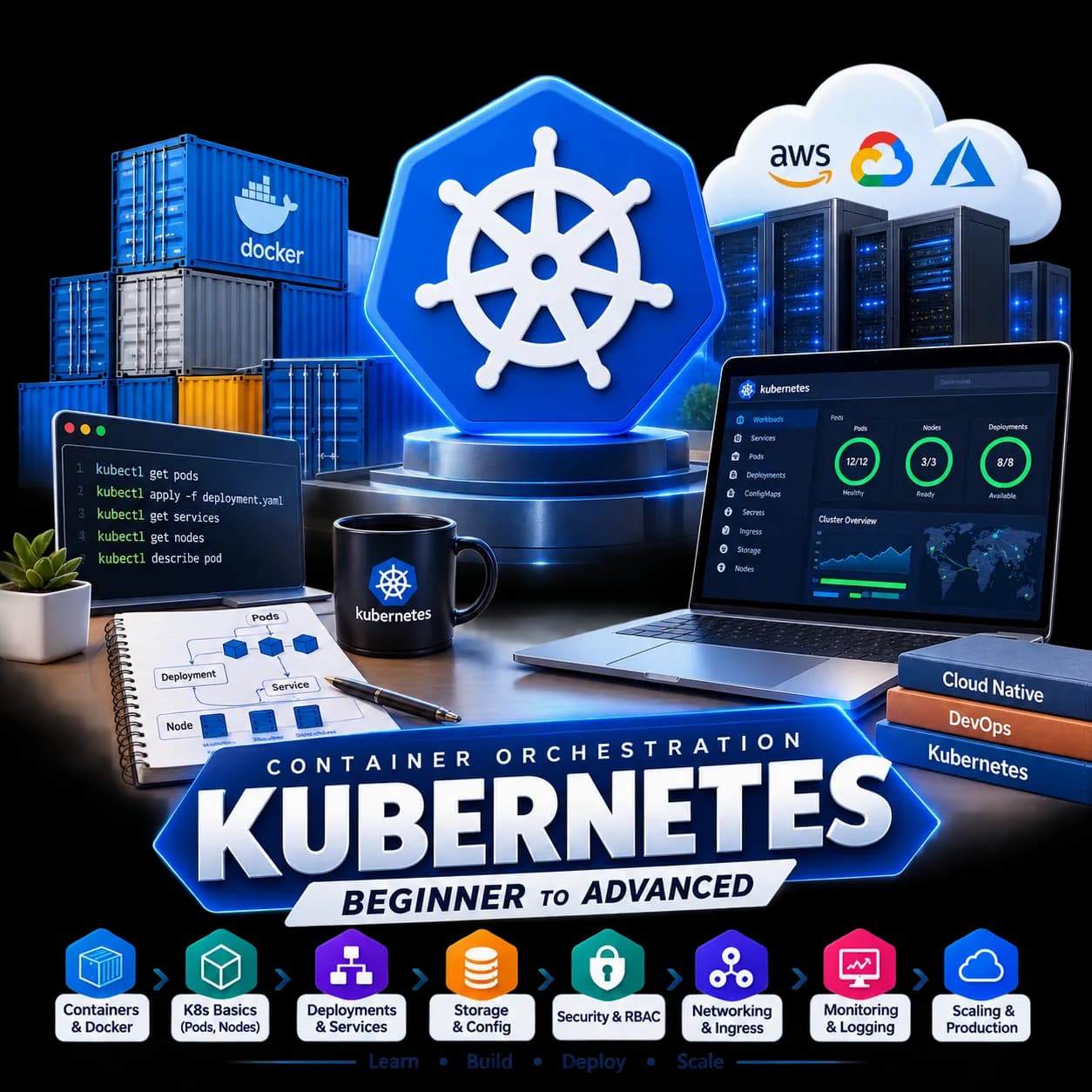
If you want containers specifically rather than the whole platform, see Docker: From Zero to Production or Kubernetes: Beginner to Advanced. For the cloud architecture side in depth, AWS Cloud is the companion course, and version control at team scale is covered in Git and GitHub.
A structured curriculum with real tools and outcomes built for the workplace.
You can diagnose an unfamiliar Linux host under load and explain what every number in top actually means.
Hands-on project: Diagnose five broken hosts — disk full, inode exhaustion, runaway process, failed unit, DNS misconfiguration — writing an investigation note for each.
You can trace a connection from a container to an external API and name every hop and every place it can fail.
Hands-on project: Diagnose a broken connection crossing NAT, a proxy, a firewall and DNS, and produce a change request the network team will accept.
You can run a branching strategy a team of forty can work in without constant merge pain.
Hands-on project: Define and document a branching and release strategy for a team of forty, including protection rules, review policy and a hotfix path.
You can build an image that is small, non-root and reproducible, and debug one that will not start.
Hands-on project: Containerise three services with multi-stage, non-root images under 100 MB each, passing a vulnerability scan with no high findings.
You can deploy and expose a stateless application on Kubernetes and explain every object you created.
Hands-on project: Deploy a three-service application with configmaps, secrets, probes, resource requests and an ingress, from manifests you wrote by hand.
You can operate a cluster other people depend on: upgrades, stateful workloads, autoscaling, RBAC and incident diagnosis.
Hands-on project: Run a production-shaped cluster through a node upgrade, a stateful database failover and an injected incident without data loss or downtime.
You can build cloud infrastructure that is reproducible, reviewable and safe to change on a Friday.
Hands-on project: Provision a multi-environment AWS estate with remote state, locking, reusable modules, drift detection and a tested destroy path.
You can bring a fleet of servers to a known state repeatedly, and prove the run is idempotent.
Hands-on project: Write a role set that configures a fleet from bare OS to running service, proving a second run changes nothing.
You can build a pipeline fast and trustworthy enough that engineers stop routing around it.
Hands-on project: Build a pipeline from commit to production with security gates, environment promotion, artefact signing and an automated rollback trigger.
You can design an AWS environment with deliberate network, identity and cost decisions rather than console defaults.
Hands-on project: Design and build a multi-account AWS landing zone with VPC segmentation, least-privilege IAM, private connectivity and a cost model.
You can answer why a system is slow from telemetry, and build dashboards an on-call engineer can act on at 3am.
Hands-on project: Instrument a distributed application with the three signals and diagnose an injected latency regression using telemetry alone.
You can keep credentials out of your pipelines and code, and produce the evidence an auditor asks for.
Hands-on project: Remove every long-lived credential from a pipeline, replace them with short-lived federated access, and produce an audit evidence pack.
You can define what reliable means for a service in numbers, and run the incident when it is not.
Hands-on project: Define SLOs and error budgets for two services, instrument them, and run a simulated incident ending in a written post-mortem.
You can reduce cloud spend without reducing reliability, and run a platform other teams actually want to use.
Hands-on project: Produce a costed reduction plan for a cloud estate, implement the top three measures, and report the measured saving.
You can build and operate a complete production platform, then prove it survives failure, scale and an audit.
Hands-on project: Build a full platform: multi-environment AWS infrastructure in Terraform, Ansible-configured hosts, a Kubernetes cluster with RBAC and autoscaling, containerised services, a CI/CD pipeline with security gates and automated rollback, full observability with SLOs and alerting, secrets via OIDC federation, a cost model and an audit evidence pack — then survive an injected incident and defend it all in review.
Every instructor here ships production code for a living and teaches the same week they deploy.
5 learners sharing their experience

The Full-Stack Java developer program at Squarebrackets completely transformed my career. Learning Spring Boot and microservices architecture alongside React and Next.js gave me the exact modern stack companies are looking for. Building real-time projects using Apache Kafka and RabbitMQ for message queuing gave me the practical confidence I needed to ace my system design rounds.
Ankit transitioned from a legacy support engineer to a high-paying product development role after completing his 6-month intensive Java and JavaScript full-stack training at our Noida campus.

Squarebrackets took me from not knowing what a gradient was to building and deploying CNNs and Transformers. The maths-first approach made everything click, and the mentors pushed me through every hard concept.
Completed the Deep Learning Course at Squarebrackets and landed a deep learning role within two months.

Squarebrackets gave me the complete AI picture — from search algorithms and Bayesian reasoning to building LLM agents. The maths-first approach meant nothing was a black box, and the mentors pushed me through every project.
Completed the Artificial Intelligence Course at Squarebrackets and moved into an AI engineering role within two months.

The Java Full-Stack and DSA course at Squarebrackets completely changed my career trajectory. The focus on raw problem-solving with DSA alongside hands-on Spring Boot and React projects gave me the practical skills I needed. I went from struggling with basic coding rounds to cracking my technical interview with absolute confidence.
Aniket joined Squarebrackets as a college senior looking to transition from theoretical academic projects to production-ready software development. After completing our rigorous training program, he secured a placement as an Associate Software Engineer.
The live cohort broke down complex concepts like Spring Boot transaction management and React state handling in a way that made immediate sense for production work. Having worked through real backend architectures during class, my daily code reviews at work became much smoother.
Completed the Java Full Stack live training while balancing a full-time role, upgrading engineering skills through rigorous hands-on sessions.

“The Full-Stack Java developer program at Squarebrackets completely transformed my career. Learning Spring Boot and microservices architecture alongside React and Next.js gave me the exact modern stack companies are looking for. Building real-time projects using Apache Kafka and RabbitMQ for message queuing gave me the practical confidence I needed to ace my system design rounds.”

Software Engineer, Student
“Squarebrackets took me from not knowing what a gradient was to building and deploying CNNs and Transformers. The maths-first approach made everything click, and the mentors pushed me through every hard concept.”

Student
“Squarebrackets gave me the complete AI picture — from search algorithms and Bayesian reasoning to building LLM agents. The maths-first approach meant nothing was a black box, and the mentors pushed me through every project.”

Student
“The Java Full-Stack and DSA course at Squarebrackets completely changed my career trajectory. The focus on raw problem-solving with DSA alongside hands-on Spring Boot and React projects gave me the practical skills I needed. I went from struggling with basic coding rounds to cracking my technical interview with absolute confidence.”
Associate Software Engineer, Capgemini
“The live cohort broke down complex concepts like Spring Boot transaction management and React state handling in a way that made immediate sense for production work. Having worked through real backend architectures during class, my daily code reviews at work became much smoother.”

Student


Browse the common questions, or reach out and our team will help you directly.
10 courses in this collection
Microsoft Azure Solutions Architect & DevOps Expert (AZ-900, AZ-305, AZ-400) Beginner24 Weeks
Docker — From Zero to Production Intermediate12 Weeks (93 Hours)

Google Cloud (GCP) Advanced5 Months (20 Weeks)
Kubernetes: Beginner to Advanced Advanced8–12 weeks

Azure Cloud Advanced5 Months (20 Weeks)
Linux Intermediate3 Months (12 Weeks)

System Monitoring & Observability Advanced4 Months (16 Weeks)
Git & GitHub Advanced12 Weeks (90 Hours)

Jenkins Intermediate3 Months (12 Weeks)

AWS Cloud Advanced5 Months (20 Weeks)
Best seller
Best seller
New
Best seller
New
New
New
New
Trending
NewHands-on programming tracks with runnable code, from fundamentals to job-ready projects.
Kubernetes Beginner to Production Grade: A Hands-On DevOps Guide Beginner25 min
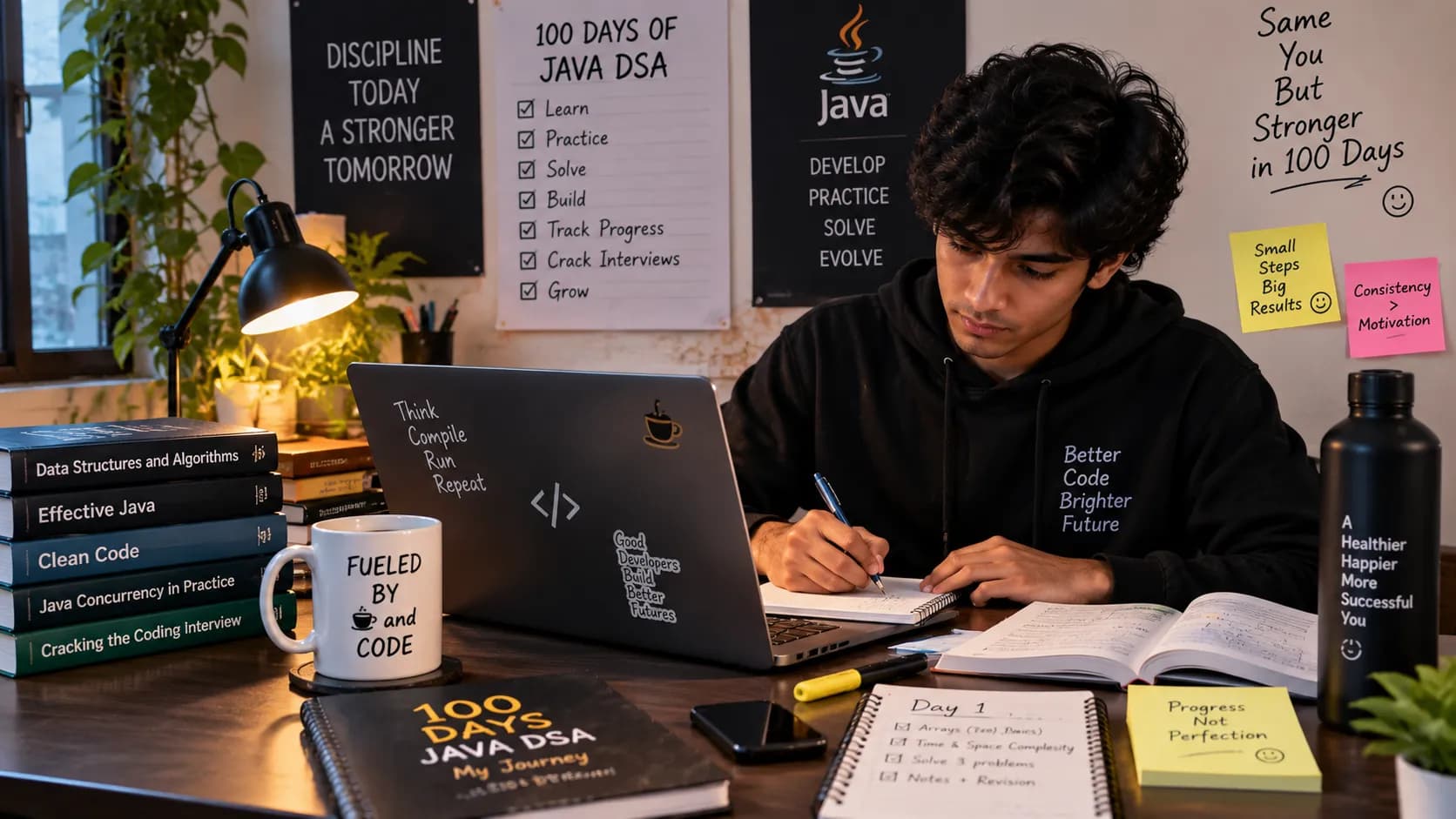
100 Days of DSA with Java Beginner to advanced100 days · 85 lessons published

100 Days of AI Engineering Beginner to advanced100 days · 57 lessons published


Articles to help you learn, grow, and get hired.
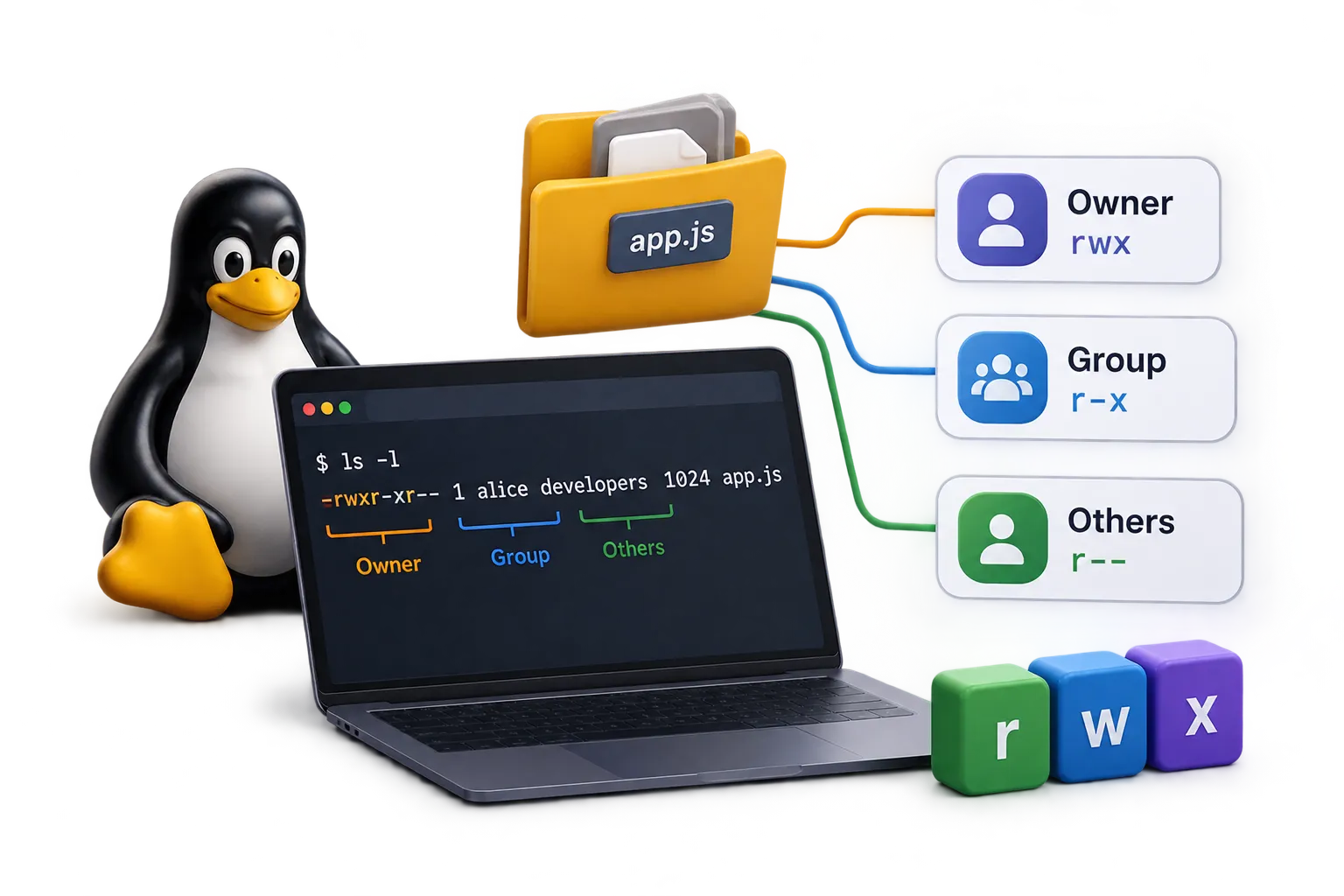
Linux Groups and File Permission: Complete Admin Guide 5 min11 Sept 2026

Terraform Architecture Explained: How It Works Under the Hood 5 min9 Sept 2026
Git vs GitLab: What's the Difference? (Simple Guide for Beginners) 5 min23 Jun 2026
Master Linux groups and File Permission with this practical guide covering user creation, group memberships, sudo privileges, and file permissions.

Demystify Terraform architecture. Learn how the Core, State files, Providers, and APIs interact to manage Infrastructure as Code safely.
TrendingA beginner-friendly guide to the real difference between Git and GitLab, explained in plain English with a simple real-life example anyone can understand.