Defend enterprise systems against live adversaries across hybrid-cloud infrastructures. This SOC and cloud security training drops you directly into the day-to-day workflow of a Tier-1 and Tier-2 security analyst. You will not memorise conceptual definitions or click through pre-rendered slide decks. Instead, you will build detection pipelines, parse noisy log streams, investigate malicious command execution, and isolate compromised instances across AWS and Microsoft Azure.
What you'll actually work on
- SIEM ingestion and parsing: Build custom extraction parsers and ingest raw logs from Linux syslog, Windows Event Forwarding, Suricata intrusion detection systems, and AWS CloudTrail into platforms like Splunk and Microsoft Sentinel.
- Correlation and detection engineering: Write precise Kusto Query Language (KQL) and Search Processing Language (SPL) correlation rules to flag pass-the-hash authentication attacks, kerberoasting, and automated cloud bucket enumeration while actively suppressing false positives.
- Live-fire incident triage: Investigate simulated multi-stage breaches, map attacker techniques to the MITRE ATT&CK framework, extract indicators of compromise (IOCs), and assemble auditable forensic timelines in TheHive.
- Automated cloud defense: Audit compromised Identity and Access Management (IAM) roles, enforce least-privilege boundaries using AWS service control policies and Azure Policies, and deploy automated containment playbooks using Lambda and Azure Functions.
- Network inspection under pressure: Dissect malicious packet capture (PCAP) files with Wireshark, identifying reverse shells, command and control (C2) beaconing frequencies, and unencrypted data exfiltration tunnels.
The realities of production security operations
Working in a modern Security Operations Center (SOC) means battling alert fatigue, noisy telemetry, and fragmented infrastructure. Most entry-level candidates get rejected during technical interviews because they cannot explain how to separate an admin running scheduled maintenance from an active lateral movement attack. We train you on real signal-to-noise ratios. You will learn to establish baseline behavioral profiles so your alerts trigger on true anomalies rather than standard enterprise cron jobs.
We examine the full lifecycle of an attack. When an alert fires at 2am, what is your first command? You will inspect running process trees with Sysmon Event ID 1, inspect parent-child relationships, confirm network sockets with Event ID 3, and correlate endpoint events with egress perimeter firewall drops. You learn how attackers hide malicious payloads within base64 PowerShell commands and how to reconstruct the invocation parameters without crashing production web services.
Before diving into high-level defense, ensure your foundation is solid by exploring the curriculum in our Computer Networks course to master packet routing and firewall rules. For operational network infrastructure, you can review our Networks & Security training. To handle broader infrastructure deployments, check out the Advanced DevOps and Infrastructure Engineering Course alongside our System Monitoring & Observability program. You can also work with automated coding assistants safely by reviewing the GitHub Copilot Mastery: GH-300 & GH-600 Certification Program.
Securing cloud infrastructure requires abandoning perimeter-first assumptions. The traditional firewall will not protect you against an over-privileged IAM access key leaked into a public repository. In this program, you will audit real multi-tier environments. You can expand your cloud engineering expertise by pairing these defense principles with our AWS Cloud training or mastering enterprise multi-tenant boundaries through the Azure Cloud program. For infrastructure automation and container orchestration, you can also explore the Google Cloud (GCP) curriculum alongside the DevOps & Automation Bootcamp.
If you need to orchestrate advanced cloud architectures and enterprise infrastructure, review our Microsoft Azure Solutions Architect & DevOps Expert (AZ-900, AZ-305, AZ-400) training or master enterprise identity design with the Microsoft Azure Solutions Architect AZ-305 Certification Training. For specialized engineering paths, consider the Forward Deployed Engineering (FDE) Masterclass or build data-intensive pipelines through the Data Engineering Bootcamp. You can also explore our core specialization in the Cybersecurity (SOC OPS, Cloud Security) program, investigate enterprise AI integration patterns with the Microsoft Azure AI-500 Certification Course, master full-stack cloud architecture via the Advanced AI-Driven Full-Stack Cloud Architect Program, or build conversational cognitive workloads through the Microsoft Azure AI Engineer Associate (AI-102) Certification Training. To expand your operational capabilities further, you can examine Microsoft Azure AI Fundamentals (AI-900 / AI-901) Certification Training, Microsoft Azure DevOps Solutions Architect (AZ-400), Agentic AI Software Engineering: Build & Deploy Production Agents, and our 100 Days of AI Engineering tutorial alongside the Generative AI Course.
Who this training is for
This cohort suits working systems administrators, network engineers, junior developers, and career switchers who want to work as blue team professionals. You must be comfortable with the Linux terminal and basic TCP/IP networking concepts. If you already understand what an IP packet header contains and how directories work in bash, you are ready for this cohort. This program is not suited for people looking for point-and-click compliance theory or push-button script kiddie tooling; every session focuses on defensive systems engineering.
How cohorts run
Sessions run live online in interactive evening and weekend cohorts designed for working engineers worldwide. You join your trainer on terminal screen shares and browser-based remote labs. Between live sessions, you run triage scenarios on cloud sandboxes, write detection rules against real attack logs, and receive line-by-line feedback on your investigation tickets from senior analysts. Every lab session is recorded and cataloged, giving you full access to review complex debugging steps whenever you need them.
The hiring market for defensive security
Global demand for defensive security professionals remains resilient across managed security service providers, fintech organizations, and cloud-native software firms. Hiring managers test specifically for investigative reasoning rather than textbook acronyms. In a typical interview loop, you will be handed a raw log snippet or a Wireshark capture and asked to talk through what happened. By completing real triage reports and defense runbooks throughout this training, you will build an undeniable technical portfolio that proves you can protect production environments from day one.











 Docker Tutorial — Learn Docker from Scratch | Squarebrackets Intermediate15 Hours
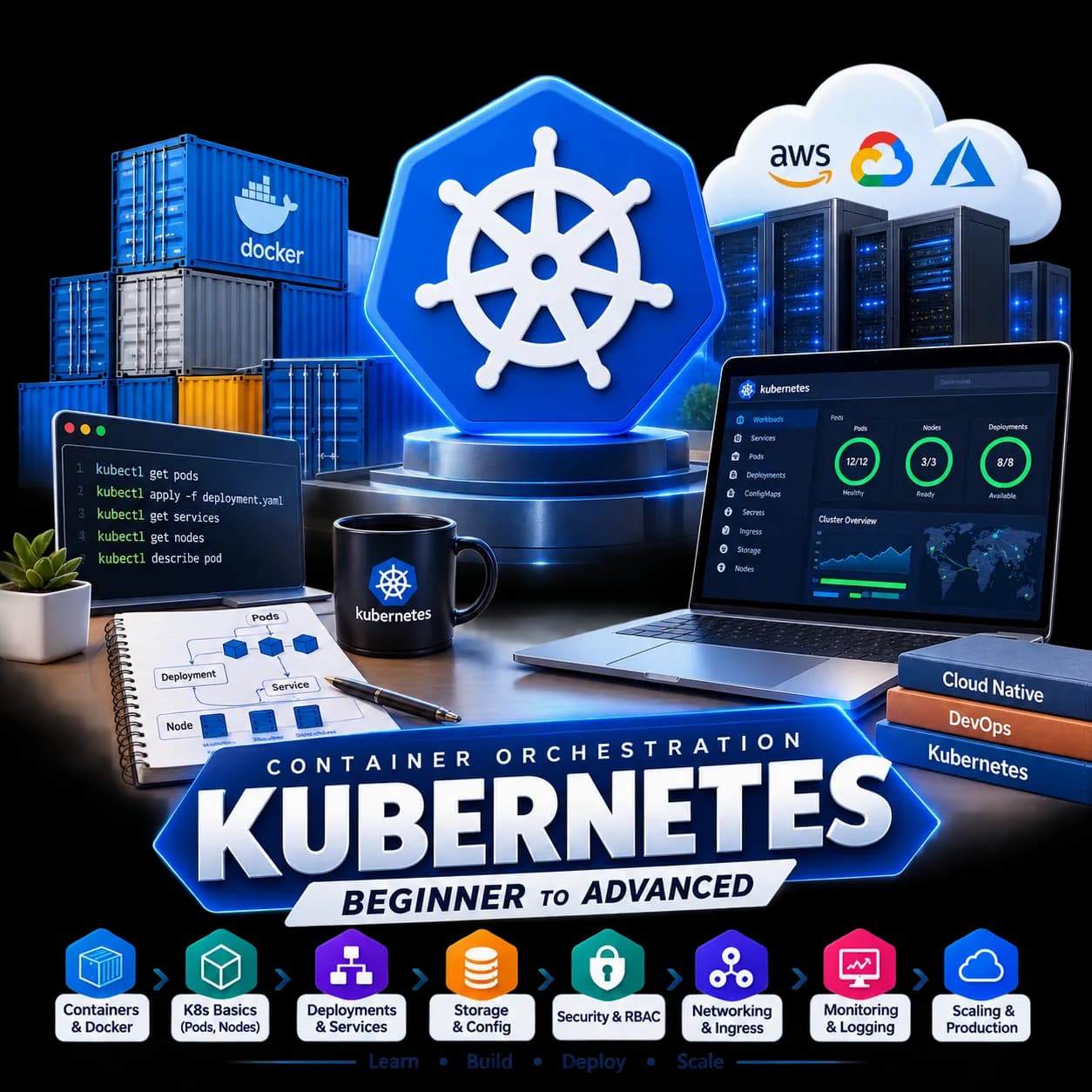 Kubernetes Beginner to Production Grade: A Hands-On DevOps Guide Beginner25 min
 100 Days of DSA with Java Beginner to advanced100 days · 85 lessons published
 100 Days of AI Engineering Beginner to advanced100 days · 57 lessons published
 Sending Mail Using Nodemailer: A Production Engineering Guide 5 min22 Oct 2026RabbitMQ with Node.js: Practical Message Queue Guide 5 min15 Oct 2026
 Modern Java New Features: From Records to Virtual Threads 5 min12 Oct 2026
 JWT Token from Scratch in Node.js: Step-by-Step Guide 5 min8 Oct 2026
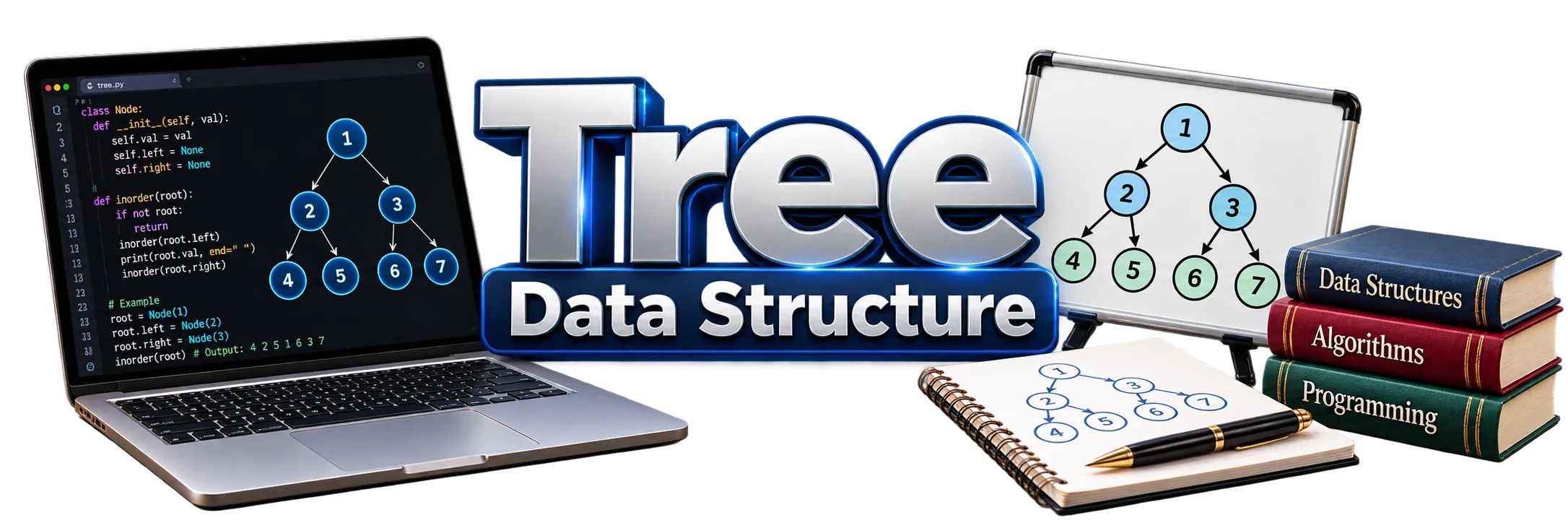 Tree Data Structure Explained: Types and Real-World Use Cases 5 min6 Oct 2026
 What is JEV and How Is It Different from LLMs? 5 min3 Oct 2026