

Swati Tyagi
Senior Full Stack and Mobile App Developer
Master Azure DevOps (AZ-400) with hands-on live online labs. Build multi-stage YAML pipelines, manage IaC with Bicep and Terraform, and deploy containerised microservices to AKS.
Designing resilient delivery pipelines requires moving far beyond simple build triggers. In this live online training for the Microsoft Azure DevOps Solutions Architect (AZ-400) certification, running in IST with learners joining from anywhere worldwide, you will build automated, zero-downtime delivery architectures on Microsoft Azure using modern DevSecOps practices. You learn to handle real production failures: broken migrations, flaky test suites, secret leakage, and cluster rollbacks. For foundational container orchestration practices, read our Kubernetes beginner tutorial before deploying complex Helm charts. You can also explore our broader DevOps training tracks to see how release workflows integrate with infrastructure engineering.
Theory will not save a production deployment at midnight. Every module centers on code you deploy to live Azure infrastructure:
If you need to establish broad foundational skills before focusing entirely on release management, explore our comprehensive Azure Cloud course. To strengthen your version control fundamentals before managing enterprise source trees, review our Git & GitHub training. To strengthen foundational infrastructure engineering practices before architecting automated pipelines, review the Advanced DevOps and Infrastructure Engineering Course. For broader cloud architecture design principles, explore the Microsoft Azure Solutions Architect AZ-305 Certification Training or build strong baseline orchestration skills in our Kubernetes: Beginner to Advanced course. When comparing build agents and runner architectures, you can also study enterprise server automation patterns in our dedicated Jenkins course. To expand your capabilities into automated delivery paths, consider our DevOps & Automation Bootcamp.
This program is designed for cloud administrators, software engineers, and systems engineers stepping into platform and site reliability roles. It assumes practical familiarity with core Azure services, command-line interfaces, and fundamental Git operations. If your day-to-day work involves chasing manual release failures or wrestling with untracked infrastructure changes, this course supplies the patterns you need.
Sessions run live online in timezone-friendly batches, led by practicing engineers who deploy systems daily. You do not sit through slides; you write YAML, configure service connections, and debug live cloud deployment errors in real time. Between classes, you work on repository deliverables, receive mentor reviews on your pull requests, and access full recordings whenever you need to revisit a complex lab.
Modern engineering teams have moved away from isolated build engineers toward platform and reliability specialists. Hiring teams prioritize engineers who understand secretless OpenID Connect federation, automated quality gates, and policy-as-code over simple drag-and-drop tool users. Technical interviews probe how you design rollbacks, protect production state files, and diagnose container startup failures under pressure.
Mastering the Microsoft Azure DevOps Solutions Architect (AZ-400) skill set equips you with verifiable production delivery expertise. For engineers pursuing an end-to-end credential path from core fundamentals up to senior enterprise orchestration, explore our comprehensive Microsoft Azure Solutions Architect & DevOps Expert track.
A structured curriculum with real tools and outcomes built for the workplace.
You can structure team backlogs across Azure Boards and GitHub, connecting user stories directly to pull requests for complete delivery traceability.
Hands-on project: Ticket: Configure an Azure Boards Scrum board mapped to a GitHub organization, setup automated issue state transitions triggered by PR merges, and document the Definition of Done in Markdown.
You can calculate DORA delivery metrics, build Azure DevOps analytics dashboards, and maintain living architectural documentation using Markdown and Mermaid diagrams.
Hands-on project: Ticket: Construct an Azure DevOps dashboard showing lead time for changes and deployment frequency widgets, and commit a versioned repository wiki with Mermaid sequence diagrams illustrating release triggers.
You can enforce strict repository branch policies, sanitize sensitive commit histories, and manage enterprise codebases using Git LFS and Scalar.
Hands-on project: Ticket: Enforce branch protection policies on main requiring two approvals, squash merging, and passing CI status checks, while sanitizing accidentally committed secrets using git-filter-repo.
You can set up secure package feeds in Azure Artifacts and GitHub Packages with upstream source rules and strict SemVer versioning.
Hands-on project: Ticket: Create an Azure Artifacts private feed with public npm upstream sources, publish an internal shared library using semantic release automation, and configure retention rules to prune untagged prerelease builds.
You can build multi-stage YAML CI/CD pipelines across Azure Pipelines and GitHub Actions utilizing self-hosted runners, approvals, and shared templates.
Hands-on project: Ticket: Write a production-ready multi-stage azure-pipelines.yml file featuring separate build, test, and deploy stages, conditional execution, variable group secret bindings, and environment approval gates.
You can configure environment deployment protection rules, manual sign-offs, and migrate legacy build definitions into modern YAML templates.
Hands-on project: Ticket: Setup an Azure DevOps Environment protected by manual sign-offs, business hours checks, and REST API invocation gates for automated canary validation.
You can embed automated unit, integration, and code coverage quality gates in build pipelines that fail builds on test regressions.
Hands-on project: Ticket: Add automated test execution into a pipeline that publishes Cobertura code coverage reports, enforces an 80% minimum coverage gate, and blocks PR merges when unit tests fail.
You can execute zero-downtime blue-green deployments, canary rollouts, and feature flag management across Azure App Services and container workloads.
Hands-on project: Ticket: Configure an Azure App Service with staging and production deployment slots, wire an automated swap triggered by healthy smoke tests, and implement a toggleable feature flag using Azure App Configuration.
You can provision and validate Azure infrastructure declaratively using Bicep and Terraform pipelines configured with remote state locking.
Hands-on project: Ticket: Build a CI/CD pipeline that runs terraform plan, validates security compliance using Checkov, and applies infrastructure changes to Azure using remote state stored in Blob Storage with blob lease locking.
You can implement secretless CI/CD authentication via OpenID Connect, secure credential storage with Azure Key Vault, and automate container vulnerability scans.
Hands-on project: Ticket: Eliminate hardcoded client secrets by configuring Workload Identity Federation (OIDC) between Azure DevOps and Microsoft Entra ID, and inject a Trivy container scanning step into the image build stage.
You can query telemetry with KQL in Log Analytics, build end-to-end Application Insights distributed traces, and optimize pipeline execution using caching.
Hands-on project: Ticket: Instrument an application with Application Insights telemetry, configure Log Analytics diagnostic settings on an AKS cluster, and write KQL alerts that trigger automated PagerDuty or webhook notifications.
You can design, build, and defend an end-to-end enterprise GitOps delivery pipeline on Azure, integrating security scanning, Terraform infrastructure, and zero-downtime AKS deployments.
Hands-on project: Ticket: Deliver the production capstone: deploy an enterprise microservices architecture to AKS using Terraform, GitHub Actions, Helm, and ArgoCD, backed by OIDC authentication, Trivy security gates, and automated KQL monitoring.
Every instructor here ships production code for a living and teaches the same week they deploy.
5 learners sharing their experience

The Full-Stack Java developer program at Squarebrackets completely transformed my career. Learning Spring Boot and microservices architecture alongside React and Next.js gave me the exact modern stack companies are looking for. Building real-time projects using Apache Kafka and RabbitMQ for message queuing gave me the practical confidence I needed to ace my system design rounds.
Ankit transitioned from a legacy support engineer to a high-paying product development role after completing his 6-month intensive Java and JavaScript full-stack training at our Noida campus.

Squarebrackets took me from not knowing what a gradient was to building and deploying CNNs and Transformers. The maths-first approach made everything click, and the mentors pushed me through every hard concept.
Completed the Deep Learning Course at Squarebrackets and landed a deep learning role within two months.

Squarebrackets gave me the complete AI picture — from search algorithms and Bayesian reasoning to building LLM agents. The maths-first approach meant nothing was a black box, and the mentors pushed me through every project.
Completed the Artificial Intelligence Course at Squarebrackets and moved into an AI engineering role within two months.

The Java Full-Stack and DSA course at Squarebrackets completely changed my career trajectory. The focus on raw problem-solving with DSA alongside hands-on Spring Boot and React projects gave me the practical skills I needed. I went from struggling with basic coding rounds to cracking my technical interview with absolute confidence.
Aniket joined Squarebrackets as a college senior looking to transition from theoretical academic projects to production-ready software development. After completing our rigorous training program, he secured a placement as an Associate Software Engineer.
The live cohort broke down complex concepts like Spring Boot transaction management and React state handling in a way that made immediate sense for production work. Having worked through real backend architectures during class, my daily code reviews at work became much smoother.
Completed the Java Full Stack live training while balancing a full-time role, upgrading engineering skills through rigorous hands-on sessions.

“The Full-Stack Java developer program at Squarebrackets completely transformed my career. Learning Spring Boot and microservices architecture alongside React and Next.js gave me the exact modern stack companies are looking for. Building real-time projects using Apache Kafka and RabbitMQ for message queuing gave me the practical confidence I needed to ace my system design rounds.”

Software Engineer, Student
“Squarebrackets took me from not knowing what a gradient was to building and deploying CNNs and Transformers. The maths-first approach made everything click, and the mentors pushed me through every hard concept.”

Student
“Squarebrackets gave me the complete AI picture — from search algorithms and Bayesian reasoning to building LLM agents. The maths-first approach meant nothing was a black box, and the mentors pushed me through every project.”

Student
“The Java Full-Stack and DSA course at Squarebrackets completely changed my career trajectory. The focus on raw problem-solving with DSA alongside hands-on Spring Boot and React projects gave me the practical skills I needed. I went from struggling with basic coding rounds to cracking my technical interview with absolute confidence.”
Associate Software Engineer, Capgemini
“The live cohort broke down complex concepts like Spring Boot transaction management and React state handling in a way that made immediate sense for production work. Having worked through real backend architectures during class, my daily code reviews at work became much smoother.”

Student


Browse the common questions, or reach out and our team will help you directly.
3 courses in this collection
Microsoft Azure AI Engineer Associate (AI-102) Certification Training Beginner10 weeks (80 hours)
Microsoft Azure Solutions Architect AZ-305 Certification Training Beginner12 weeks
Microsoft Azure AI-500 Certification Course Beginner14 weeks
Best seller
Best seller
Best sellerHands-on programming tracks with runnable code, from fundamentals to job-ready projects.
Kubernetes Beginner to Production Grade: A Hands-On DevOps Guide Beginner25 min

100 Days of DSA with Java Beginner to advanced100 days · 85 lessons published

100 Days of AI Engineering Beginner to advanced100 days · 57 lessons published


Articles to help you learn, grow, and get hired.
Sending Mail Using Nodemailer: A Production Engineering Guide 5 min22 Oct 2026RabbitMQ with Node.js: Practical Message Queue Guide 5 min15 Oct 2026

Modern Java New Features: From Records to Virtual Threads 5 min12 Oct 2026
JWT Token from Scratch in Node.js: Step-by-Step Guide 5 min8 Oct 2026
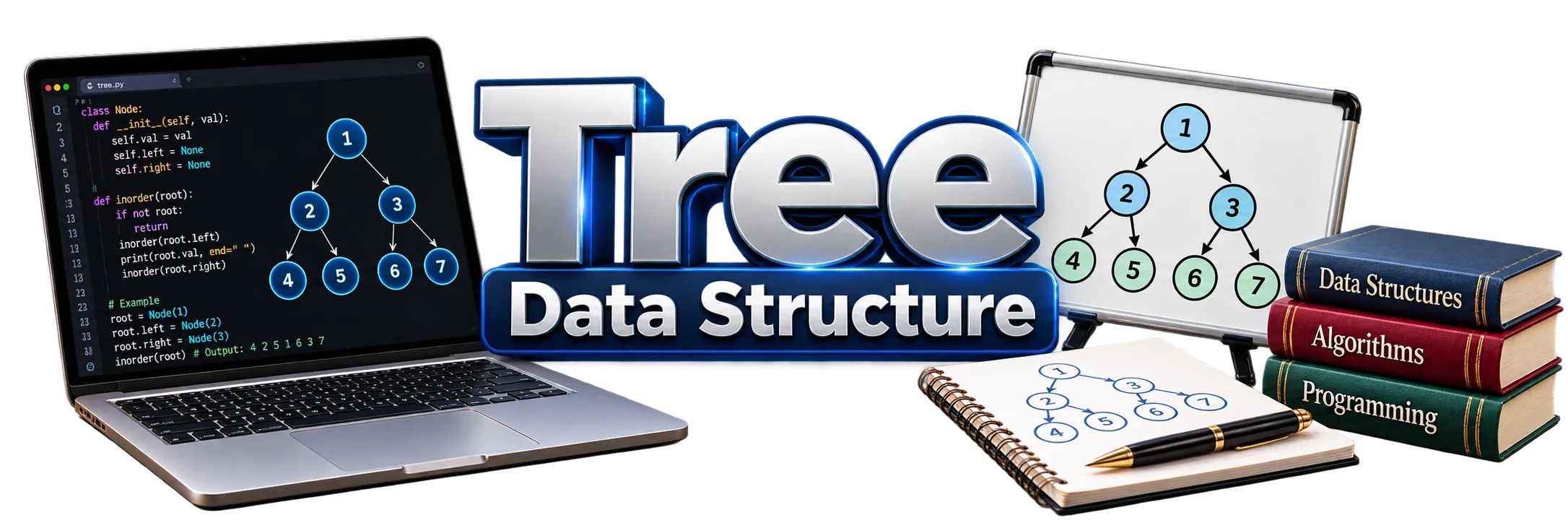
Tree Data Structure Explained: Types and Real-World Use Cases 5 min6 Oct 2026
What is JEV and How Is It Different from LLMs? 5 min3 Oct 2026
Master sending mail using Nodemailer in Node.js. Configure pooled SMTP transports, design HTML templates, avoid event loop lag, and queue delivery in production.
Learn how to connect RabbitMQ with Node.js using amqplib. Build a reliable message producer and consumer with real-world error handling and production patterns.

Explore modern Java new features across Java 17 and Java 21 LTS releases. Learn how records, pattern matching, virtual threads, and sequenced collections work in production systems.

Learn how to implement JWT authentication and refresh token rotation from scratch in Node.js using crypto and express, without relying on external libraries for the core logic.

Understand tree data structures, their different types, segment trees, and real-world software engineering use cases from database indexing to range queries.
TrendingDiscover JEV, how it differs fundamentally from Large Language Models, and when to use each for enterprise architectures.