

Himanshu Mudgal
Lead DevOps Engineer
Become a SOC Analyst: SIEM, incident response, threat hunting and cloud security across AWS, Azure and GCP — hands-on, with placement support.
Securing modern digital infrastructure requires defenders who understand how to monitor, detect, and respond to threats across on-premises environments and multi-cloud architectures. This comprehensive soc operations cloud security training program equips you with the exact technical skills needed to protect enterprise workloads, analyze complex log data, and operate within a professional Security Operations Centre. You will move past theoretical concepts and spend your time building real detection pipelines, investigating simulated breaches, and hardening cloud environments against sophisticated adversaries.
Rather than sitting through passive slide decks, you will build and deploy concrete security projects that mirror the daily responsibilities of a working security professional. Here are the core deliverables you will complete throughout the curriculum:
This curriculum is engineered for aspiring SOC analysts, IT system administrators transitioning into cybersecurity, and recent graduates aiming for entry-to-mid-level defensive security roles. You do not need prior security experience, though a working familiarity with Linux and networking fundamentals will help you hit the ground running. If you want a deeper dive into network defense architectures before tackling advanced monitoring, consider pairing this with our Networks & Security course.
All cohorts are delivered live online by working security engineers who spend their days running threat detection and incident response for production environments. Sessions combine live architecture walkthroughs, instructor-led troubleshooting, and hands-on lab hours where you tackle real attack scenarios inside isolated virtual testbeds. You get lifetime access to all session recordings, allowing you to review complex log-parsing techniques or detection-tuning strategies whenever you need a refresher.
Organizations across fintech, healthcare, SaaS, and enterprise tech continue to expand their blue teams to handle escalating threat volumes. Hiring managers for SOC Analyst (L1 and L2), Security Analyst, and Cloud Security Engineer roles look for practical competence rather than memorized theory. Technical interview loops typically test your ability to explain how you would triage a suspicious alert, parse a Windows event log, isolate a compromised host, and explain cloud identity controls. Strengthening your cloud knowledge further with programs like Google Cloud (GCP) ensures you can defend modern serverless and containerized workloads effectively.
Defensive security is learned by doing the work: analyzing alerts, writing rules, and investigating anomalies. Take control of your career trajectory and build the exact capabilities that hiring managers look for in soc operations cloud security roles by enrolling in our live cohort today.
A structured curriculum with real tools and outcomes built for the workplace.
You can configure core network protocols, evaluate the CIA triad for common IT setups, and establish a defender's baseline in Windows and Linux operating systems.
Hands-on project: Deploy a local SOC test bed running a Linux SIEM receiver and verify packet ingestion using Wireshark and tcpdump.
You can dissect malware delivery vectors, analyze web application exploits against the OWASP Top 10, and prioritize vulnerabilities using CVE and CVSS metrics.
Hands-on project: Analyze a quarantined malware sample payload in an isolated sandbox and generate a structured Indicators of Compromise (IoC) report.
You can map adversary behaviors to the MITRE ATT&CK framework and build threat-informed detection strategies using the ATT&CK Navigator.
Hands-on project: Map a multi-stage APT intrusion scenario to MITRE ATT&CK tactics and export a custom JSON navigator layer highlighting coverage gaps.
You can parse, normalize, and query diverse security telemetry sources including Windows event logs, Sysmon, Linux syslog, and firewall traffic.
Hands-on project: Configure a centralized log forwarder to parse raw syslog and Windows security events into a structured schema format.
You can ingest multi-source telemetry, write robust correlation rules, and construct investigative dashboards within enterprise SIEM platforms like Splunk and Microsoft Sentinel.
Hands-on project: Build a custom SIEM detection dashboard in Splunk or Microsoft Sentinel featuring three alert correlation rules and zero false-positive tuning.
You can execute daily SOC triage workflows, enrich alerts with threat intelligence feeds, and compile professional shift handovers.
Hands-on project: Perform end-to-end triage on a simulated brute-force alert queue, enrich artifacts with VirusTotal, and draft an escalation ticket.
You can execute the NIST incident response lifecycle from containment to eradication and author comprehensive post-incident forensics reports.
Hands-on project: Run an active incident response playbook on a compromised web server: isolate the host, terminate malicious processes, extract artifacts, and write the post-mortem report.
You can design hypothesis-driven threat hunts using EDR query languages and MITRE ATT&CK intelligence to uncover undetected persistent threats.
Hands-on project: Execute a hypothesis-driven threat hunt across endpoint telemetry for living-off-the-land binaries (Lolbins) and document findings in an actionable report.
You can apply the cloud shared responsibility model, configure rigorous Identity and Access Management (IAM), and establish cloud logging guardrails.
Hands-on project: Audit an overly permissive cloud account configuration and remediate IAM policies to enforce least-privilege access across resources.
You can harden infrastructure across AWS, Azure, and GCP, deploy Cloud Security Posture Management, and mitigate cloud-specific threat vectors.
Hands-on project: Deploy multi-cloud posture management scans across AWS and Azure, identify misconfigurations, and implement automated remediation scripts.
You can align security operations with regulatory frameworks like NIST, ISO 27001, and CIS benchmarks, and maintain audit-ready documentation.
Hands-on project: Draft a compliance evidence collection runbook mapping technical SIEM controls to NIST CSF and ISO 27001 annex controls.
You can write a detection rule that catches a technique with few false positives, and automate the response.
Hands-on project: Write and tune Sigma detections for three MITRE techniques against supplied telemetry, measure true and false positives, then automate enrichment and containment for one alert in a SOAR playbook with a human approval step.
You can execute a full-scale simulated security breach investigation, present your portfolio of hardened cloud environments, and clear SOC analyst interview loops.
Hands-on project: Complete the live end-to-end SOC capstone: ingest a complex multi-stage attack trace, triage alerts, contain the threat, write the forensic report, and complete a technical mock interview.
Every instructor here ships production code for a living and teaches the same week they deploy.
5 learners sharing their experience

The Full-Stack Java developer program at Squarebrackets completely transformed my career. Learning Spring Boot and microservices architecture alongside React and Next.js gave me the exact modern stack companies are looking for. Building real-time projects using Apache Kafka and RabbitMQ for message queuing gave me the practical confidence I needed to ace my system design rounds.
Ankit transitioned from a legacy support engineer to a high-paying product development role after completing his 6-month intensive Java and JavaScript full-stack training at our Noida campus.

Squarebrackets took me from not knowing what a gradient was to building and deploying CNNs and Transformers. The maths-first approach made everything click, and the mentors pushed me through every hard concept.
Completed the Deep Learning Course at Squarebrackets and landed a deep learning role within two months.

Squarebrackets gave me the complete AI picture — from search algorithms and Bayesian reasoning to building LLM agents. The maths-first approach meant nothing was a black box, and the mentors pushed me through every project.
Completed the Artificial Intelligence Course at Squarebrackets and moved into an AI engineering role within two months.

The Java Full-Stack and DSA course at Squarebrackets completely changed my career trajectory. The focus on raw problem-solving with DSA alongside hands-on Spring Boot and React projects gave me the practical skills I needed. I went from struggling with basic coding rounds to cracking my technical interview with absolute confidence.
Aniket joined Squarebrackets as a college senior looking to transition from theoretical academic projects to production-ready software development. After completing our rigorous training program, he secured a placement as an Associate Software Engineer.
The live cohort broke down complex concepts like Spring Boot transaction management and React state handling in a way that made immediate sense for production work. Having worked through real backend architectures during class, my daily code reviews at work became much smoother.
Completed the Java Full Stack live training while balancing a full-time role, upgrading engineering skills through rigorous hands-on sessions.

“The Full-Stack Java developer program at Squarebrackets completely transformed my career. Learning Spring Boot and microservices architecture alongside React and Next.js gave me the exact modern stack companies are looking for. Building real-time projects using Apache Kafka and RabbitMQ for message queuing gave me the practical confidence I needed to ace my system design rounds.”

Software Engineer, Student
“Squarebrackets took me from not knowing what a gradient was to building and deploying CNNs and Transformers. The maths-first approach made everything click, and the mentors pushed me through every hard concept.”

Student
“Squarebrackets gave me the complete AI picture — from search algorithms and Bayesian reasoning to building LLM agents. The maths-first approach meant nothing was a black box, and the mentors pushed me through every project.”

Student
“The Java Full-Stack and DSA course at Squarebrackets completely changed my career trajectory. The focus on raw problem-solving with DSA alongside hands-on Spring Boot and React projects gave me the practical skills I needed. I went from struggling with basic coding rounds to cracking my technical interview with absolute confidence.”
Associate Software Engineer, Capgemini
“The live cohort broke down complex concepts like Spring Boot transaction management and React state handling in a way that made immediate sense for production work. Having worked through real backend architectures during class, my daily code reviews at work became much smoother.”

Student


Browse the common questions, or reach out and our team will help you directly.
6 courses in this collection

DevOps & Automation Bootcamp Beginner5 Months (20 Weeks)

Java Full Stack Bootcamp with DSA & System Design Beginner6 Months (24 Weeks)

Machine Learning Bootcamp Beginner4 Months (16 Weeks)

Artificial Intelligence Bootcamp Beginner5 Months (20 Weeks)
Forward Deployed Engineering (FDE) Masterclass Beginner20 weeks
MERN Bootcamp with Microservices DSA & System Design Beginner6 Months (24 Weeks)
Trending
Trending
Best seller
Best seller
Best seller
Best sellerHands-on programming tracks with runnable code, from fundamentals to job-ready projects.
Kubernetes Beginner to Production Grade: A Hands-On DevOps Guide Beginner25 min

100 Days of DSA with Java Beginner to advanced100 days · 85 lessons published

100 Days of AI Engineering Beginner to advanced100 days · 57 lessons published


Articles to help you learn, grow, and get hired.
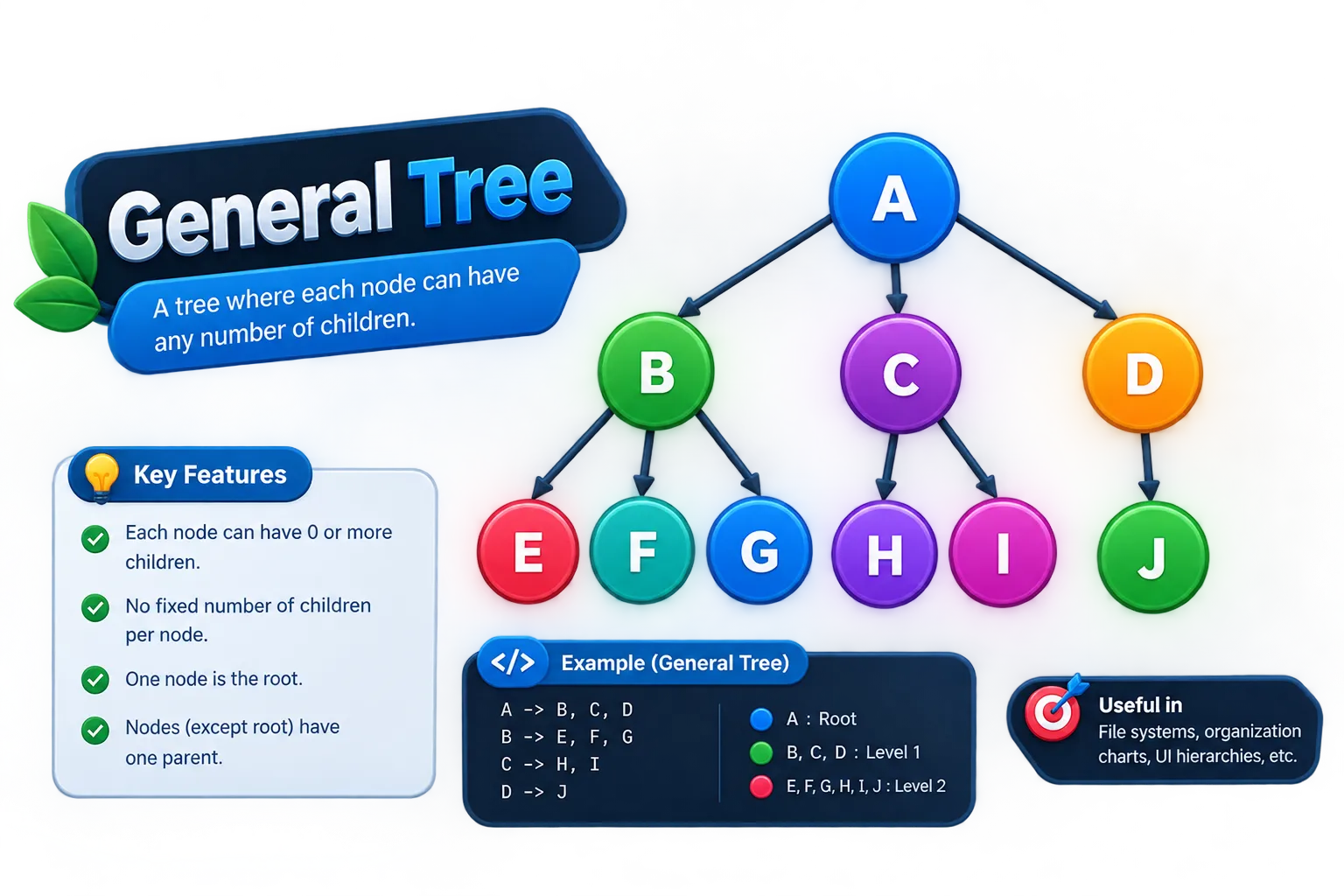
Generic Tree Interview Questions: Roadmap by Core Coding Techniques 5 min6 Sept 2026

DSA Roadmap: Master Algorithms Roadmap 5 min5 Sept 2026

Linked List Placement Preparation Roadmap: 15 Patterns with LeetCode 5 min1 Sept 2026
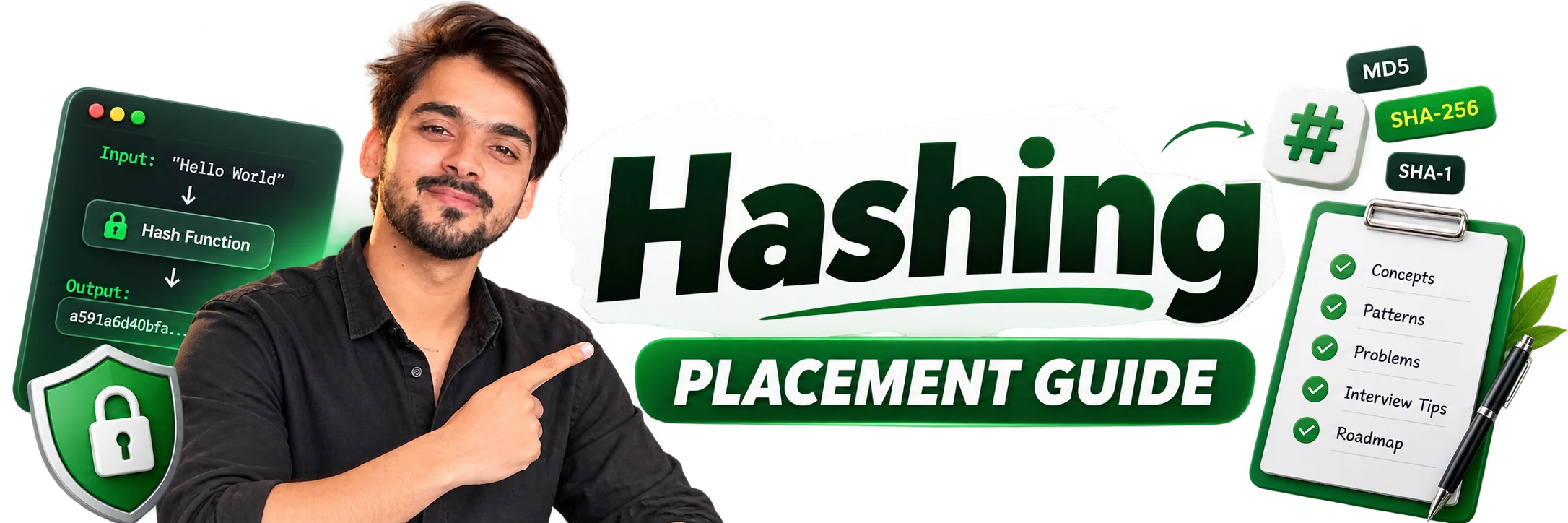
Hashing in DSA: What Tech Interviews Actually Ask 5 min30 Aug 2026

Placement Array Roadmap: The Ultimate Coding Interview Guide 5 min30 Aug 2026
TrendingMaster N-ary and generic tree interview questions. This technical roadmap breaks down traversal, serialization, and recursion techniques with real-world coding patterns.

The ultimate master algorithm roadmap for our DSA roadmap. Learn the core patterns, time complexities, and coding techniques you need to crack FAANG interviews.
TrendingMaster linked list interview questions with our 15-step placement preparation roadmap. Features pattern breakdowns, practical code, and direct LeetCode links.
TrendingMaster hashing, HashMaps, and Map data structures for tech interviews. Learn the exact patterns, code implementations, and LeetCode problems top companies ask.

Master the Placement Array Roadmap with this complete guide featuring curated LeetCode problems, categorized by difficulty, to help you crack technical interviews.