
Introduction
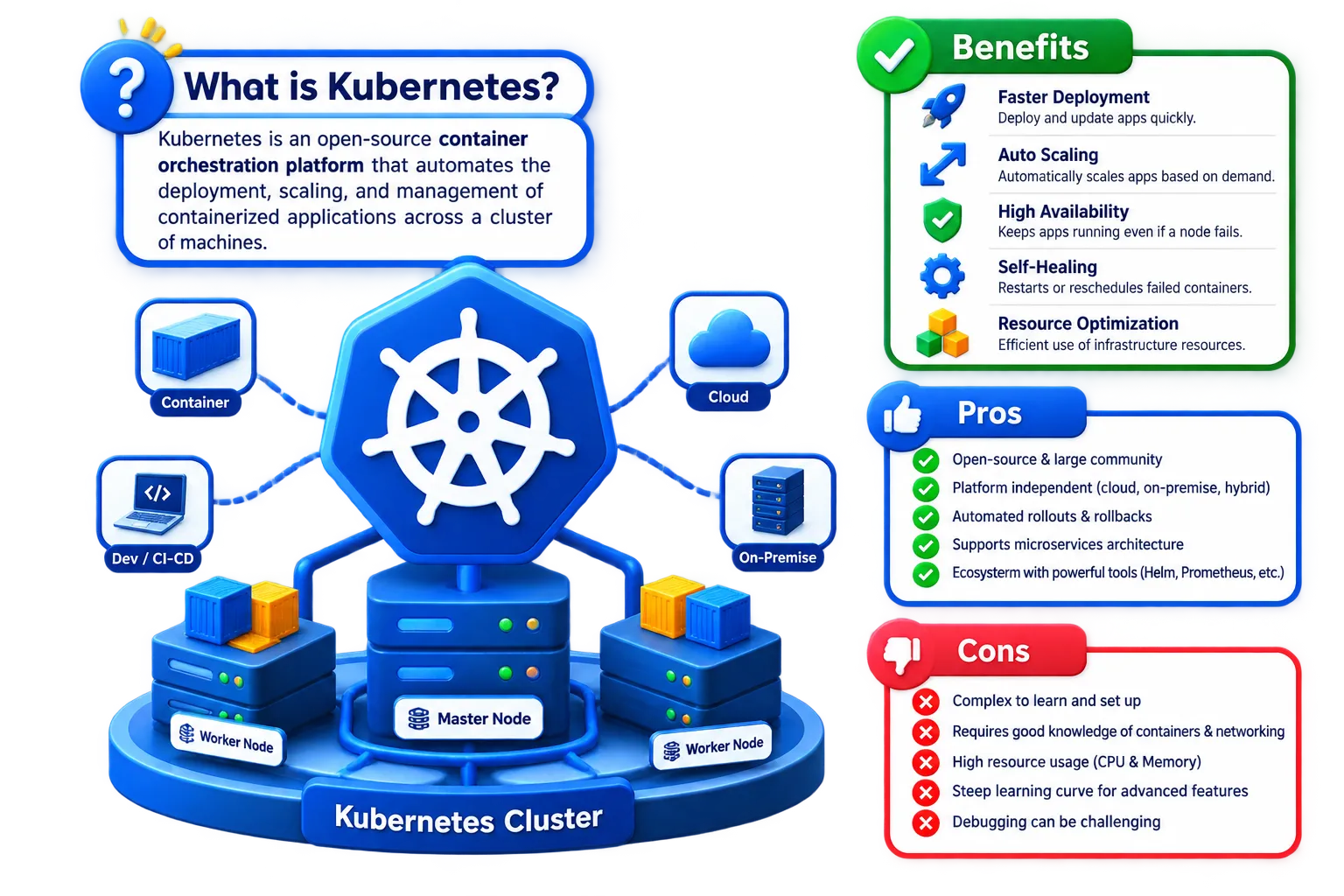
What is Kubernates
The simplest way to understand Kubernetes
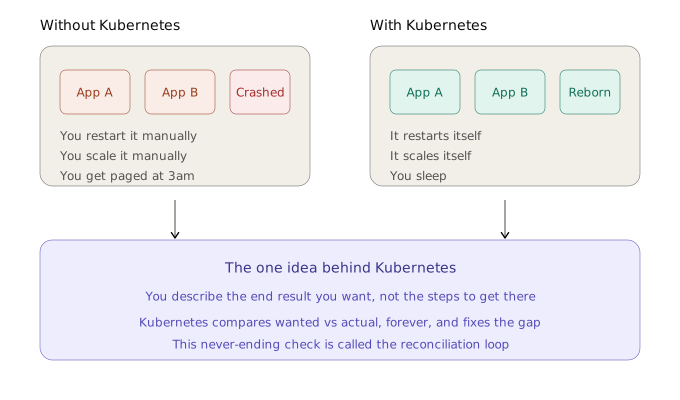
imagine you hire a building manager for an apartment block. You don't tell them "go to flat 3B, turn the tap, check the fuse." You just say: "I want 50 flats, all occupied, all with working water and power, at all times." The manager then walks the building forever, spots what's broken, and fixes it — without asking you.
Kubernetes is that manager. Your apps are the tenants. The servers are the building. You write down what you want in a text file, hand it over, and Kubernetes spends the rest of its life making reality match that file.
Now, who exactly is doing this work inside Kubernetes? A cluster splits into a brain and a set of muscles.
Kubernetes is an open-source container orchestration platform that automates the deployment, scaling, management, and operation of containerized applications. It helps organizations run applications reliably across multiple servers by managing containers, networking, storage, load balancing, scaling, and application availability. In simple terms, Kubernetes manages containers automatically so applications can run reliably and scale efficiently in production environments.