

Ravi Tyagi
Lead AI Engineer & Generative AI Systems Engineer
Build software robots that automate real business workflows, then make them intelligent with AI-driven document understanding and decisions.

Enterprise operations around the world rely on manual toil that quietly drains thousands of hours every month. Analysts copy data between legacy Windows forms, finance teams retype PDF invoices into Excel sheets, and customer support staff cross-reference three different browser portals to resolve a single ticket. RPA & Intelligent Automation teaches you to build software robots that eliminate this drudgery. You will design, build, and deploy automation workflows that interact with web pages, desktop apps, and databases just like a human operator does, but without errors and at twenty times the speed.
As you progress through the twelve modules of this live online training program, you move past simple mouse clicks into cognitive automation. By combining visual workflow designers with OCR engines, computer vision selectors, and REST APIs, you create end-to-end bots that read unstructured documents, make conditional decisions, and push data directly into backend systems. Whether you are aiming for roles in shared-services centres, IT operations teams, or digital transformation practices, this curriculum gives you the exact production patterns required to build resilient, maintainable bots.
Theory alone does not prepare you for production automation exceptions. Throughout this course, you will construct real deliverables that simulate the challenges encountered by working automation engineers:
If you want to expand your technical testing capabilities beyond standard UI automation, you can also explore our Automation with Java & Selenium course for deeper programmatic control over web applications. Similarly, for those looking to merge physical systems with smart decision-making, the Applied Robotics and AI program provides an excellent follow-up path.
This training fits fresh graduates looking to enter tech without writing complex code from scratch, operations analysts wanting to automate their own daily reporting chores, and software testers transitioning into higher-paying automation engineering roles. Because enterprise bots often interface with cloud services, having a foundational grasp of cloud architectures—such as the concepts covered in our Microsoft Azure AI Fundamentals (AI-900 / AI-901) Certification Training—will help you understand how modern enterprises host and secure their automation infrastructure.
You do not need a heavy computer science degree or years of software development experience to succeed here. Basic logical reasoning, familiarity with spreadsheets, and a methodical approach to breaking down business tasks into sequential steps are all it takes to begin. For those who want to master broader infrastructure automation and continuous integration pipelines later on, our DevOps & Automation Bootcamp provides the ideal next step.
Every cohort runs live online in interactive sessions led by working automation engineers who build enterprise bots during the day and teach them at night. You code along in real time, test your bots against live sandbox environments, and debug broken selectors together with your instructor. If you miss a session or want to review a complex explanation of state machines and exception bubbling, you keep lifetime access to all class recordings.
Between classes, you get 1-on-1 mentorship to review your workflow design patterns, clean up messy variable scopes, and optimize your bot execution times. You will never feel stuck on a broken selector or a confusing queue trigger because our mentors review your repository and point out exact fixes before your code goes into production.
The market for automation talent spans every major industry vertical, from global banking and insurance giants to healthcare providers, telecommunications firms, and logistics enterprises. Companies continuously seek certified professionals who can identify inefficient operational handoffs, measure ROI, and deliver reliable software robots that run unattended 24 hours a day.
Hiring interviews for RPA Developer and Automation Engineer roles focus on three core areas: your ability to interpret business requirements into a structured PDD, your practical mastery of selectors, error handling, and queue management in tools like UiPath or Automation Anywhere, and your troubleshooting methodology when a target application changes its user interface overnight. We prepare you for these technical loops through rigorous mock interviews, resume and portfolio optimization, and structured code reviews.
Take control of your career and learn the skills that traditional software development bootcamps miss. Join our next cohort to build real bots, earn your industry-recognised certificate, and step into high-demand automation roles with complete confidence.
A structured curriculum with real tools and outcomes built for the workplace.
You can write clean, object-oriented Python code and structure production-ready scripts inside virtual environments.
Hands-on project: Build a CLI-based data ingestion utility that fetches paginated JSON records from a REST API, validates schema integrity with Pydantic, writes clean output records to disk, and isolates failures using Python logging.
You can calculate vector transformations, derivatives, and probability distributions required to understand model optimization.
Hands-on project: Implement a multivariable linear regression optimizer from scratch using pure NumPy matrix math, tracking loss trajectories across iterations and proving numerical gradient convergence.
You can clean, reshape, and explore messy tabular datasets using NumPy and Pandas before feeding them to models.
Hands-on project: Build an exploratory data pipeline that ingests a raw multi-thousand row CSV, removes anomalies, imputes nulls with domain-appropriate statistics, and outputs a clean dataset with an automated EDA visualization report.
You can train, evaluate, and tune classical machine learning models using scikit-learn while preventing data leakage.
Hands-on project: Build an end-to-end customer churn prediction classifier using scikit-learn and XGBoost, packaged inside a Pipeline with preprocessing, hyperparameter search, and audited against test data leakage.
You can design and train custom feedforward neural networks using PyTorch with proper weight initialization and loss tracking.
Hands-on project: Build and train a custom multi-layer perceptron in PyTorch on an tabular dataset, implementing mini-batching, Dropout, LayerNorm, early stopping, and real-time loss tracking in TensorBoard.
You can process image tensors, build Convolutional Neural Networks, and apply transfer learning for image classification.
Hands-on project: Fine-tune a pre-trained ResNet-50 vision model on a custom multi-class image dataset, apply data augmentations, achieve >90% validation accuracy, and export the final model to ONNX format.
You can tokenize text sequences, implement embedding layers, and fine-tune Transformer models for sequence classification.
Hands-on project: Fine-tune a pre-trained BERT model for multi-class ticket classification using Hugging Face Transformers, tracking evaluation metrics on a validation set and logging misclassifications for error analysis.
You can construct prompt chains, configure generation parameters, and build Retrieval-Augmented Generation systems using LangChain.
Hands-on project: Build an enterprise document question-answering system using LangChain and ChromaDB, implementing semantic chunking, embedding generation, source citations, and hallucination evaluation.
You can expose AI models behind FastAPI backends and build interactive frontend user interfaces using Streamlit.
Hands-on project: Build and run a complete AI web application featuring an asynchronous FastAPI inference service with OpenAPI documentation and an interactive Streamlit chat interface that supports streaming token responses.
You can containerise AI models with Docker, track experiments, and deploy production services to cloud environments.
Hands-on project: Containerize the FastAPI inference application with a multi-stage Dockerfile under 350 MB running as a non-root user, write a GitHub Actions pipeline that runs pytest on pull requests, and deploy the container to a cloud host.
You can frame business challenges into ML problem statements, evaluate ROI, and navigate ethical compliance.
Hands-on project: Draft a formal Machine Learning System Architecture and ROI Proposal for an enterprise use-case, specifying the business problem, baseline heuristic, target online KPIs, hardware budget, and compliance risk mitigations.
You can test an AI feature for the ways it fails and publish its real limits.
Hands-on project: Build an automated evaluation and adversarial testing harness for an AI application using Promptfoo, document three successful injection exploits with corresponding mitigations, and publish a complete Model Card.
You can design, train, evaluate, containerise, and defend an enterprise-grade AI system in production-ready interview scenarios.
Hands-on project: Architect, train/fine-tune, evaluate, containerize, and deploy a full-scale AI application (such as an Enterprise RAG Assistant or Real-Time Multi-Modal Classifier) with an automated CI/CD pipeline, Prometheus observability, and a complete Model Card.
Every instructor here ships production code for a living and teaches the same week they deploy.
5 learners sharing their experience
The Full-Stack Java developer program at Squarebrackets completely transformed my career. Learning Spring Boot and microservices architecture alongside React and Next.js gave me the exact modern stack companies are looking for. Building real-time projects using Apache Kafka and RabbitMQ for message queuing gave me the practical confidence I needed to ace my system design rounds.
Ankit transitioned from a legacy support engineer to a high-paying product development role after completing his 6-month intensive Java and JavaScript full-stack training at our Noida campus.

Squarebrackets took me from not knowing what a gradient was to building and deploying CNNs and Transformers. The maths-first approach made everything click, and the mentors pushed me through every hard concept.
Completed the Deep Learning Course at Squarebrackets and landed a deep learning role within two months.

Squarebrackets gave me the complete AI picture — from search algorithms and Bayesian reasoning to building LLM agents. The maths-first approach meant nothing was a black box, and the mentors pushed me through every project.
Completed the Artificial Intelligence Course at Squarebrackets and moved into an AI engineering role within two months.

The Java Full-Stack and DSA course at Squarebrackets completely changed my career trajectory. The focus on raw problem-solving with DSA alongside hands-on Spring Boot and React projects gave me the practical skills I needed. I went from struggling with basic coding rounds to cracking my technical interview with absolute confidence.
Aniket joined Squarebrackets as a college senior looking to transition from theoretical academic projects to production-ready software development. After completing our rigorous training program, he secured a placement as an Associate Software Engineer.
The live cohort broke down complex concepts like Spring Boot transaction management and React state handling in a way that made immediate sense for production work. Having worked through real backend architectures during class, my daily code reviews at work became much smoother.
Completed the Java Full Stack live training while balancing a full-time role, upgrading engineering skills through rigorous hands-on sessions.

“The Full-Stack Java developer program at Squarebrackets completely transformed my career. Learning Spring Boot and microservices architecture alongside React and Next.js gave me the exact modern stack companies are looking for. Building real-time projects using Apache Kafka and RabbitMQ for message queuing gave me the practical confidence I needed to ace my system design rounds.”

Software Engineer, Student
“Squarebrackets took me from not knowing what a gradient was to building and deploying CNNs and Transformers. The maths-first approach made everything click, and the mentors pushed me through every hard concept.”

Student
“Squarebrackets gave me the complete AI picture — from search algorithms and Bayesian reasoning to building LLM agents. The maths-first approach meant nothing was a black box, and the mentors pushed me through every project.”

Student
“The Java Full-Stack and DSA course at Squarebrackets completely changed my career trajectory. The focus on raw problem-solving with DSA alongside hands-on Spring Boot and React projects gave me the practical skills I needed. I went from struggling with basic coding rounds to cracking my technical interview with absolute confidence.”
Associate Software Engineer, Capgemini
“The live cohort broke down complex concepts like Spring Boot transaction management and React state handling in a way that made immediate sense for production work. Having worked through real backend architectures during class, my daily code reviews at work became much smoother.”

Student






Browse the common questions, or reach out and our team will help you directly.
2 courses in this collection
Hands-on programming tracks with runnable code, from fundamentals to job-ready projects.
 Docker Tutorial — Learn Docker from Scratch | Squarebrackets Intermediate15 Hours
 Kubernetes Beginner to Production Grade: A Hands-On DevOps Guide Beginner25 min
 100 Days of DSA with Java Beginner to advanced100 days · 85 lessons published
 100 Days of AI Engineering Beginner to advanced100 days · 57 lessons published
Articles to help you learn, grow, and get hired.
 Sending Mail Using Nodemailer: A Production Engineering Guide 5 min22 Oct 2026RabbitMQ with Node.js: Practical Message Queue Guide 5 min15 Oct 2026
 Modern Java New Features: From Records to Virtual Threads 5 min12 Oct 2026
 JWT Token from Scratch in Node.js: Step-by-Step Guide 5 min8 Oct 2026
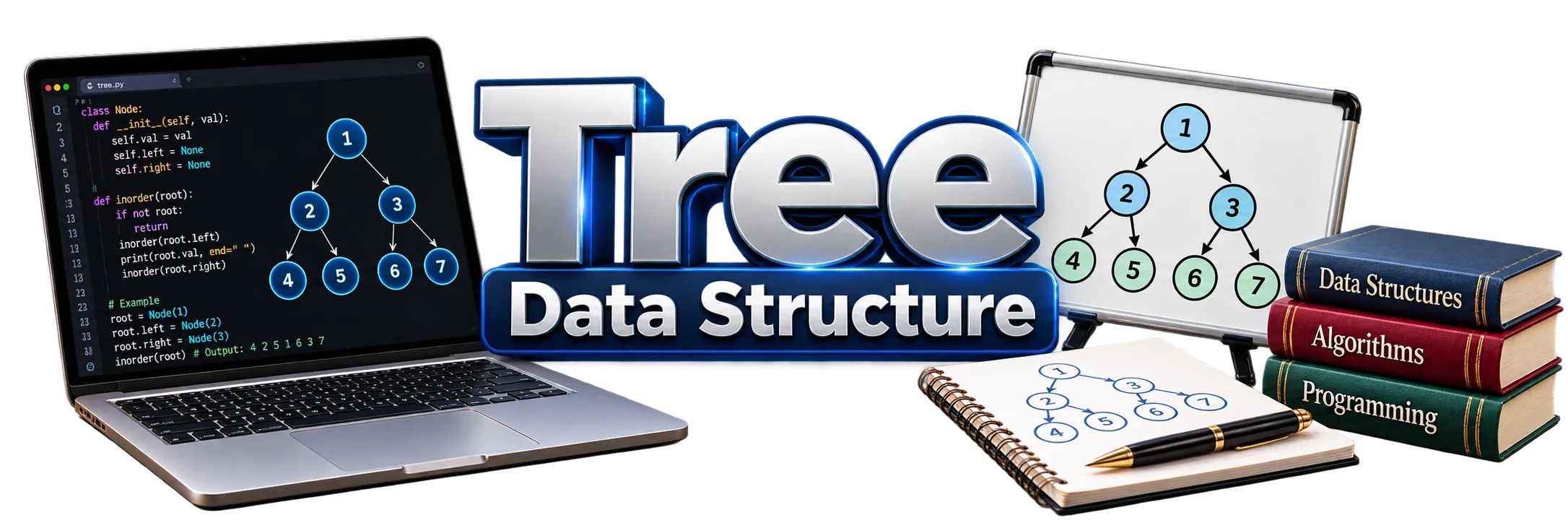 Tree Data Structure Explained: Types and Real-World Use Cases 5 min6 Oct 2026
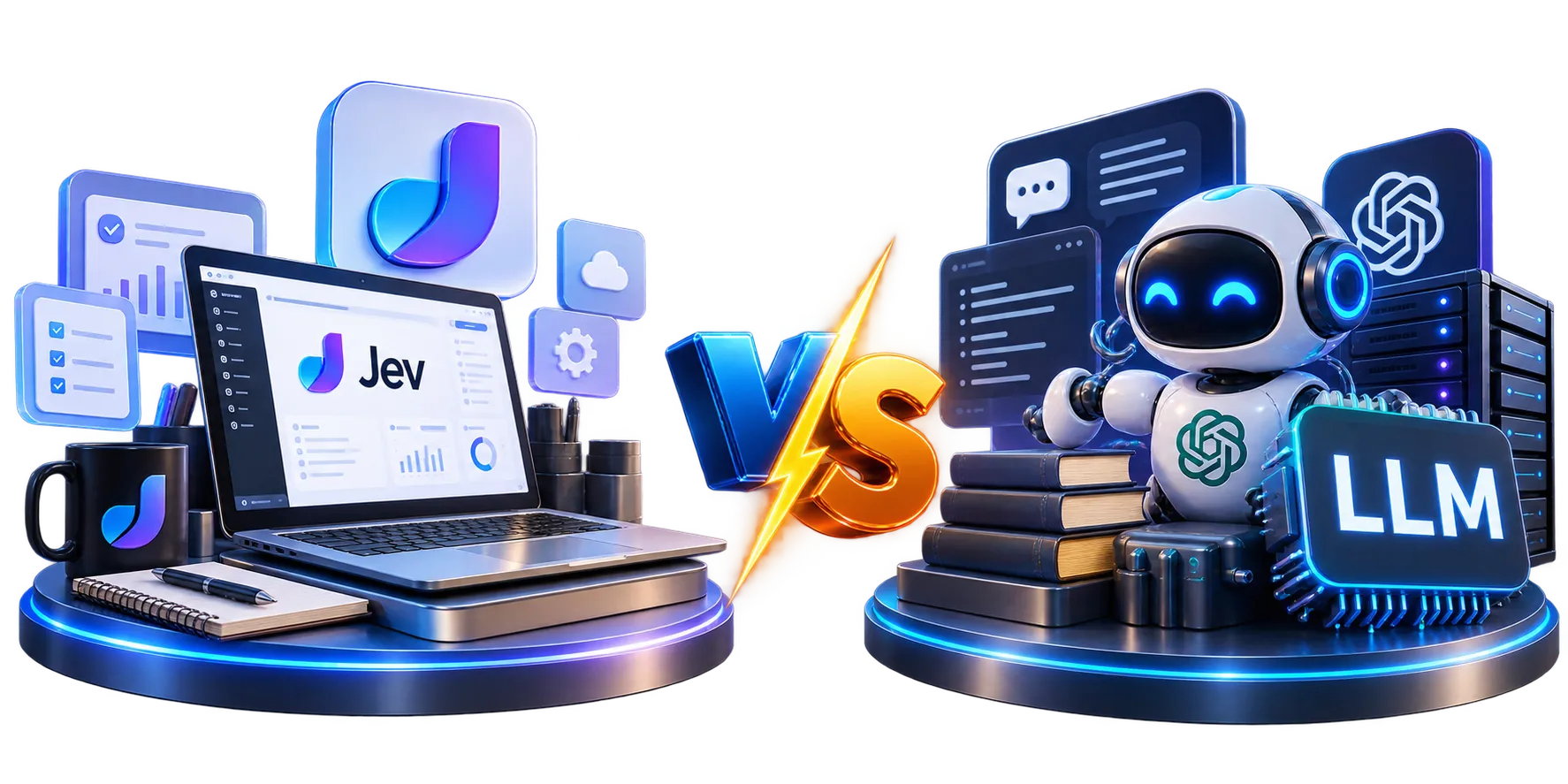 What is JEV and How Is It Different from LLMs? 5 min3 Oct 2026
Master sending mail using Nodemailer in Node.js. Configure pooled SMTP transports, design HTML templates, avoid event loop lag, and queue delivery in production.
Learn how to connect RabbitMQ with Node.js using amqplib. Build a reliable message producer and consumer with real-world error handling and production patterns.
Explore modern Java new features across Java 17 and Java 21 LTS releases. Learn how records, pattern matching, virtual threads, and sequenced collections work in production systems.
Learn how to implement JWT authentication and refresh token rotation from scratch in Node.js using crypto and express, without relying on external libraries for the core logic.
Understand tree data structures, their different types, segment trees, and real-world software engineering use cases from database indexing to range queries.
TrendingDiscover JEV, how it differs fundamentally from Large Language Models, and when to use each for enterprise architectures.