

Swati Tyagi
Senior Full Stack and Mobile App Developer
Job-ready Machine Learning training covering Python, statistics, supervised & unsupervised learning, deep learning and MLOps — with 10+ real datasets, mentorship and career support.
Machine Learning is the backbone of predictive software, recommendation engines, and modern data-driven decision making. If you want to move beyond writing rigid business rules and start building systems that generalise from raw data, you are in the right place. Most developers and analysts get stuck because they treat ML libraries like black boxes or rely on toy datasets that never appear in production. Here, you will write the math out, inspect the feature vectors, tune the hyperparameters, and ship real models behind containerised APIs.
By the end of this program, you will be able to build, evaluate, and deploy production-grade predictive systems from scratch. You will not just learn syntax; you will learn how models fail under data drift, how to handle severely imbalanced fraud datasets, and how to track your training runs so you can reproduce any result six months later.
Theory alone will not pass a technical interview or keep a production service alive. Throughout this curriculum, you will build and deploy concrete deliverables that form an impressive GitHub portfolio for your next job search:
This program is built for backend developers, data analysts, fresh graduates, and technical professionals who want a rigorous, engineering-first approach to machine learning. You do not need a PhD in statistics or prior machine learning experience. We teach the required mathematics — linear algebra, probability, and descriptive statistics — alongside Python fundamentals in the opening modules so you never feel lost.
It is not for someone looking for a quick certificate without writing code. You will write hundreds of lines of Python, debug shape mismatches in NumPy arrays, and troubleshoot gradient descent convergence issues. If you are willing to put in the reps, our mentors will guide you through every hurdle.
All cohorts run live online in timezone-friendly batches with practicing engineers who build ML systems in production daily. Sessions combine live coding, architectural walkthroughs, and interactive debugging. When you hit an error message during an exercise, you share your screen and work through it with your mentor.
You also get lifetime access to all session recordings, a private community for peer discussion, and weekly code reviews on your own GitHub repository. To ground your fundamentals in clean algorithmic logic before tackling advanced models, you can explore our Data Structures and Algorithms using Python training. Once you master tabular datasets, you can broaden your analytical skillset with our comprehensive Data Science curriculum or transition straight into multi-layer neural architectures through our Deep Learning course. For a faster, intensive track, learners frequently enroll in the Machine Learning Bootcamp. If you want to push your models into autonomous workflows and large language frameworks later, you can transition smoothly into the Production-Grade Generative AI and Agentic AI Engineer Program.
The demand for engineers who understand both machine learning algorithms and deployment pipelines remains exceptionally high across product startups and enterprise engineering teams. Hiring loops for Machine Learning Engineer and Data Scientist roles have evolved past simple coding tests. Interviewers now probe your understanding of the bias-variance trade-off, ask you to design data leakage prevention strategies, and require you to explain how you would monitor a model for drift after it ships to production.
Our dedicated placement team works with you on resume refinement, Kaggle profile optimization, and technical mock interviews that mirror real hiring bars. Take the next step in your engineering career and master Machine Learning with us today.
A structured curriculum with real tools and outcomes built for the workplace.
You can write clean Python scripts using NumPy vectors and Pandas dataframes while computing derivatives and probability distributions for model training.
Hands-on project: Write a vectorized data analysis pipeline in Python that processes raw CSV logs using NumPy and Pandas to compute custom statistical metrics without explicit loops, meeting memory efficiency constraints under 512 MB.
You can clean raw datasets, handle missing inputs, encode categorical variables, and generate exploratory visualizations with Seaborn and Matplotlib.
Hands-on project: Perform end-to-end exploratory data analysis on a messy customer churn dataset, resolving missing values and generating publication-ready correlation matrices with Seaborn while documenting outlier trimming thresholds.
You can train and evaluate regression and classification models using Scikit-learn, interpreting precision, recall, and ROC-AUC curves correctly.
Hands-on project: Build a multi-class classification model using Logistic Regression and Random Forests to predict customer purchase intent, evaluating performance with precision-recall curves and setting optimal classification thresholds.
You can group unlabelled data with clustering algorithms and reduce feature dimensionality using Principal Component Analysis.
Hands-on project: Apply K-Means clustering and PCA on customer purchase records to segment retail buyers into distinct behavioral personas for targeted marketing campaigns, validating cluster stability with silhouette scores.
You can tune hyperparameters using grid search and build high-performance gradient boosting models with XGBoost to prevent overfitting.
Hands-on project: Train an XGBoost classifier with hyperparameter tuning via RandomizedSearchCV to maximize predictive accuracy on a complex financial fraud dataset while ensuring validation latency remains under 50ms.
You can build feedforward neural networks and convolutional architectures using TensorFlow and Keras to process image and text data.
Hands-on project: Build and train a Convolutional Neural Network (CNN) in TensorFlow to classify image inputs with high validation accuracy, using data augmentation and dropout layers to prevent overfitting.
You can write comprehensive test suites for ML pipelines, validate data integrity before inference, and audit models for fairness and bias.
Hands-on project: Implement unit and integration tests for a feature engineering pipeline using PyTest, adding input validation guards and automated checks for data drift.
You can serialize models, build serving APIs with FastAPI, track experiments with MLflow, and containerize applications using Docker.
Hands-on project: Containerize a trained machine learning model inside a multi-stage Dockerfile, expose it via FastAPI with Pydantic validation, and log training runs using MLflow.
You can design distributed training setups, manage feature stores, and scale inference pipelines to handle high enterprise throughput securely.
Hands-on project: Design a distributed batch inference pipeline architecture specification, detailing feature store integration, secret management, and rollback procedures for a high-throughput enterprise system.
You can implement security controls, data privacy compliance checks, and audit trails for production machine learning models.
Hands-on project: Perform a comprehensive security and bias audit on an enterprise credit scoring model, documenting data lineage, access controls, and compliance measures.
You can design large-scale machine learning architectures for recommendation engines, fraud detection, and predictive maintenance.
Hands-on project: Design a complete system architecture document for a real-time recommendation engine handling 10,000 requests per second, detailing caching strategies and failure recovery.
You can serve the same feature definition to training and inference and stop train-serve skew.
Hands-on project: Define five features in a feature store with point-in-time-correct training retrieval and low-latency online serving, then demonstrate and fix a train-serve skew bug caused by a leaked future value.
You can design, build, and deploy an end-to-end machine learning system while presenting your portfolio professionally to hiring panels.
Hands-on project: Deploy a complete machine learning capstone system on cloud infrastructure, complete with automated inference testing, GitHub portfolio documentation, and mock interview clearance.
Every instructor here ships production code for a living and teaches the same week they deploy.
5 learners sharing their experience

The Full-Stack Java developer program at Squarebrackets completely transformed my career. Learning Spring Boot and microservices architecture alongside React and Next.js gave me the exact modern stack companies are looking for. Building real-time projects using Apache Kafka and RabbitMQ for message queuing gave me the practical confidence I needed to ace my system design rounds.
Ankit transitioned from a legacy support engineer to a high-paying product development role after completing his 6-month intensive Java and JavaScript full-stack training at our Noida campus.

Squarebrackets took me from not knowing what a gradient was to building and deploying CNNs and Transformers. The maths-first approach made everything click, and the mentors pushed me through every hard concept.
Completed the Deep Learning Course at Squarebrackets and landed a deep learning role within two months.

Squarebrackets gave me the complete AI picture — from search algorithms and Bayesian reasoning to building LLM agents. The maths-first approach meant nothing was a black box, and the mentors pushed me through every project.
Completed the Artificial Intelligence Course at Squarebrackets and moved into an AI engineering role within two months.

The Java Full-Stack and DSA course at Squarebrackets completely changed my career trajectory. The focus on raw problem-solving with DSA alongside hands-on Spring Boot and React projects gave me the practical skills I needed. I went from struggling with basic coding rounds to cracking my technical interview with absolute confidence.
Aniket joined Squarebrackets as a college senior looking to transition from theoretical academic projects to production-ready software development. After completing our rigorous training program, he secured a placement as an Associate Software Engineer.
The live cohort broke down complex concepts like Spring Boot transaction management and React state handling in a way that made immediate sense for production work. Having worked through real backend architectures during class, my daily code reviews at work became much smoother.
Completed the Java Full Stack live training while balancing a full-time role, upgrading engineering skills through rigorous hands-on sessions.

“The Full-Stack Java developer program at Squarebrackets completely transformed my career. Learning Spring Boot and microservices architecture alongside React and Next.js gave me the exact modern stack companies are looking for. Building real-time projects using Apache Kafka and RabbitMQ for message queuing gave me the practical confidence I needed to ace my system design rounds.”

Software Engineer, Student
“Squarebrackets took me from not knowing what a gradient was to building and deploying CNNs and Transformers. The maths-first approach made everything click, and the mentors pushed me through every hard concept.”

Student
“Squarebrackets gave me the complete AI picture — from search algorithms and Bayesian reasoning to building LLM agents. The maths-first approach meant nothing was a black box, and the mentors pushed me through every project.”

Student
“The Java Full-Stack and DSA course at Squarebrackets completely changed my career trajectory. The focus on raw problem-solving with DSA alongside hands-on Spring Boot and React projects gave me the practical skills I needed. I went from struggling with basic coding rounds to cracking my technical interview with absolute confidence.”
Associate Software Engineer, Capgemini
“The live cohort broke down complex concepts like Spring Boot transaction management and React state handling in a way that made immediate sense for production work. Having worked through real backend architectures during class, my daily code reviews at work became much smoother.”

Student


Browse the common questions, or reach out and our team will help you directly.
6 courses in this collection

GitHub Copilot Mastery: GH-300 & GH-600 Certification Program Beginner12 Weeks (93 Hours)

Agentic AI Software Engineering: Build & Deploy Production Agents Beginner12 Weeks

Artificial Intelligence Advanced6 Months

Data Science Advanced6 Months

Deep Learning Advanced6 Months

Generative AI Course Advanced6 Months (24 Weeks)
Best seller
Best seller
Trending
Trending
Trending
NewHands-on programming tracks with runnable code, from fundamentals to job-ready projects.
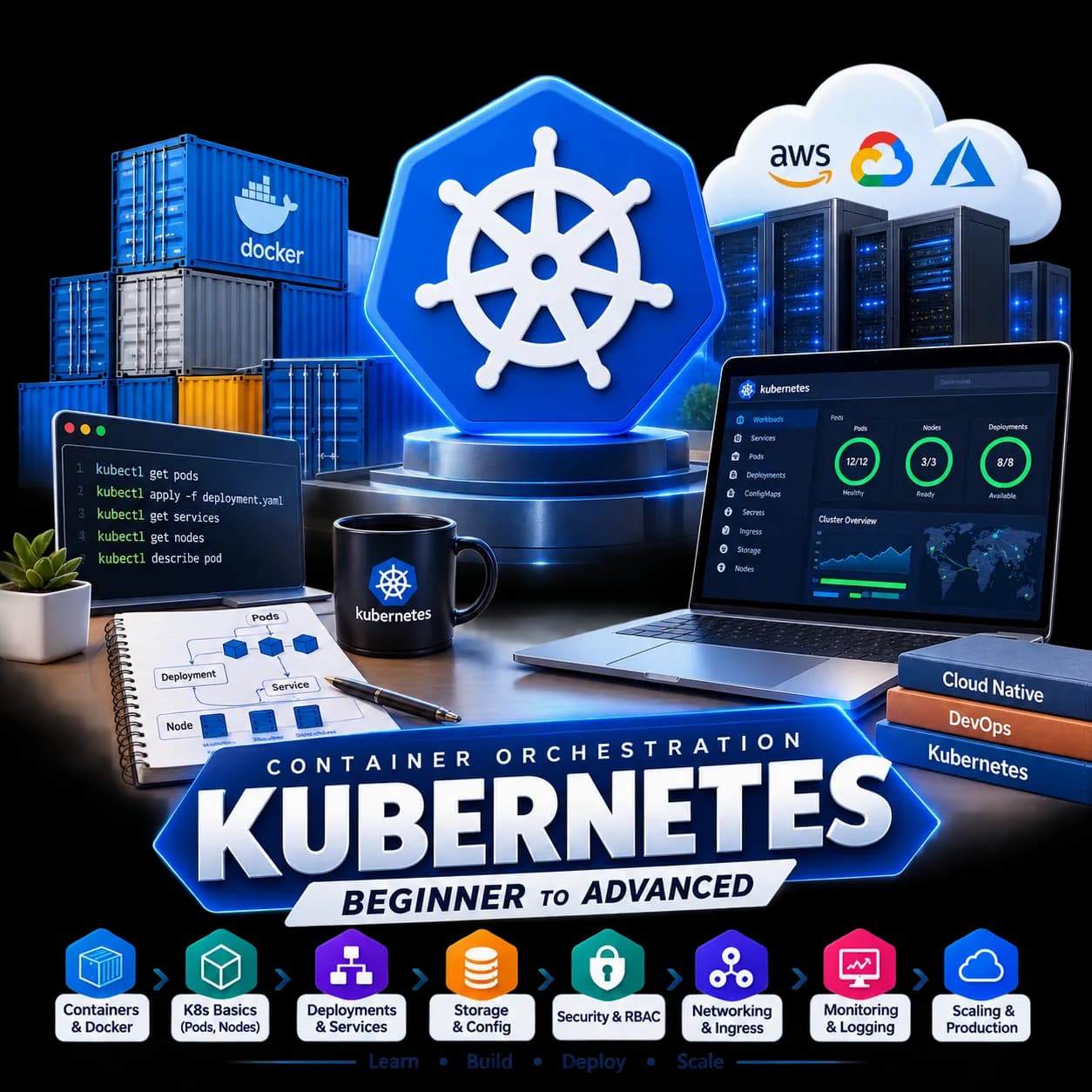
Kubernetes Beginner to Production Grade: A Hands-On DevOps Guide Beginner25 min

100 Days of DSA with Java Beginner to advanced100 days · 85 lessons published

100 Days of AI Engineering Beginner to advanced100 days · 57 lessons published


Articles to help you learn, grow, and get hired.
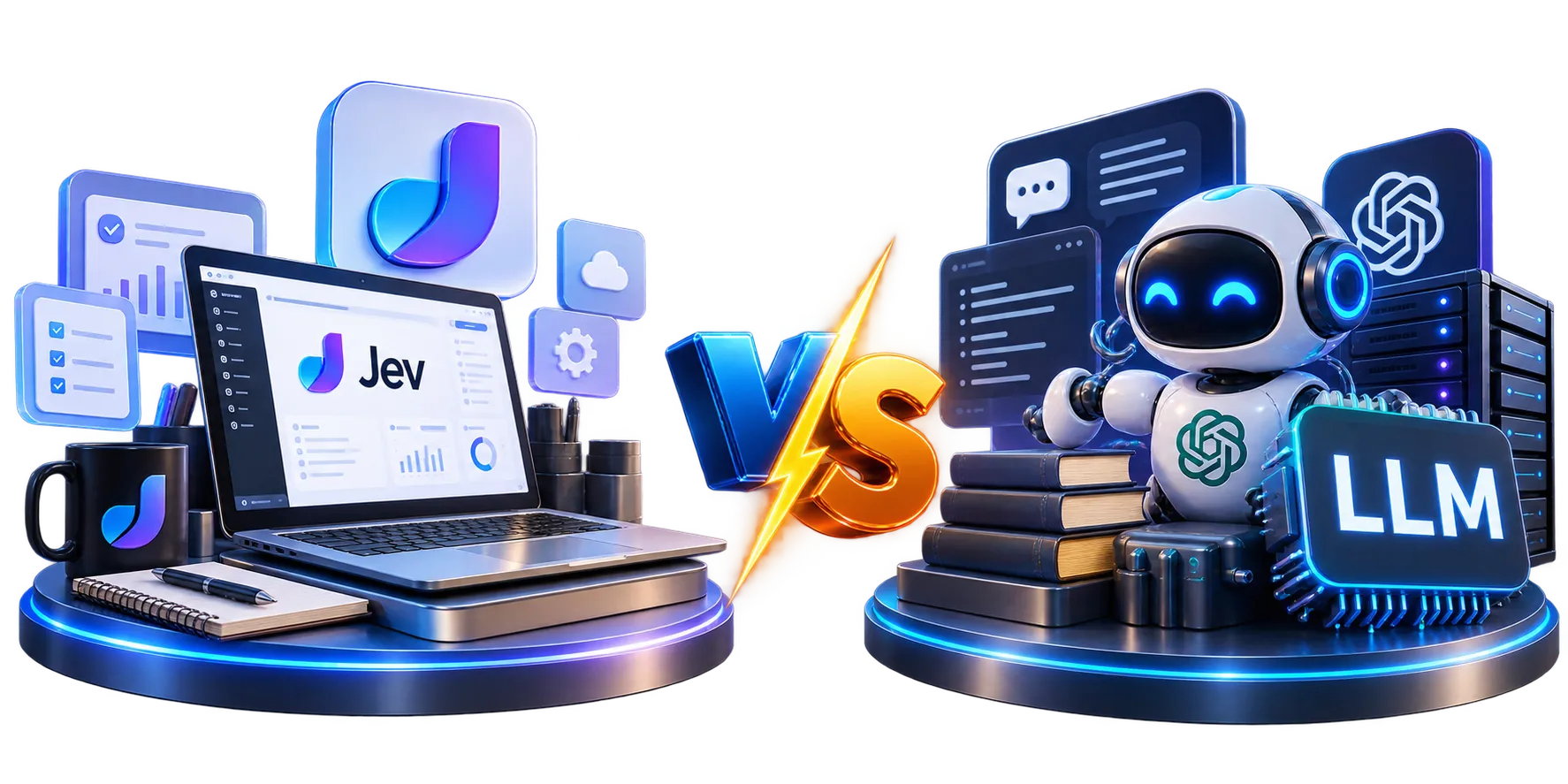
What is JEV and How Is It Different from LLMs? 5 min3 Oct 2026

Waterfall to Agentic SDLC: The Evolution of Software Engineering 5 min6 Sept 2026

Prompt Engineering to Harness Engineering: AI Development Evolution 5 min6 Sept 2026
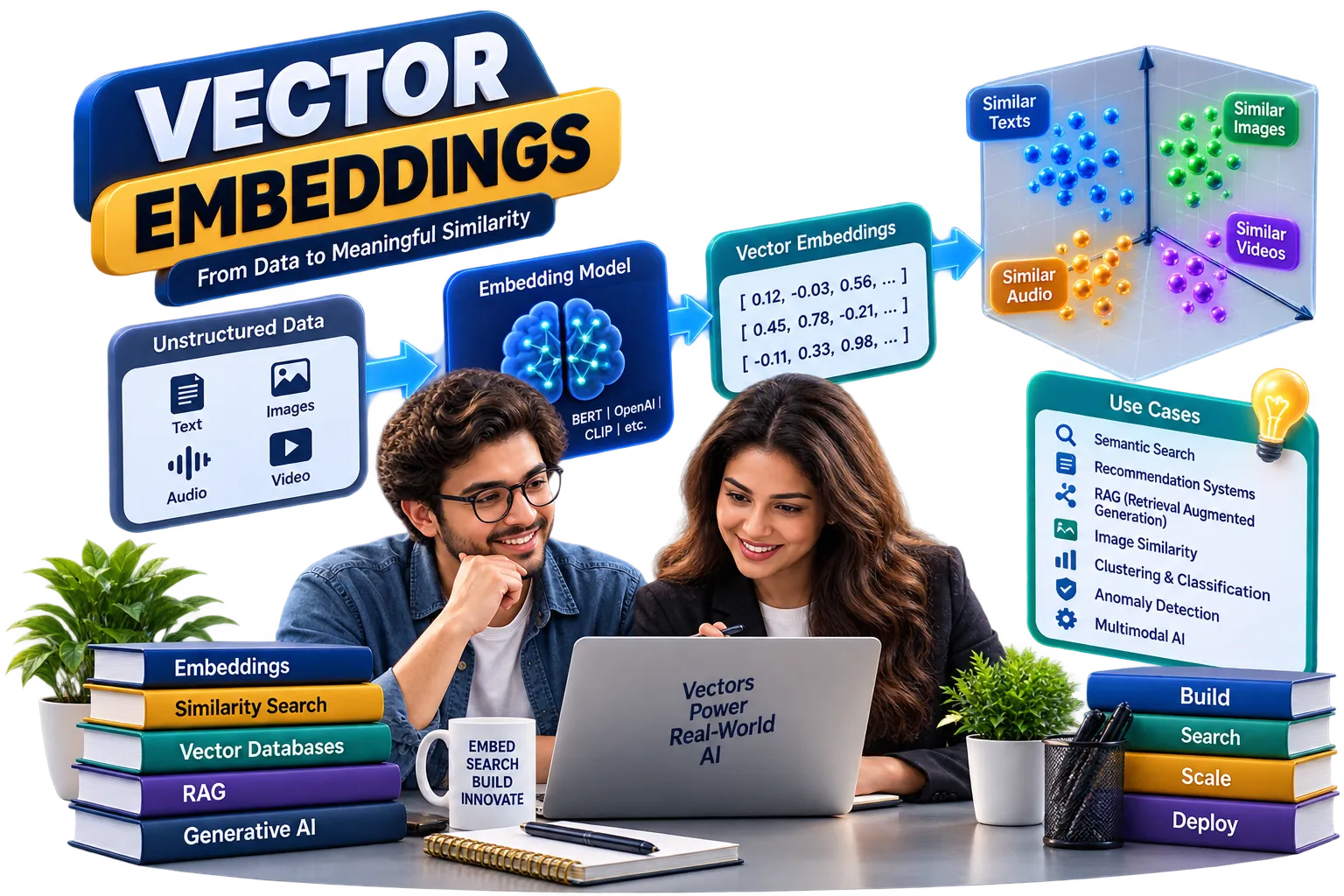
Vector Embedding Explained: The Math Behind Modern AI 5 min4 Sept 2026

JSON vs TOON: The Problem and the Fix for LLM Data Transfer 5 min18 Aug 2026
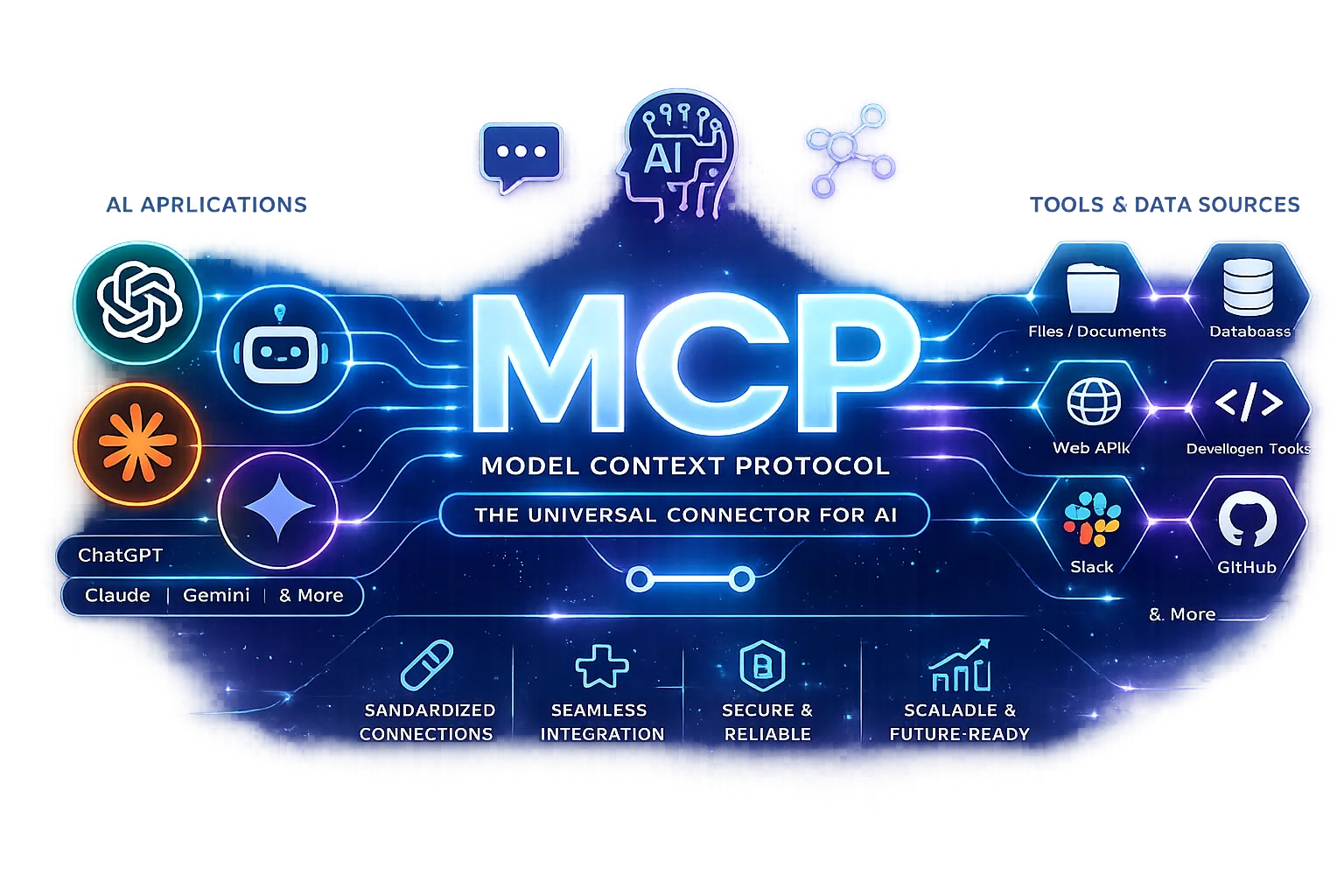
Model Context Protocol and the N*M Integration Problem 5 min16 Aug 2026
TrendingDiscover JEV, how it differs fundamentally from Large Language Models, and when to use each for enterprise architectures.

Explore how software development evolved from rigid Waterfall and Agile cycles into the era of Agentic SDLC, where autonomous AI agents write, test, and deploy code.
TrendingDiscover why AI development is moving beyond simple prompt writing toward robust software wrappers. Learn how to build production-grade LLM application pipelines.

Demystify vector embeddings, how they represent real-world data as high-dimensional coordinates, and how LLMs use them to understand semantic meaning.

Discover why JSON costs you money in LLM APIs and how TOON (Token Object-Oriented Notation) fixes token bloat for efficient AI automation.
TrendingUnderstand the Model Context Protocol (MCP), how it solves the complex N*M integration problem between LLMs and data sources, and why it simplifies AI tool development.