

Himanshu Mudgal
Lead DevOps Engineer
Master Apache Kafka and build real-time, event-driven data pipelines. Learn brokers, topics, producers, consumers, Kafka Streams, and Kafka Connect in this hands-on live online training.
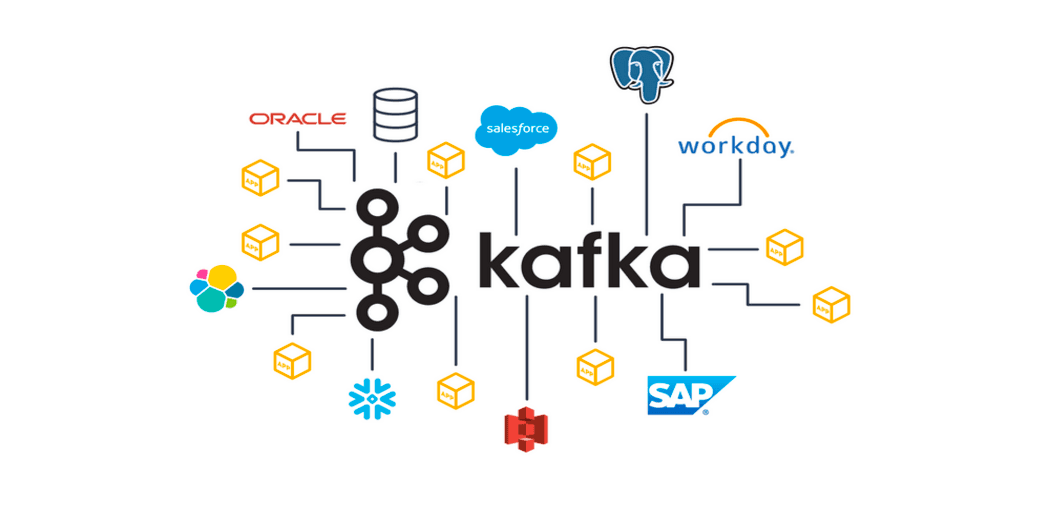
The backbone of real-time data. Apache Kafka Training moves trillions of messages a day at top tech companies because it streams events reliably at scale. This live online training makes you fluent in the platform, taking you from local broker setup to production-grade streaming topologies.
You will learn Kafka's core architecture—topics, partitions, brokers, producers, and consumer groups—along with offset management and delivery semantics. You will build streaming pipelines, integrate Kafka Connect, and write stream processing applications using Kafka Streams. Kafka rarely operates in isolation. It feeds directly into the Data Engineering Bootcamp pipelines and integrates with batch analytics layers like Apache Hive Training architectures for enterprise reporting. Before building complex distributed event networks, ensure your fundamentals are solid by practising core logic through Data Structures and Algorithms using Java or managing underlying database state using SQL (Structured Query Language) Training queries. You will leave equipped to design resilient event-driven architectures that maintain stability under heavy production loads.
This program suits backend developers, data engineers, and infrastructure operators who need to move away from batch polling and build event-driven systems. If you have written services in Java or Python and understand basic relational database queries, you are ready for this material. Sessions run live online in timezone-friendly cohorts, featuring direct screen-sharing, live debugging of broken consumer offsets, and rigorous peer code reviews. You do not need to commute to any campus or relocate.
Modern distributed systems rely on event streaming to decouple microservices and ingest telemetry feeds. Companies hiring backend and data engineers actively test your knowledge of consumer rebalancing, partition sizing math, and lag monitoring during technical loops. Mastering these mechanics positions you for senior roles where high-throughput data movement is the primary bottleneck. Take your next step by reviewing our complete curriculum and joining the upcoming live cohort.
A structured curriculum with real tools and outcomes built for the workplace.
You can explain the architecture of event streaming platforms and initialize a local Apache Kafka broker instance using Docker Compose.
Hands-on project: Spin up a single-node Kafka and ZooKeeper container stack via docker-compose.yml and verify broker health using kafka-topics.sh with custom partition configurations.
You can design topics with optimal partition counts and configure cluster replication for absolute durability under node failure.
Hands-on project: Create a multi-broker Kafka cluster with a replication factor of 3 and test data availability by killing a broker container.
You can write high-throughput Java producers featuring custom partitioners and robust acknowledgement configurations.
Hands-on project: Implement a Java producer using KafkaProducer API that publishes 100,000 keyed records with a custom Partitioner class and acks=all.
You can scale reading workloads horizontally across consumer groups while managing offset commits and rebalance listeners.
Hands-on project: Build a multi-threaded consumer application in Java that handles partition rebalances gracefully and implements manual asynchronous offset commits.
You can build real-time stream processing applications that execute aggregations, windowing operations, and stream joins.
Hands-on project: Develop a Kafka Streams topology that reads raw user click events, computes sliding-window aggregates, and writes results to an output topic.
You can configure source and sink connectors to stream data between databases and Kafka without writing custom integration code.
Hands-on project: Deploy Debezium MySQL source connector and JDBC sink connector in distributed Kafka Connect mode to stream database table changes in real time.
You can enforce data contracts across distributed producers and consumers using Confluent Schema Registry and Apache Avro.
Hands-on project: Set up a local Confluent Schema Registry instance and configure Java producers to serialize messages using Avro with Backward compatibility rules.
You can tune Kafka cluster performance parameters, configure Prometheus metrics scraping, and secure brokers with TLS and SASL.
Hands-on project: Configure SASL/SCRAM authentication on a Kafka cluster and set up a Prometheus and Grafana dashboard tracking broker request latency and disk saturation.
You can integrate Kafka with Apache Spark streaming jobs and deploy managed streaming infrastructure on AWS MSK and Confluent Cloud.
Hands-on project: Connect a Kafka topic to an AWS MSK cluster and run a Spark Structured Streaming job to consume and aggregate events in real time.
You can perform load testing on Kafka pipelines, write robust integration tests with EmbeddedKafka, and execute zero-downtime maintenance operations.
Hands-on project: Write comprehensive integration tests for a Kafka consumer service using EmbeddedKafka and simulate peak load using kafka-producer-perf-test.sh.
You can establish enterprise data governance frameworks, enforce security compliance policies, and manage multi-team Kafka ownership models.
Hands-on project: Design an enterprise Kafka governance document specifying topic naming conventions, ACL access control matrices, and data retention policies for a regulated financial institution.
You can replicate a cluster across regions and state the data loss a failover would cost.
Hands-on project: Replicate a topic to a second cluster with MirrorMaker 2, document offset translation for consumers, then run a failover of a consuming application to the secondary and measure the duplicate and lost message counts.
You can build, deploy, and monitor an end-to-end real-time event streaming pipeline processing millions of records with fault tolerance.
Hands-on project: Build and deploy a complete real-time event processing system consisting of a custom Java producer, Kafka broker cluster, Kafka Streams aggregator, and PostgreSQL sink connector.
Every instructor here ships production code for a living and teaches the same week they deploy.
5 learners sharing their experience

The Full-Stack Java developer program at Squarebrackets completely transformed my career. Learning Spring Boot and microservices architecture alongside React and Next.js gave me the exact modern stack companies are looking for. Building real-time projects using Apache Kafka and RabbitMQ for message queuing gave me the practical confidence I needed to ace my system design rounds.
Ankit transitioned from a legacy support engineer to a high-paying product development role after completing his 6-month intensive Java and JavaScript full-stack training at our Noida campus.

Squarebrackets took me from not knowing what a gradient was to building and deploying CNNs and Transformers. The maths-first approach made everything click, and the mentors pushed me through every hard concept.
Completed the Deep Learning Course at Squarebrackets and landed a deep learning role within two months.

Squarebrackets gave me the complete AI picture — from search algorithms and Bayesian reasoning to building LLM agents. The maths-first approach meant nothing was a black box, and the mentors pushed me through every project.
Completed the Artificial Intelligence Course at Squarebrackets and moved into an AI engineering role within two months.

The Java Full-Stack and DSA course at Squarebrackets completely changed my career trajectory. The focus on raw problem-solving with DSA alongside hands-on Spring Boot and React projects gave me the practical skills I needed. I went from struggling with basic coding rounds to cracking my technical interview with absolute confidence.
Aniket joined Squarebrackets as a college senior looking to transition from theoretical academic projects to production-ready software development. After completing our rigorous training program, he secured a placement as an Associate Software Engineer.
The live cohort broke down complex concepts like Spring Boot transaction management and React state handling in a way that made immediate sense for production work. Having worked through real backend architectures during class, my daily code reviews at work became much smoother.
Completed the Java Full Stack live training while balancing a full-time role, upgrading engineering skills through rigorous hands-on sessions.

“The Full-Stack Java developer program at Squarebrackets completely transformed my career. Learning Spring Boot and microservices architecture alongside React and Next.js gave me the exact modern stack companies are looking for. Building real-time projects using Apache Kafka and RabbitMQ for message queuing gave me the practical confidence I needed to ace my system design rounds.”

Software Engineer, Student
“Squarebrackets took me from not knowing what a gradient was to building and deploying CNNs and Transformers. The maths-first approach made everything click, and the mentors pushed me through every hard concept.”

Student
“Squarebrackets gave me the complete AI picture — from search algorithms and Bayesian reasoning to building LLM agents. The maths-first approach meant nothing was a black box, and the mentors pushed me through every project.”

Student
“The Java Full-Stack and DSA course at Squarebrackets completely changed my career trajectory. The focus on raw problem-solving with DSA alongside hands-on Spring Boot and React projects gave me the practical skills I needed. I went from struggling with basic coding rounds to cracking my technical interview with absolute confidence.”
Associate Software Engineer, Capgemini
“The live cohort broke down complex concepts like Spring Boot transaction management and React state handling in a way that made immediate sense for production work. Having worked through real backend architectures during class, my daily code reviews at work became much smoother.”

Student


Browse the common questions, or reach out and our team will help you directly.
4 courses in this collection
Hadoop Training3 Months (12 Weeks)

MongoDB Training Advanced3 Months (12 Weeks)

Apache Hive Training Advanced3 Months (12 Weeks)
SQL (Structured Query Language) Training3 Months (12 Weeks)
Featured
New
New
TrendingHands-on programming tracks with runnable code, from fundamentals to job-ready projects.
Kubernetes Beginner to Production Grade: A Hands-On DevOps Guide Beginner25 min

100 Days of DSA with Java Beginner to advanced100 days · 85 lessons published

100 Days of AI Engineering Beginner to advanced100 days · 57 lessons published


Articles to help you learn, grow, and get hired.
Sending Mail Using Nodemailer: A Production Engineering Guide 5 min22 Oct 2026RabbitMQ with Node.js: Practical Message Queue Guide 5 min15 Oct 2026

Modern Java New Features: From Records to Virtual Threads 5 min12 Oct 2026
JWT Token from Scratch in Node.js: Step-by-Step Guide 5 min8 Oct 2026
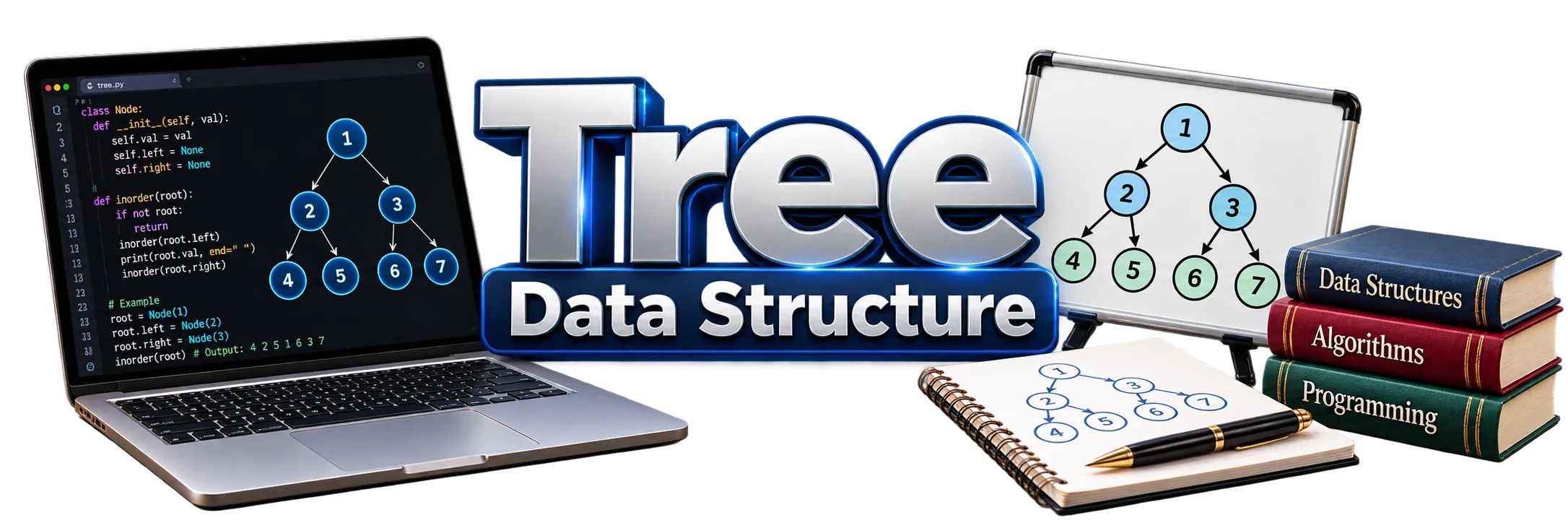
Tree Data Structure Explained: Types and Real-World Use Cases 5 min6 Oct 2026
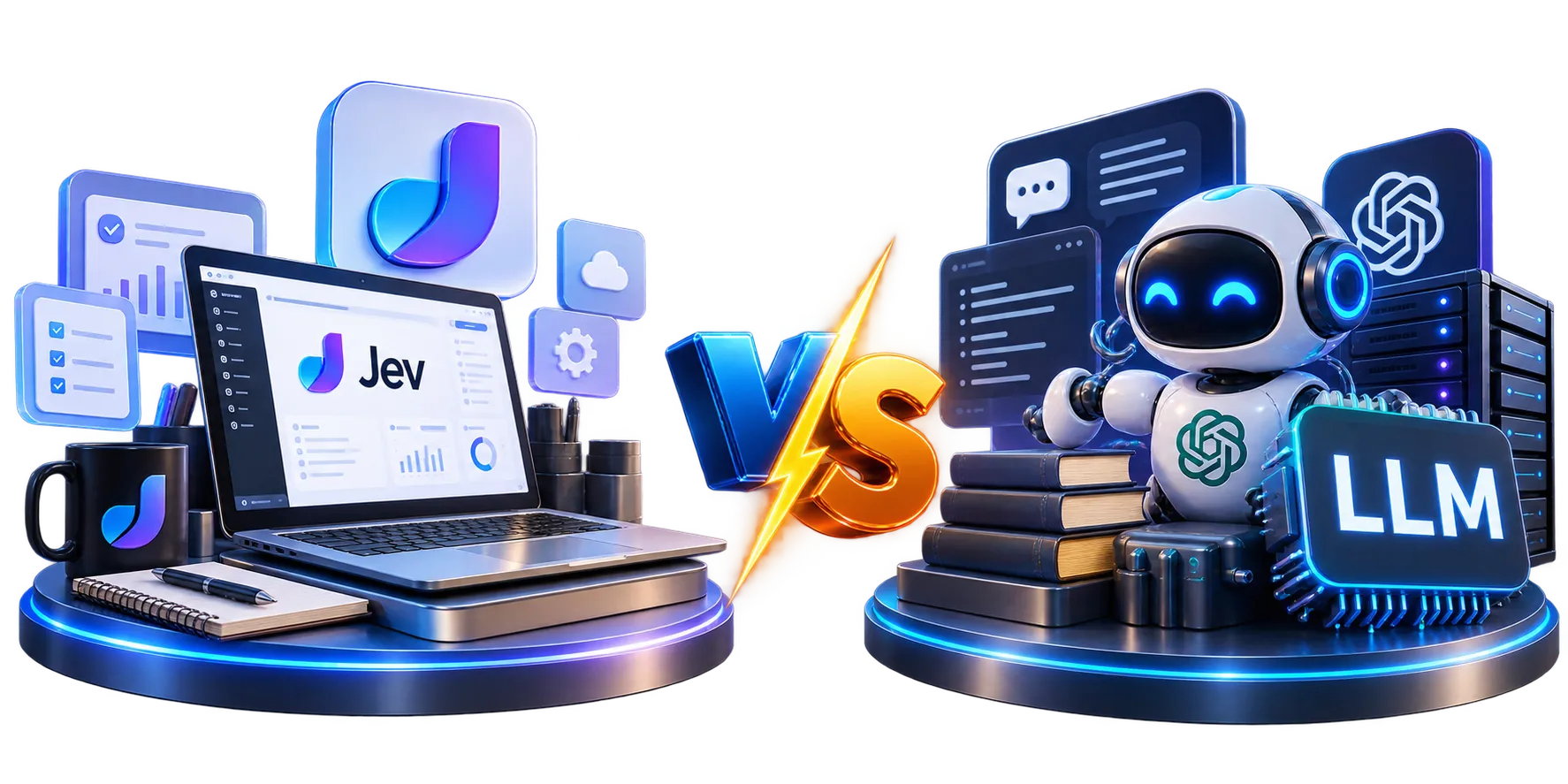
What is JEV and How Is It Different from LLMs? 5 min3 Oct 2026
Master sending mail using Nodemailer in Node.js. Configure pooled SMTP transports, design HTML templates, avoid event loop lag, and queue delivery in production.
Learn how to connect RabbitMQ with Node.js using amqplib. Build a reliable message producer and consumer with real-world error handling and production patterns.

Explore modern Java new features across Java 17 and Java 21 LTS releases. Learn how records, pattern matching, virtual threads, and sequenced collections work in production systems.

Learn how to implement JWT authentication and refresh token rotation from scratch in Node.js using crypto and express, without relying on external libraries for the core logic.

Understand tree data structures, their different types, segment trees, and real-world software engineering use cases from database indexing to range queries.
TrendingDiscover JEV, how it differs fundamentally from Large Language Models, and when to use each for enterprise architectures.