Swati Tyagi
Senior Full Stack and Mobile App Developer
Master Jenkins CI/CD pipelines, Jenkinsfiles, Docker, and Kubernetes with live online hands-on labs, a production capstone project, and career support at Squarebrackets.

Automate your build and delivery pipeline. Jenkins is the industry-standard engine for continuous integration and delivery, powering the automated bridge from a developer's local commit to production deployment. This hands-on program transforms how you manage release engineering by teaching you to build production-grade workflows from first principles.
You will learn to configure controllers, provision agents, write robust declarative and scripted syntax, and enforce rigorous quality gates across every build. Modern software engineering teams expect automated validation, fast feedback loops, and zero-downtime releases. You will master the exact patterns required to eliminate manual deployments and maintain reliable delivery pipelines.
You will build and deliver concrete systems throughout your training. You will package applications inside containerized build environments, orchestrate multi-branch pipelines with automated webhooks, enforce code quality checks with vulnerability scanners, and execute zero-downtime rollouts directly into clustered environments. Each deliverable replicates the operational responsibilities of a senior build and release engineer in remote-first engineering squads.
This program is designed for backend developers, system administrators, and infrastructure engineers looking to specialize in delivery automation. If you spend hours running manual shell scripts, debugging flaky build servers, or managing brittle release processes, this training gives you the systematic methodology to automate release management end to end. Prior experience with Linux command line operations and basic Git version control will help you hit the ground running.
It builds directly on foundational concepts from Git & GitHub and pairs smoothly with containerization techniques taught in Docker — From Zero to Production and container orchestration explored in Kubernetes: Beginner to Advanced. For engineers seeking a complete career transition into infrastructure automation, this course serves as a core pillar inside the comprehensive DevOps & Automation Bootcamp.
All cohorts are conducted live online in timezone-friendly batches, allowing working developers from any region to participate without disrupting their employment. Sessions emphasize active coding rather than passive slide viewing. You write pipelines, debug failure logs, and configure webhook integrations alongside experienced practitioners who run CI/CD infrastructure in production daily. Every session is recorded for lifetime reference, and weekly code reviews on your personal repository ensure you master idiomatic pipeline design.
Engineering teams across product startups and global enterprises actively recruit specialists who can design, secure, and scale continuous integration workflows. Job postings for backend and DevOps roles frequently list pipeline automation as a core requirement. Interview loops for these positions typically test your ability to troubleshoot stuck executors, write clean declarative pipeline syntax, handle credential injection securely, and scale worker nodes across cloud infrastructure. Mastering these competencies prepares you to excel in technical assessments and take on senior release engineering responsibilities.
Take the next step in your engineering career by mastering the tool that powers software delivery across modern tech stacks. Join our live sessions and start building reliable, automated deployment systems today.
A structured curriculum with real tools and outcomes built for the workplace.
You can explain continuous delivery flows and set up a working Jenkins controller using Docker Compose.
Hands-on project: Deploy Jenkins via Docker Compose with persistent volume storage on /var/jenkins_home and unlock it using the initial admin password from container logs.
You can configure traditional freestyle jobs to poll Git repositories and execute shell build steps.
Hands-on project: Create a freestyle job that clones a Git repository, runs a Maven clean compile goal, and archives the resulting JAR file in the workspace.
You can write declarative Jenkinsfiles with multiple stages, parallel execution, and environment variables.
Hands-on project: Write a multi-stage Jenkinsfile for a Java application containing build, test, and package stages running in parallel where applicable.
You can set up webhook-driven multibranch pipelines that validate GitHub pull requests automatically.
Hands-on project: Configure a GitHub webhook to trigger a multibranch Jenkins pipeline that runs automated checks on every pull request opening.
You can run unit tests, publish JUnit test reports, and enforce quality gates using SonarQube in pipelines.
Hands-on project: Integrate Maven test execution and SonarQube quality analysis into a Jenkinsfile, failing the build if code coverage drops below 80 percent.
You can securely manage secrets using Jenkins credentials store and send build failure alerts to Slack channels.
Hands-on project: Configure secret text and username-password credentials in Jenkins and write a post-build block to send Slack webhook notifications on build status changes.
You can provision and scale static and dynamic Jenkins agents across containerized hosts.
Hands-on project: Configure a permanent SSH agent node connected to the Jenkins controller and execute pipeline stages specifically targeted to that node label.
You can build container images inside pipelines, push them to registries, and deploy them to Kubernetes clusters.
Hands-on project: Build a Docker image from a pipeline workspace, push it to an image registry, and update a Kubernetes deployment manifest using kubectl apply.
You can write reusable Groovy shared libraries and manage controller configuration as code using JCasC.
Hands-on project: Create a custom global shared library containing a standardized build function and load it into multiple team pipelines.
You can run a Jenkins controller that survives a host failure and an upgrade.
Hands-on project: Stand up a controller with its configuration fully defined in JCasC, script a backup of JENKINS_HOME to object storage, restore it into a clean container to prove the backup works, and perform a plugin and core upgrade behind a tested rollback.
You can stop a pipeline from leaking credentials and prove what an artifact was built from.
Hands-on project: Lock a multi-team instance down with matrix-based RBAC and folder-scoped credentials, prove a secret is masked in console output, then sign a build artifact and publish an SBOM alongside it.
You can tell a broken pipeline from a broken test, and fix flakiness instead of retrying it.
Hands-on project: Instrument the instance with the Prometheus plugin and chart queue time and failure rate in Grafana, identify the three slowest stages of a real pipeline, and remove one genuine source of flakiness with evidence it is gone.
You can design, build, and deploy an automated enterprise-grade CI/CD pipeline for a real production application.
Hands-on project: Deliver a complete multi-stage pipeline that triggers on GitHub PR, runs unit tests and SonarQube scans, builds a container via Kubernetes pod agents, deploys to Kubernetes, and posts Slack alerts.
Every instructor here ships production code for a living and teaches the same week they deploy.
5 learners sharing their experience
The Full-Stack Java developer program at Squarebrackets completely transformed my career. Learning Spring Boot and microservices architecture alongside React and Next.js gave me the exact modern stack companies are looking for. Building real-time projects using Apache Kafka and RabbitMQ for message queuing gave me the practical confidence I needed to ace my system design rounds.
Ankit transitioned from a legacy support engineer to a high-paying product development role after completing his 6-month intensive Java and JavaScript full-stack training at our Noida campus.

Squarebrackets took me from not knowing what a gradient was to building and deploying CNNs and Transformers. The maths-first approach made everything click, and the mentors pushed me through every hard concept.
Completed the Deep Learning Course at Squarebrackets and landed a deep learning role within two months.

Squarebrackets gave me the complete AI picture — from search algorithms and Bayesian reasoning to building LLM agents. The maths-first approach meant nothing was a black box, and the mentors pushed me through every project.
Completed the Artificial Intelligence Course at Squarebrackets and moved into an AI engineering role within two months.

The Java Full-Stack and DSA course at Squarebrackets completely changed my career trajectory. The focus on raw problem-solving with DSA alongside hands-on Spring Boot and React projects gave me the practical skills I needed. I went from struggling with basic coding rounds to cracking my technical interview with absolute confidence.
Aniket joined Squarebrackets as a college senior looking to transition from theoretical academic projects to production-ready software development. After completing our rigorous training program, he secured a placement as an Associate Software Engineer.
The live cohort broke down complex concepts like Spring Boot transaction management and React state handling in a way that made immediate sense for production work. Having worked through real backend architectures during class, my daily code reviews at work became much smoother.
Completed the Java Full Stack live training while balancing a full-time role, upgrading engineering skills through rigorous hands-on sessions.

“The Full-Stack Java developer program at Squarebrackets completely transformed my career. Learning Spring Boot and microservices architecture alongside React and Next.js gave me the exact modern stack companies are looking for. Building real-time projects using Apache Kafka and RabbitMQ for message queuing gave me the practical confidence I needed to ace my system design rounds.”

Software Engineer, Student
“Squarebrackets took me from not knowing what a gradient was to building and deploying CNNs and Transformers. The maths-first approach made everything click, and the mentors pushed me through every hard concept.”

Student
“Squarebrackets gave me the complete AI picture — from search algorithms and Bayesian reasoning to building LLM agents. The maths-first approach meant nothing was a black box, and the mentors pushed me through every project.”

Student
“The Java Full-Stack and DSA course at Squarebrackets completely changed my career trajectory. The focus on raw problem-solving with DSA alongside hands-on Spring Boot and React projects gave me the practical skills I needed. I went from struggling with basic coding rounds to cracking my technical interview with absolute confidence.”
Associate Software Engineer, Capgemini
“The live cohort broke down complex concepts like Spring Boot transaction management and React state handling in a way that made immediate sense for production work. Having worked through real backend architectures during class, my daily code reviews at work became much smoother.”

Student


Browse the common questions, or reach out and our team will help you directly.
10 courses in this collection
Microsoft Azure Solutions Architect & DevOps Expert (AZ-900, AZ-305, AZ-400) Beginner24 Weeks

Advanced DevOps and Infrastructure Engineering Course Beginner22 Weeks
Docker — From Zero to Production Intermediate12 Weeks (93 Hours)

Google Cloud (GCP) Advanced5 Months (20 Weeks)
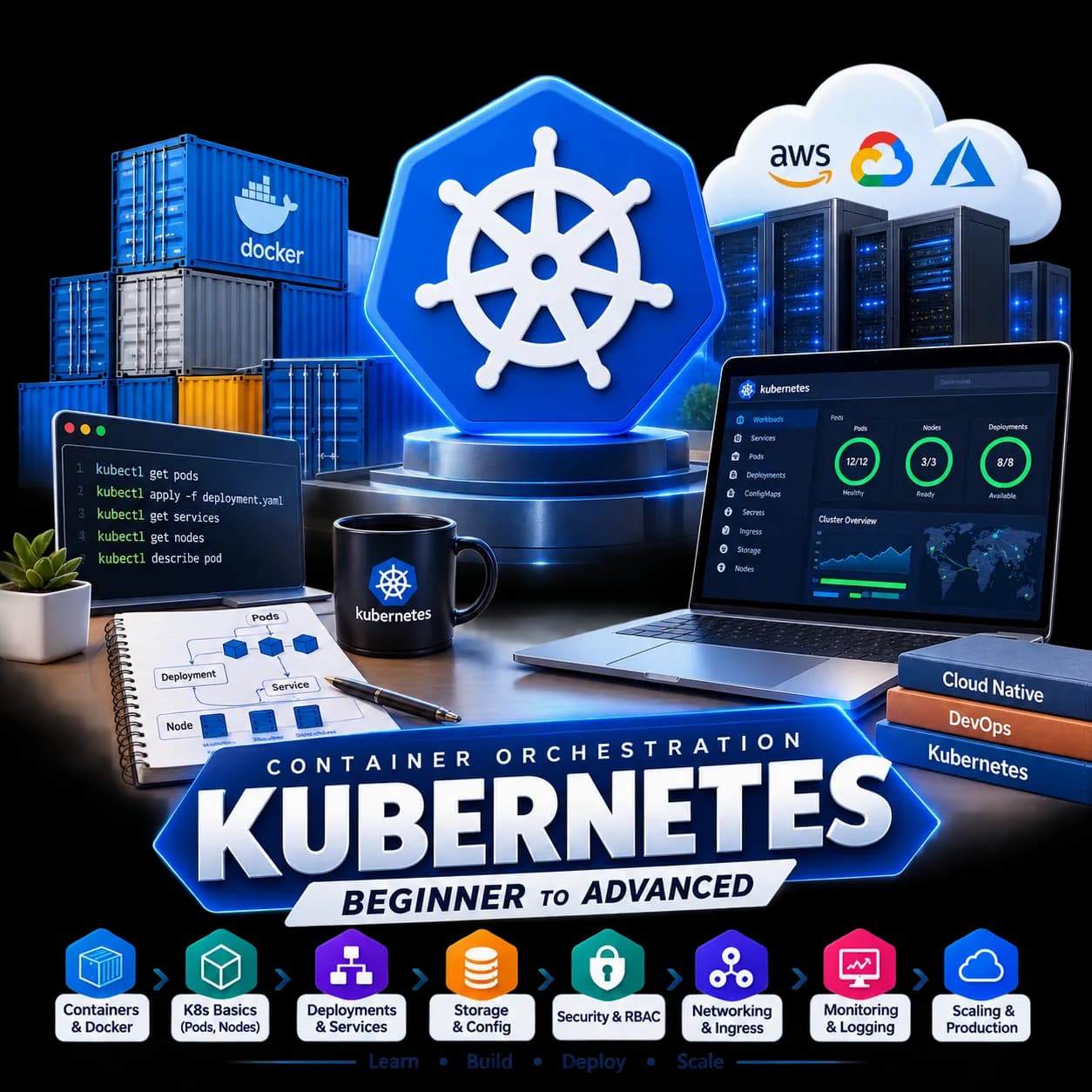
Kubernetes: Beginner to Advanced Advanced8–12 weeks

Azure Cloud Advanced5 Months (20 Weeks)
Linux Intermediate3 Months (12 Weeks)

System Monitoring & Observability Advanced4 Months (16 Weeks)
Git & GitHub Advanced12 Weeks (90 Hours)

AWS Cloud Advanced5 Months (20 Weeks)
Best seller
Best seller
Best seller
New
Best seller
New
New
New
New
NewHands-on programming tracks with runnable code, from fundamentals to job-ready projects.
Kubernetes Beginner to Production Grade: A Hands-On DevOps Guide Beginner25 min

100 Days of DSA with Java Beginner to advanced100 days · 85 lessons published

100 Days of AI Engineering Beginner to advanced100 days · 57 lessons published

Articles to help you learn, grow, and get hired.
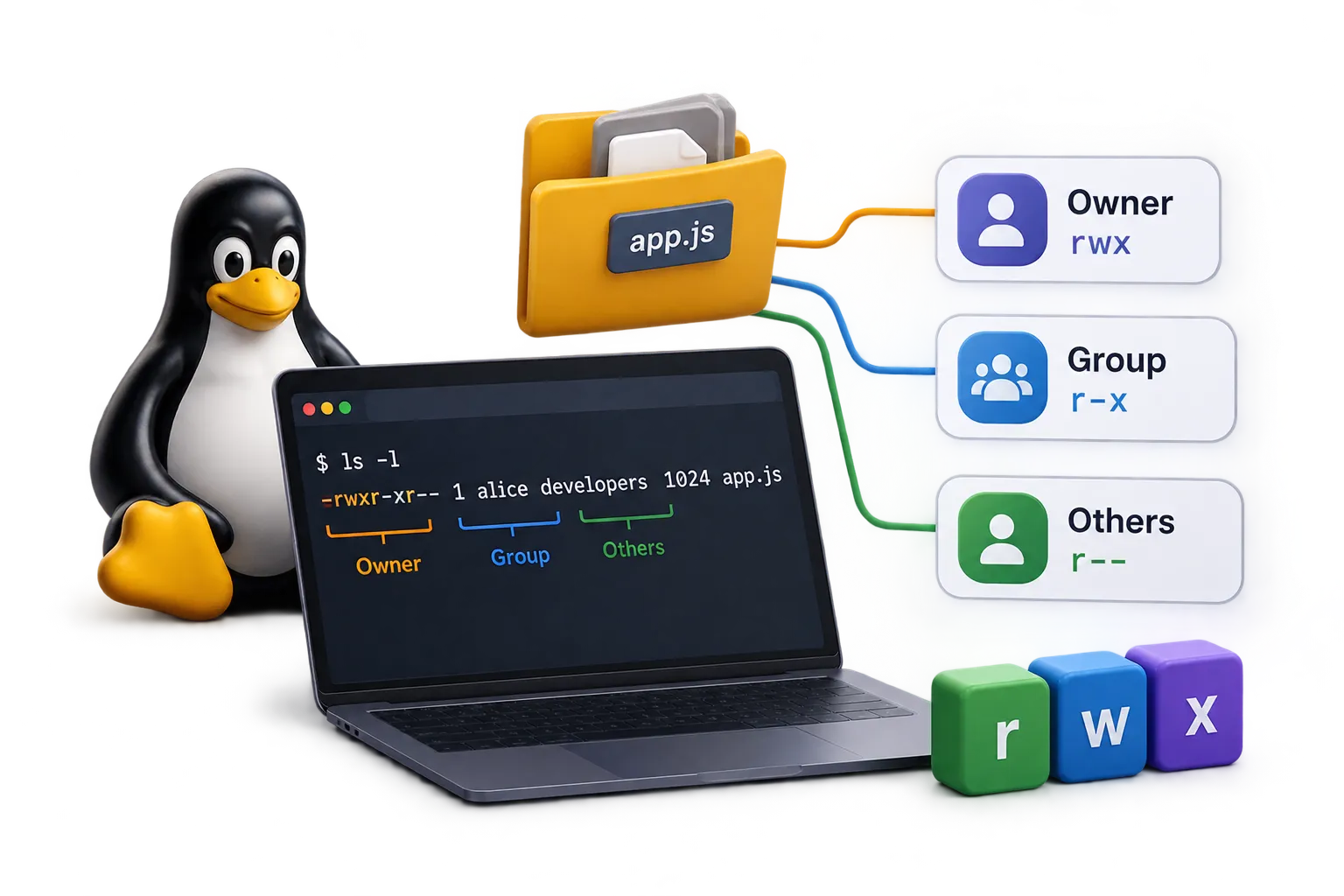
Linux Groups and File Permission: Complete Admin Guide 5 min11 Sept 2026

Terraform Architecture Explained: How It Works Under the Hood 5 min9 Sept 2026
Git vs GitLab: What's the Difference? (Simple Guide for Beginners) 5 min23 Jun 2026

Master Linux groups and File Permission with this practical guide covering user creation, group memberships, sudo privileges, and file permissions.

Demystify Terraform architecture. Learn how the Core, State files, Providers, and APIs interact to manage Infrastructure as Code safely.
TrendingA beginner-friendly guide to the real difference between Git and GitLab, explained in plain English with a simple real-life example anyone can understand.