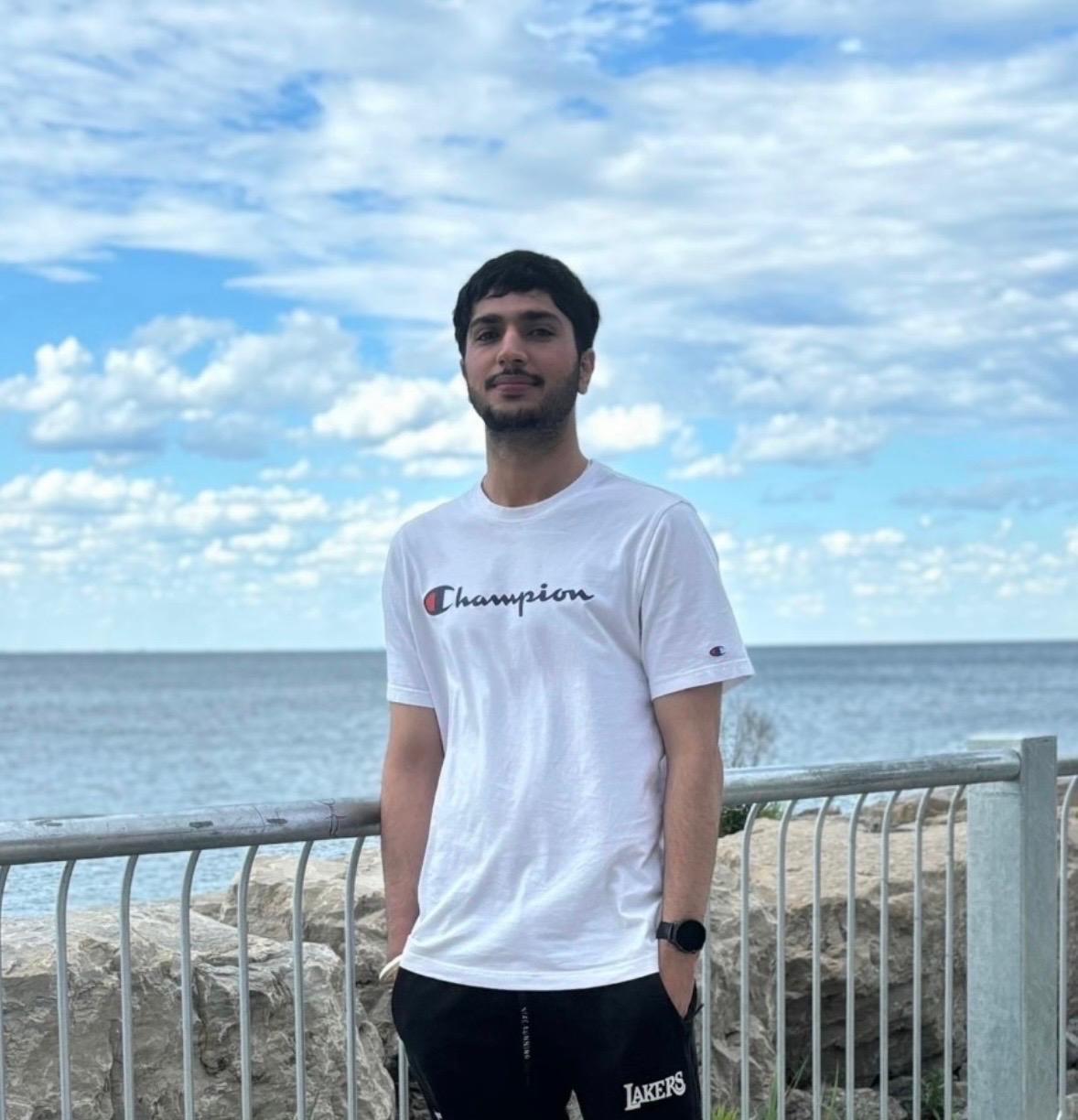


Swati Tyagi
Senior Full Stack and Mobile App Developer
Git and GitHub from your first commit to running a real project: internals, branching, rebasing, recovery, pull requests, Actions, OIDC deployment and repository security. Fully online.
Everyone learns three Git commands and then spends years avoiding the fourth. This course removes that entirely, and it does it by spending one early module on what a commit actually is. Once you know that commits are immutable objects, branches are pointers and nothing reachable is ever really lost, detached HEAD stops being frightening and a bad rebase becomes a two-minute fix.
It starts before your first commit and assumes no version control experience. It finishes with you deploying to a cloud provider from a GitHub Actions workflow using OIDC federation with no static credentials, and hardening a repository to a standard a security team would sign off. A complete beginner has a long runway; someone who has used Git daily for years will still meet new material from the rebase module onward.
When an employer asks for Git & GitHub experience, they rarely mean the commands. They mean: can you open a pull request someone wants to review, give feedback without being the reason people dread your name in a review queue, choose a branching strategy that fits how the team actually releases, set up CI that is fast enough that nobody routes around it, and harden a repository against the mistakes that actually happen. Six modules cover exactly that.
Fully online in live IST cohorts, learners across Delhi NCR and worldwide join the same batch, with every session recorded to the LMS the same day and kept afterwards. There is no physical centre to travel to.
Once version control is solid, the natural next steps are Advanced DevOps and Infrastructure Engineering for the delivery pipeline end to end, Docker: From Zero to Production for containerisation, or GitHub Copilot Mastery for AI-assisted development on top of these workflows.
A structured curriculum with real tools and outcomes built for the workplace.
You can explain what problem Git solves and why distributed version control replaced what came before.
Hands-on project: Reconstruct a week of changes to a project kept in dated folders, and write up every failure mode that approach has.
You can explain what a commit actually is, which turns every confusing Git situation into something you can reason about.
Hands-on project: Build a commit by hand using plumbing commands only, then inspect the object database to show what you created.
You can find out who changed what and why in a repository you have never seen before.
Hands-on project: Investigate an unfamiliar repository to find when a specific bug was introduced, by whom, and in which release.
You can work on several things at once without stepping on anyone, and resolve a conflict without fear.
Hands-on project: Resolve six conflicts of increasing difficulty, including a semantic conflict where both sides merge cleanly but the result is broken.
You can produce a clean, reviewable history and know precisely when rewriting is dangerous.
Hands-on project: Turn a messy twenty-commit branch into five logical commits with interactive rebase, keeping the final tree byte-identical.
You can recover from any Git mistake, which is the skill that removes fear from everything else.
Hands-on project: Recover from eight destructive scenarios including a hard reset, a deleted branch, a bad force push and an amended shared commit.
You can reason about what is on your machine versus the server, and never be surprised by a push rejection again.
Hands-on project: Work through ten remote scenarios including diverged branches, rejected pushes, upstream deletions and a force push you have to recover from.
You can run the collaboration side of a repository, not just the Git side.
Hands-on project: Set up a repository for a new project: templates, labels, milestones, a project board and a contributing guide.
You can open a pull request people want to review, and review someone else's without being the reason they dread it.
Hands-on project: Open three pull requests of increasing complexity and review three from others, with written reflection on the feedback given and received.
You can choose a branching model that fits how your team actually releases, rather than copying one from a blog post.
Hands-on project: Write a branching and release policy for three different team shapes and defend each choice against the alternatives.
You can build a pipeline that runs tests on every pull request and gives useful feedback in under five minutes.
Hands-on project: Build a CI workflow for a real project with caching, a matrix build and a required status check, finishing inside five minutes.
You can deploy from a pipeline without storing a single long-lived cloud credential.
Hands-on project: Build a deployment workflow using OIDC federation to a cloud provider, with environment approvals and no static secrets anywhere.
You can harden a repository against the mistakes and attacks that actually happen.
Hands-on project: Harden a repository: branch protection, secret scanning, dependency review, signed commits and a documented access model.
You can contribute to a project you do not own and maintain one other people contribute to.
Hands-on project: Make a real contribution to an open-source project, and separately triage ten issues on a repository you maintain.
You can set up and run a repository to a professional standard that a team could join tomorrow.
Hands-on project: Take a project from empty repository to a working collaborative setup: branching policy, protection rules, issue and PR templates, CODEOWNERS, a CI pipeline under five minutes, a deployment workflow using OIDC with no static secrets, secret scanning and dependency review, a release with signed tags and generated changelog, and a contributor guide — then run a simulated week of team activity including a conflict, a hotfix and a bad force push to recover from.
Every instructor here ships production code for a living and teaches the same week they deploy.
5 learners sharing their experience

The Full-Stack Java developer program at Squarebrackets completely transformed my career. Learning Spring Boot and microservices architecture alongside React and Next.js gave me the exact modern stack companies are looking for. Building real-time projects using Apache Kafka and RabbitMQ for message queuing gave me the practical confidence I needed to ace my system design rounds.
Ankit transitioned from a legacy support engineer to a high-paying product development role after completing his 6-month intensive Java and JavaScript full-stack training at our Noida campus.

Squarebrackets took me from not knowing what a gradient was to building and deploying CNNs and Transformers. The maths-first approach made everything click, and the mentors pushed me through every hard concept.
Completed the Deep Learning Course at Squarebrackets and landed a deep learning role within two months.

Squarebrackets gave me the complete AI picture — from search algorithms and Bayesian reasoning to building LLM agents. The maths-first approach meant nothing was a black box, and the mentors pushed me through every project.
Completed the Artificial Intelligence Course at Squarebrackets and moved into an AI engineering role within two months.

The Java Full-Stack and DSA course at Squarebrackets completely changed my career trajectory. The focus on raw problem-solving with DSA alongside hands-on Spring Boot and React projects gave me the practical skills I needed. I went from struggling with basic coding rounds to cracking my technical interview with absolute confidence.
Aniket joined Squarebrackets as a college senior looking to transition from theoretical academic projects to production-ready software development. After completing our rigorous training program, he secured a placement as an Associate Software Engineer.
The live cohort broke down complex concepts like Spring Boot transaction management and React state handling in a way that made immediate sense for production work. Having worked through real backend architectures during class, my daily code reviews at work became much smoother.
Completed the Java Full Stack live training while balancing a full-time role, upgrading engineering skills through rigorous hands-on sessions.

“The Full-Stack Java developer program at Squarebrackets completely transformed my career. Learning Spring Boot and microservices architecture alongside React and Next.js gave me the exact modern stack companies are looking for. Building real-time projects using Apache Kafka and RabbitMQ for message queuing gave me the practical confidence I needed to ace my system design rounds.”

Software Engineer, Student
“Squarebrackets took me from not knowing what a gradient was to building and deploying CNNs and Transformers. The maths-first approach made everything click, and the mentors pushed me through every hard concept.”

Student
“Squarebrackets gave me the complete AI picture — from search algorithms and Bayesian reasoning to building LLM agents. The maths-first approach meant nothing was a black box, and the mentors pushed me through every project.”

Student
“The Java Full-Stack and DSA course at Squarebrackets completely changed my career trajectory. The focus on raw problem-solving with DSA alongside hands-on Spring Boot and React projects gave me the practical skills I needed. I went from struggling with basic coding rounds to cracking my technical interview with absolute confidence.”
Associate Software Engineer, Capgemini
“The live cohort broke down complex concepts like Spring Boot transaction management and React state handling in a way that made immediate sense for production work. Having worked through real backend architectures during class, my daily code reviews at work became much smoother.”

Student


Browse the common questions, or reach out and our team will help you directly.
10 courses in this collection
Microsoft Azure Solutions Architect & DevOps Expert (AZ-900, AZ-305, AZ-400) Beginner24 Weeks

Advanced DevOps and Infrastructure Engineering Course Beginner22 Weeks
Docker — From Zero to Production Intermediate12 Weeks (93 Hours)

Google Cloud (GCP) Advanced5 Months (20 Weeks)
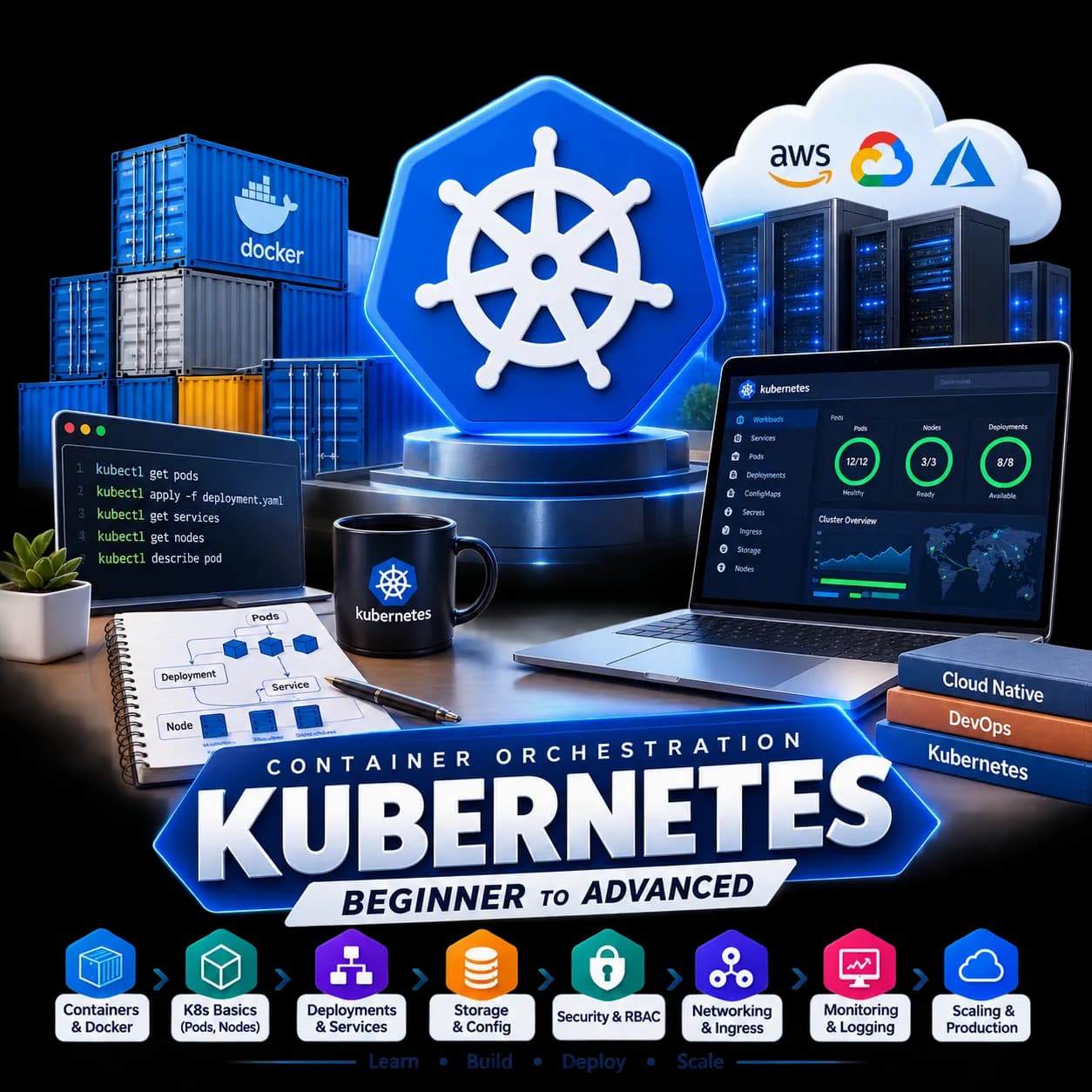
Kubernetes: Beginner to Advanced Advanced8–12 weeks

Azure Cloud Advanced5 Months (20 Weeks)

Linux Intermediate3 Months (12 Weeks)

System Monitoring & Observability Advanced4 Months (16 Weeks)

Jenkins Intermediate3 Months (12 Weeks)

AWS Cloud Advanced5 Months (20 Weeks)
Best seller
Best seller
Best seller
New
Best seller
New
New
New
Trending
NewHands-on programming tracks with runnable code, from fundamentals to job-ready projects.
Kubernetes Beginner to Production Grade: A Hands-On DevOps Guide Beginner25 min
100 Days of DSA with Java Beginner to advanced100 days · 85 lessons published

100 Days of AI Engineering Beginner to advanced100 days · 57 lessons published


Articles to help you learn, grow, and get hired.
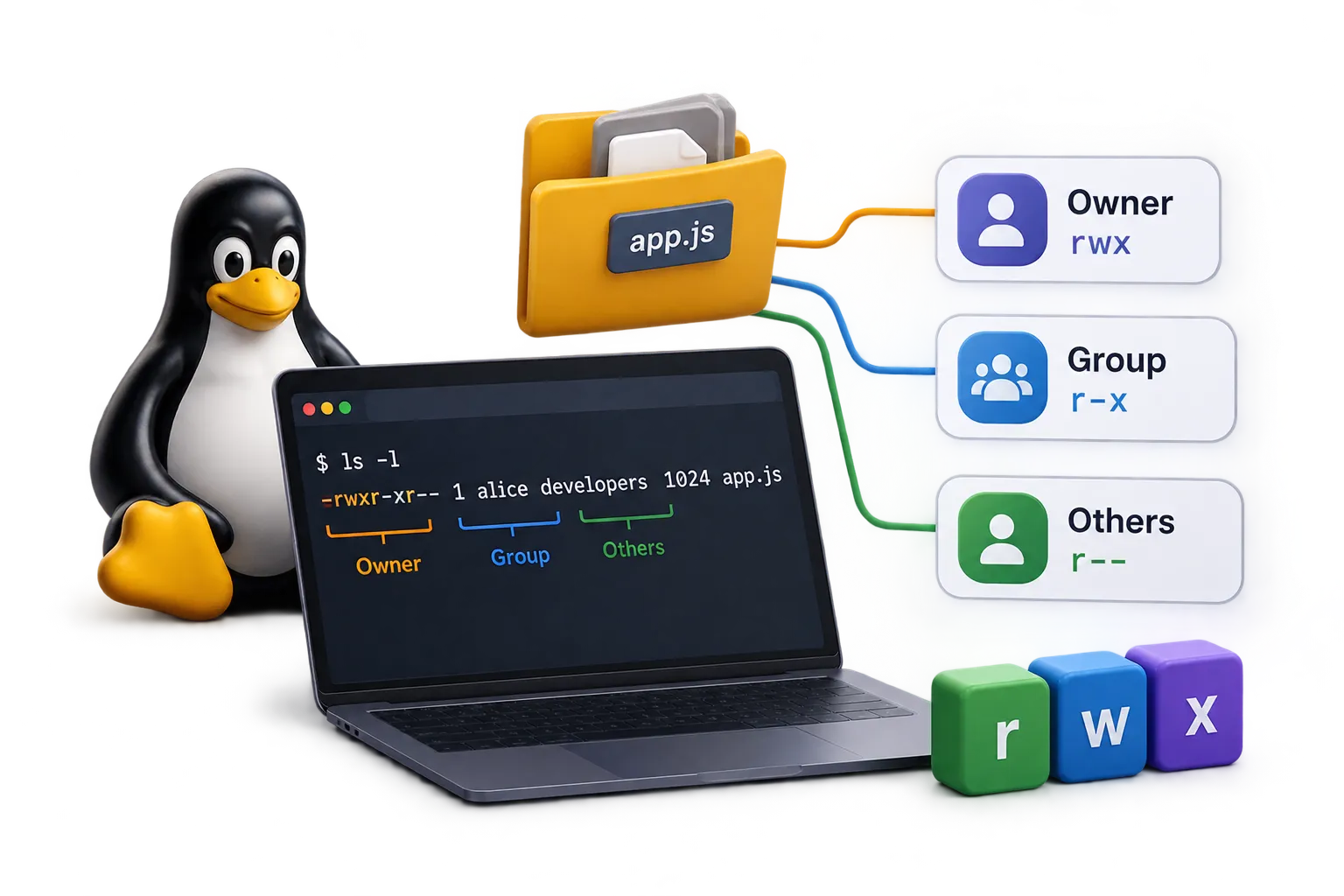
Linux Groups and File Permission: Complete Admin Guide 5 min11 Sept 2026

Terraform Architecture Explained: How It Works Under the Hood 5 min9 Sept 2026
Git vs GitLab: What's the Difference? (Simple Guide for Beginners) 5 min23 Jun 2026
Master Linux groups and File Permission with this practical guide covering user creation, group memberships, sudo privileges, and file permissions.

Demystify Terraform architecture. Learn how the Core, State files, Providers, and APIs interact to manage Infrastructure as Code safely.
TrendingA beginner-friendly guide to the real difference between Git and GitLab, explained in plain English with a simple real-life example anyone can understand.